Shopify - Orders.
Scope
Project
Role
Year
/
Summary
(01)
Working on the most used Shopify Surface
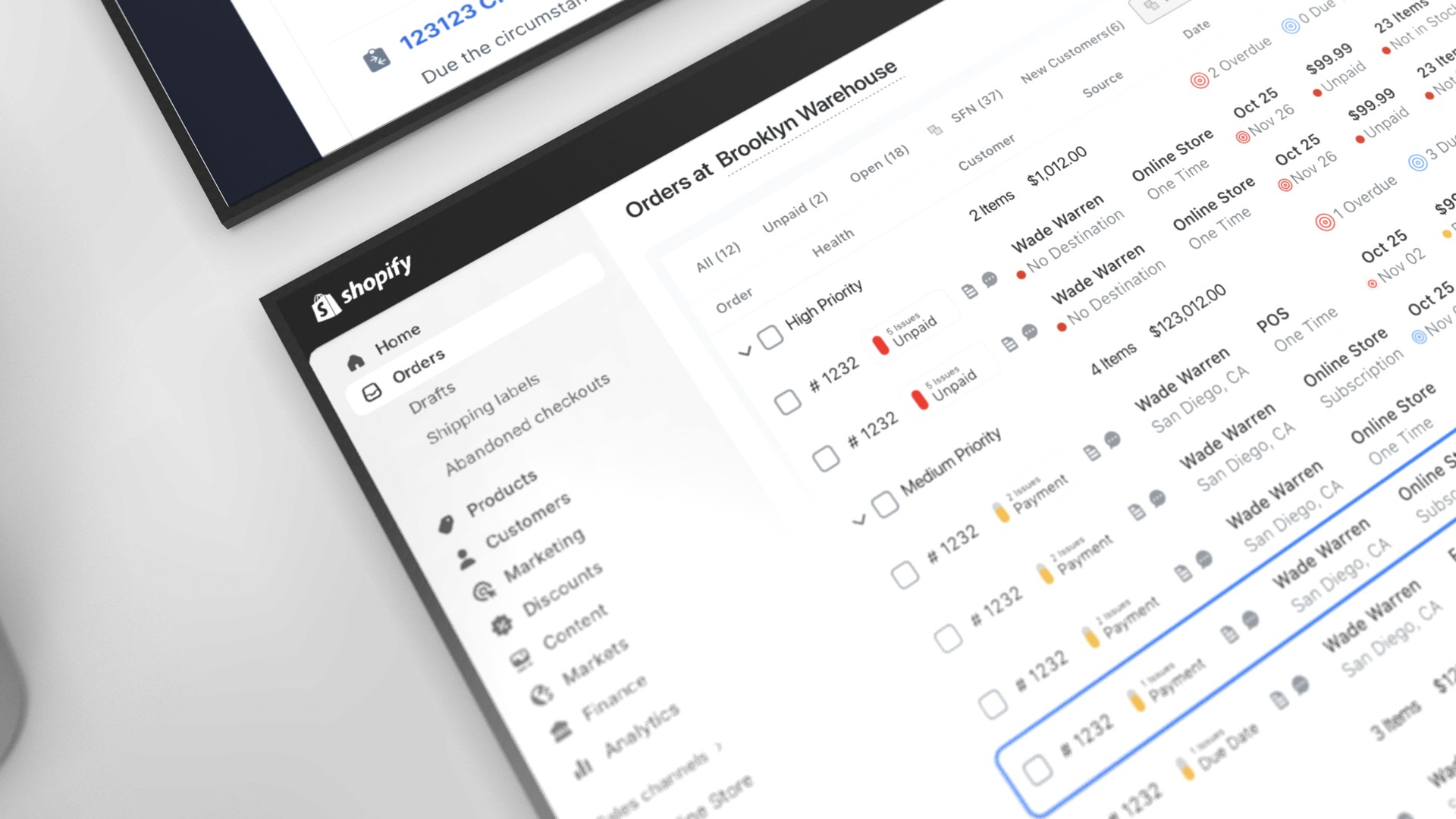
I joined as a Staff Product Designer to partner with the UX manager to add strategic oversight, sharpen design solutions, generate new ideas, and mentor the team working on merchant operations - one of Shopify's most critical and most-used surfaces.
When the UX manager leading the team left a few months in, my role expanded. I stepped in to keep the work moving - running weekly rituals, reviewing designs, maintaining the cadence that holds a team together when leadership changes.
Outcomes
Led design for Order Tasks - driving concept development, stakeholder alignment, and research that redirected product strategy before further engineering investment
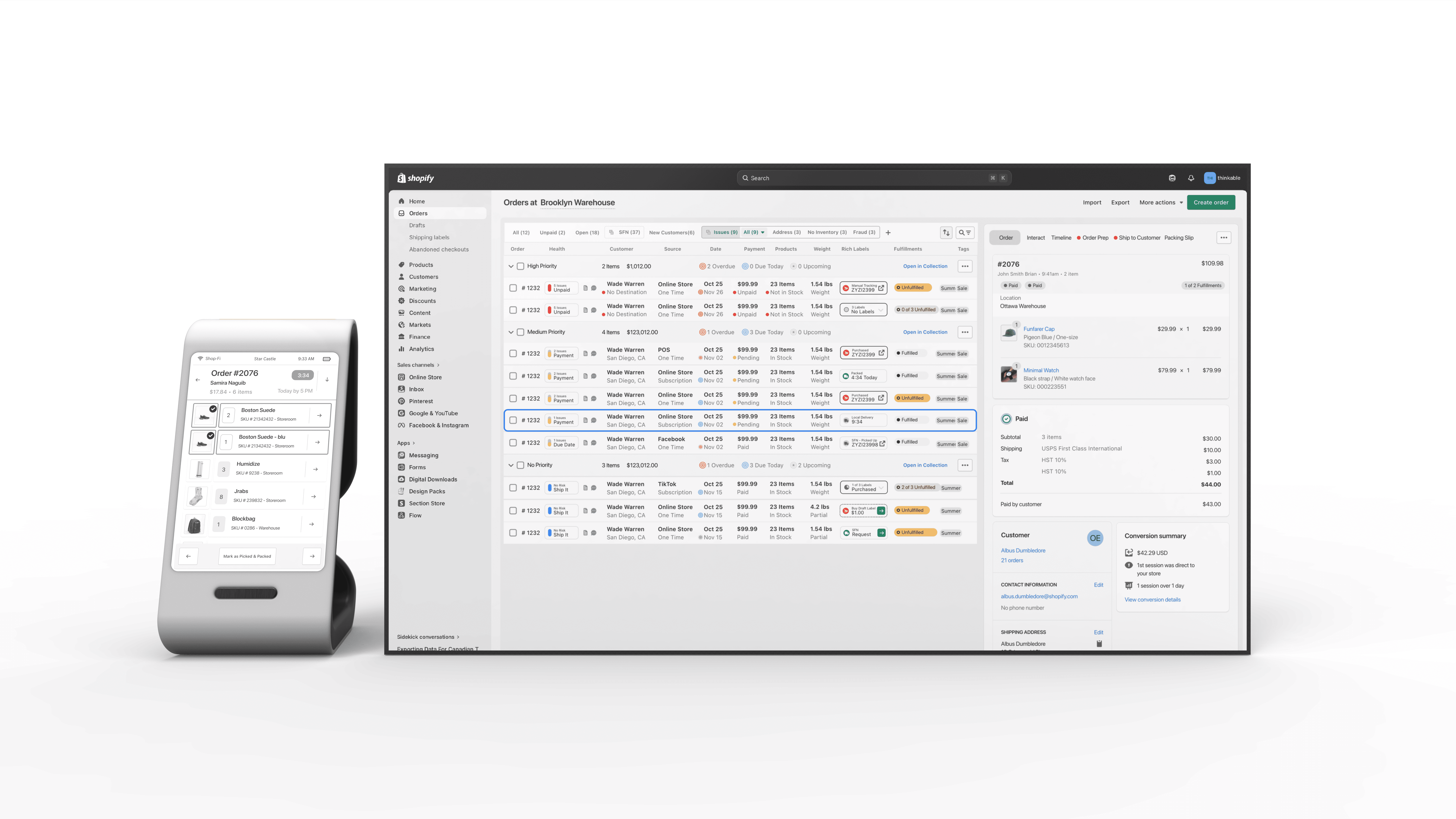
Drove Orders Green-pathing after pivot - defining a unified interface that consolidated fulfillments, returns, and shipping into a single operational surface
Conceived and filed a patent for a Point of Pack device - a hands-free orientation-adaptive UI for accelerating packing of orders, originated through internal hackathon
Co-inventor on Shopify patent - an AR system that detects purchased products via camera and surfaces contextual post-purchase actions; granted January 2026
Initiated Unified Labels component design - working closely with Shopify's labels and shipping team to reduce merchant cognitive load through state-aware information
Read the case study below
/
Phase 1 - Guiding, mentoring and influencing
(02)
Order Tasks - The Original Hypothesis
Problem Context
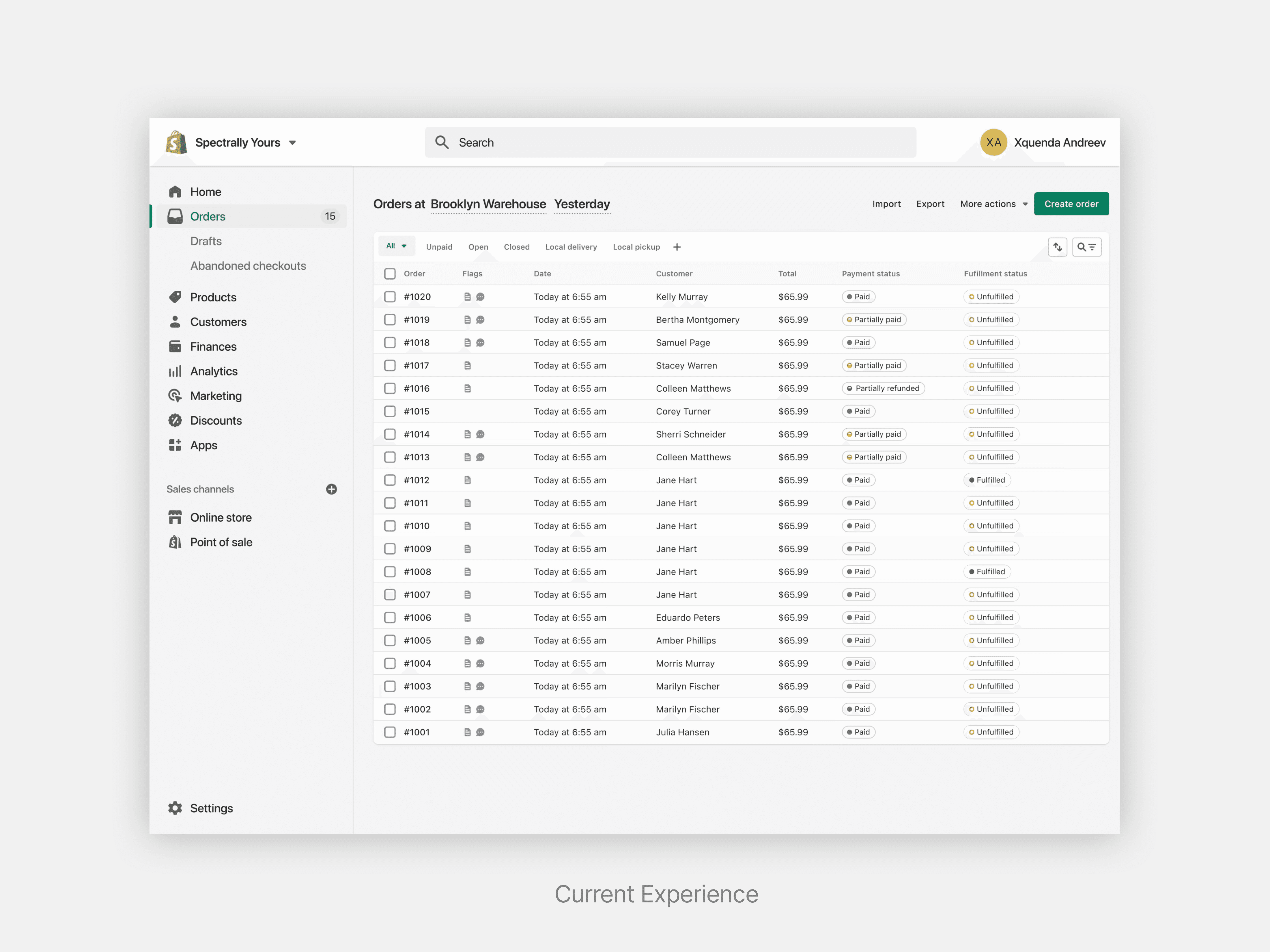
Every day, millions of Shopify merchants start their day on the same screen - the orders index. A flat table. Every order, in a list. No prioritization, no triage, no signal about what needs attention now versus later. The question was how to solve it without breaking the surface merchants already trusted.
Context Building
Cross-functional interviews with Product, Engineering, and Data
Historical context discovery with the design team
Reviewed existing merchant interviews
Merchant visits and interviews
Goals
Increase visibility into order tracking
Reduce confusion around order status
Increase merchant productivity
Output - Merchant Operations
Design Planning
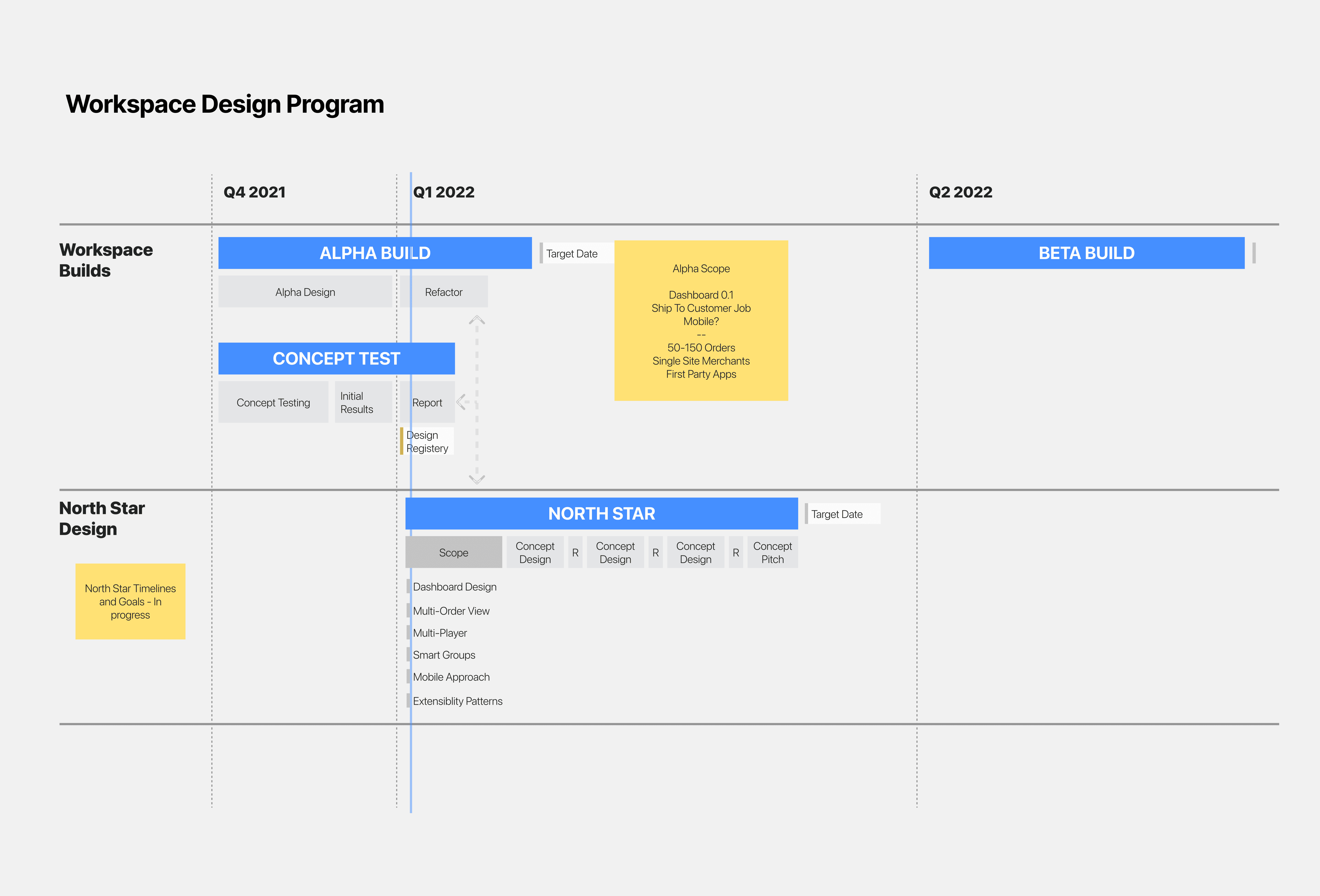
When I joined, Order Tasks had been running for six months. The Design team had developed explorations but needed to focus on building. I worked with product, engineering, and data to organize the team and drive towards build dates.
Order Tasks Surface
The concept was a task-driven triage layer - a new surface that bucketed orders by status: open, received today, ready to fulfill, shipped, and fraud alerts. Merchants would triage from the task view, then drill into filtered sub-lists.
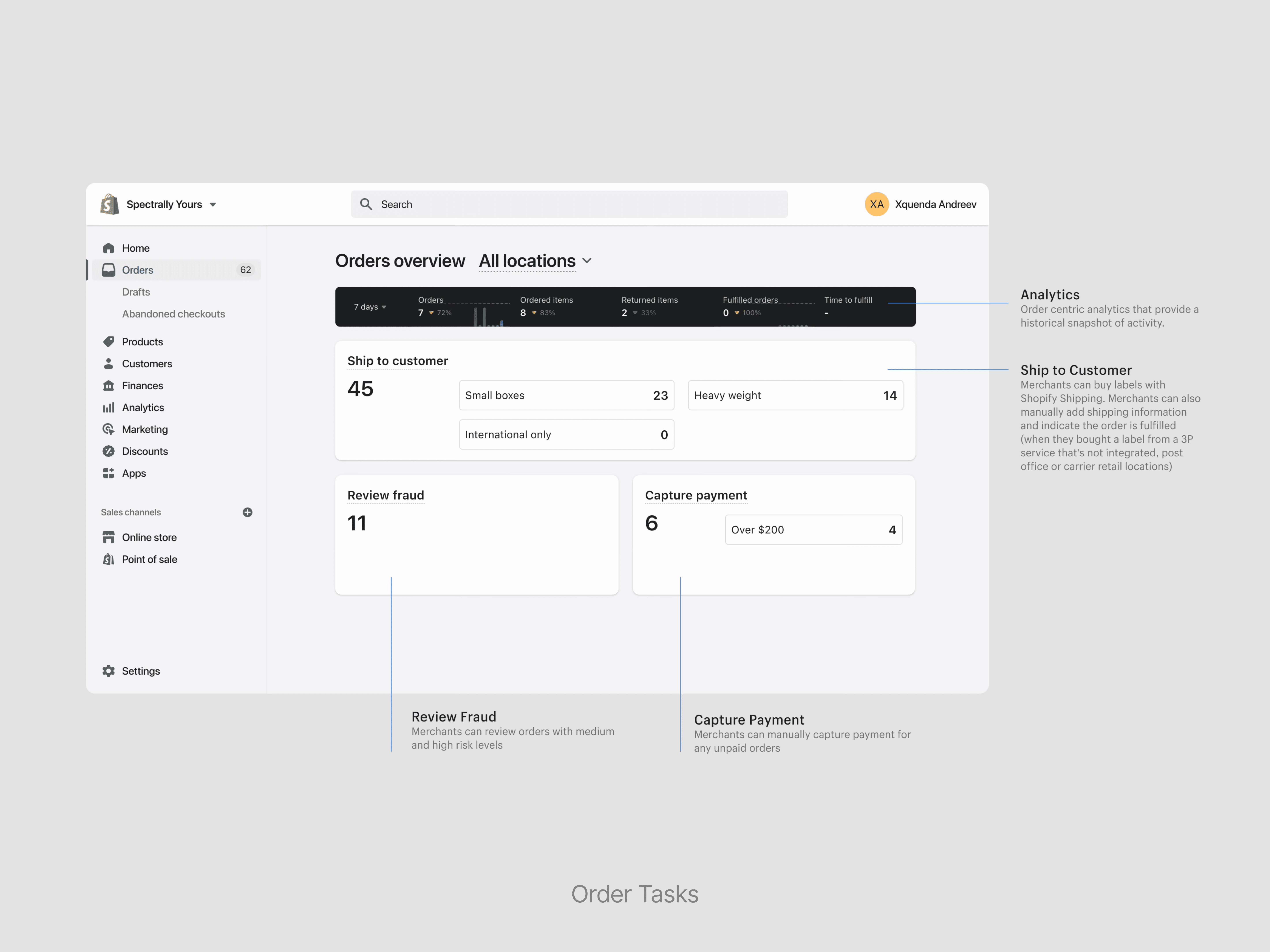
Merchants can see the work that must be completed - organized by tasks. These tasks reflect the outstanding work a merchant must complete and provide a mechanism to visualize the quantity of effort.
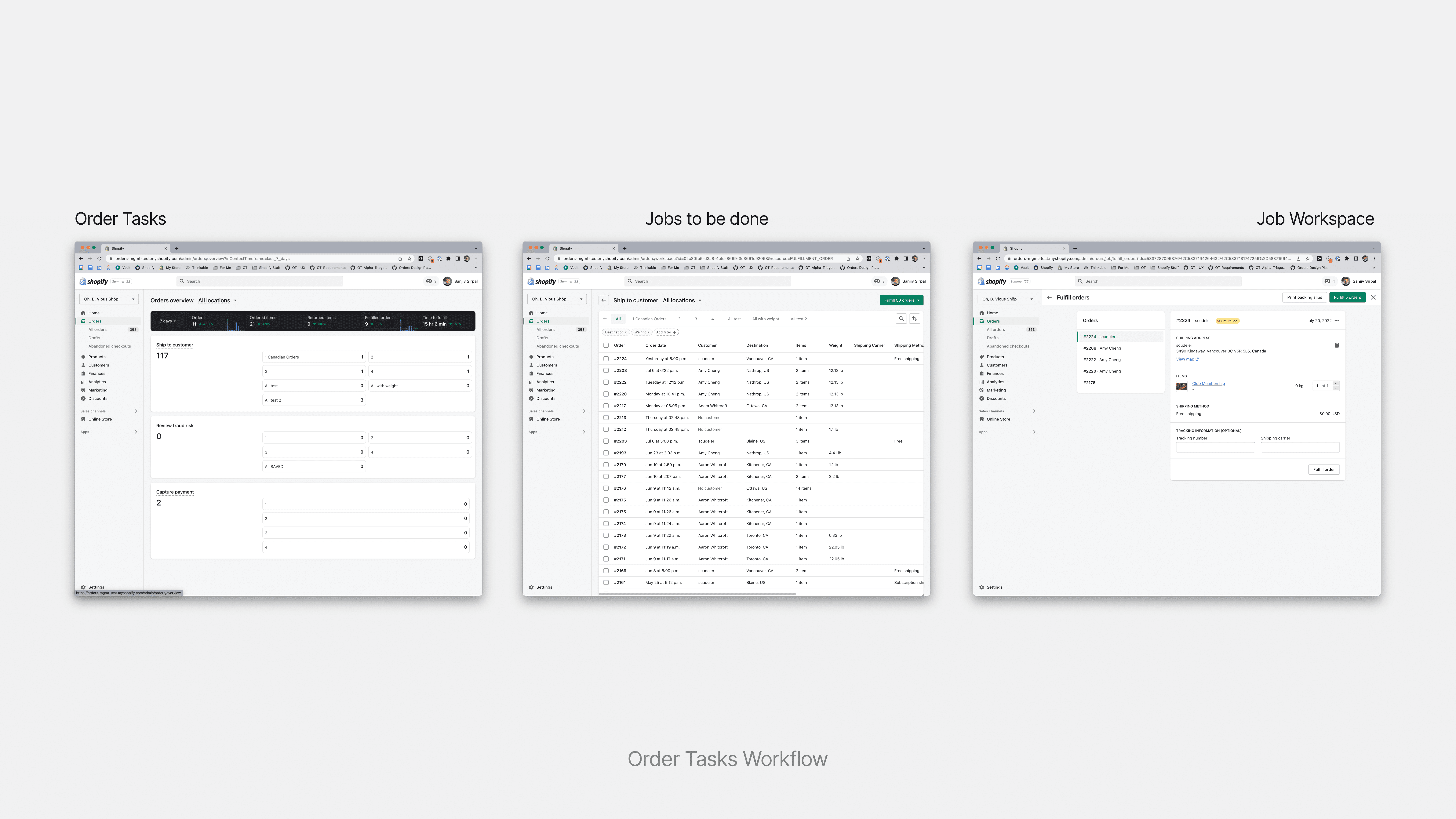
Selecting the task routed the user to the Jobs list. Here they could select the jobs they wanted to work on, and then move forward to job surfaces.
Analysis
The design was a reasonable response to a real problem. What it lacked was merchant validation - and when we put a prototype in front of them, their response was consistent: "this is interesting, but I don't want a new place to go."
The orders index was their home base. Pulling them away from it - even to something smarter - created friction instead of clarity.
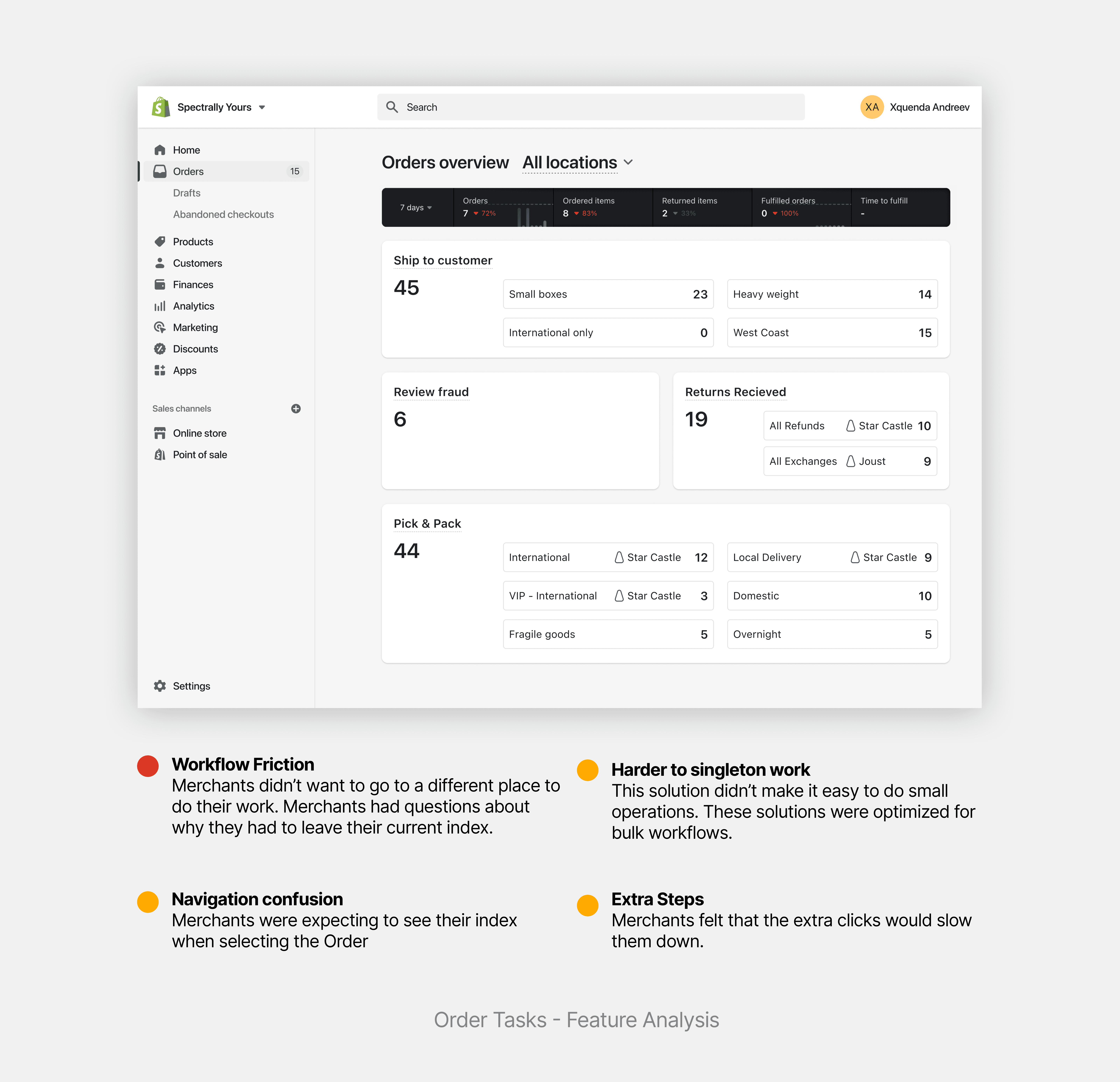
Problem: Merchants needed triage and prioritization, but the existing orders index had none.
Action: Evaluated the existing Order Tasks hypothesis; ran merchant validation with prototypes.
Result: Research surfaced a critical insight - merchants wouldn't leave the orders index. Direction pivoted before engineering investment locked in.
/
Vision
(03)
Shopify POP - Invention from Observation
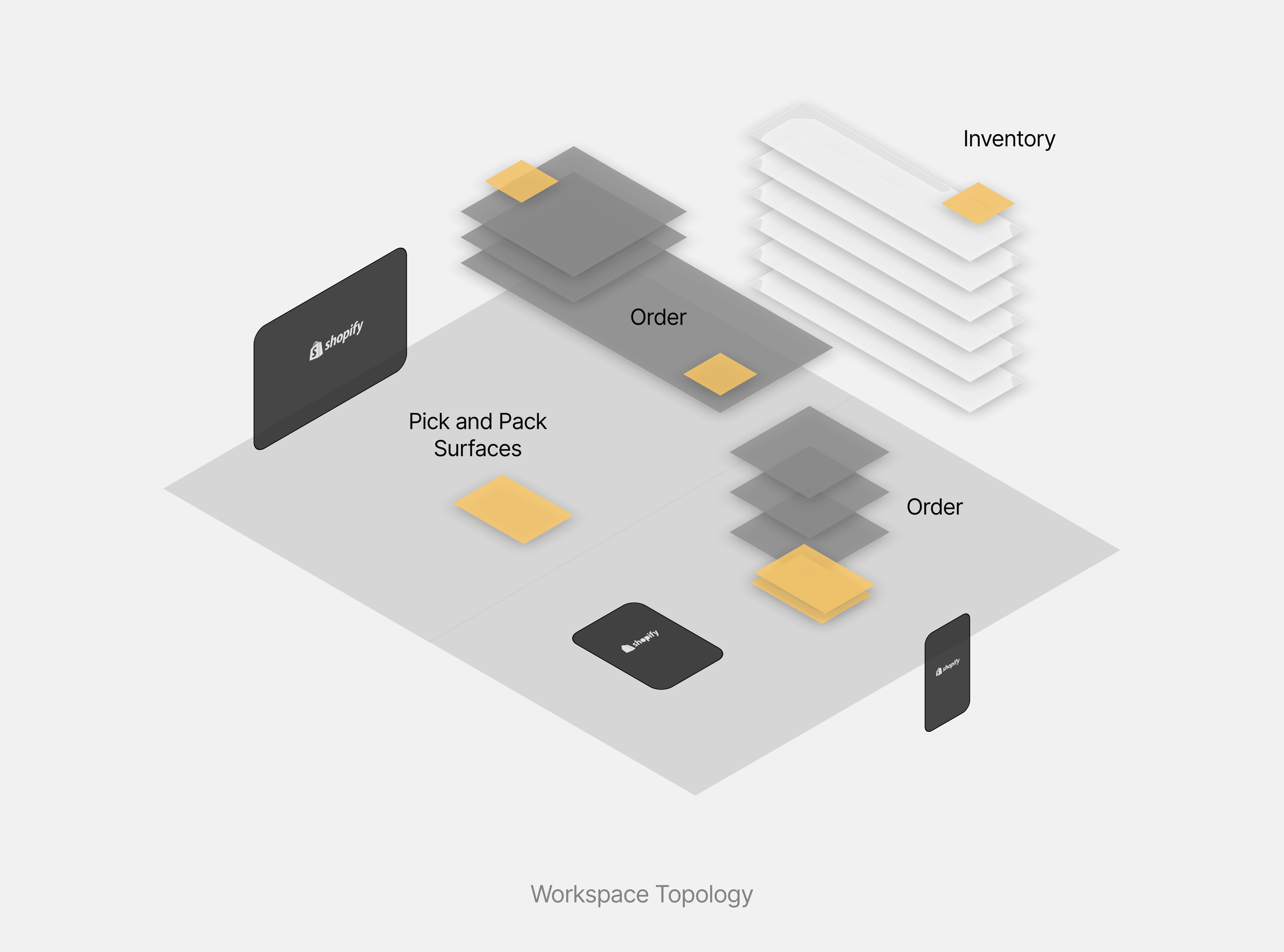
While building context for the Orders work, I spent time with merchants - understanding how they actually operated, and what I found was that the packing process - the physical act of fulfilling an order - was almost entirely analog.
During peak periods like Black Friday, merchants would bring in friends and family to help. The digital order existed in Shopify. The physical packing happened on a table, with paper. I thought there might be a different way to do this.
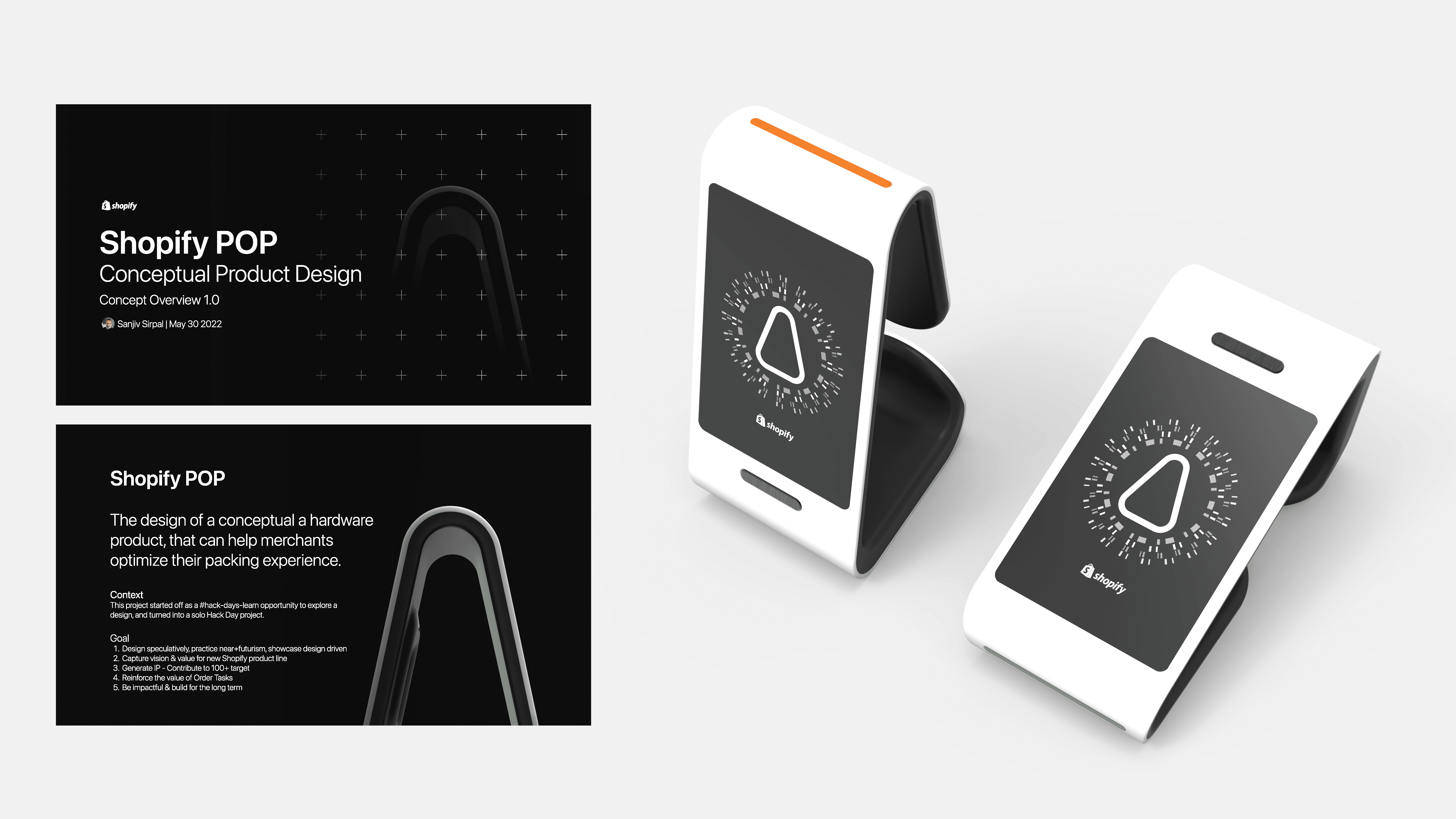
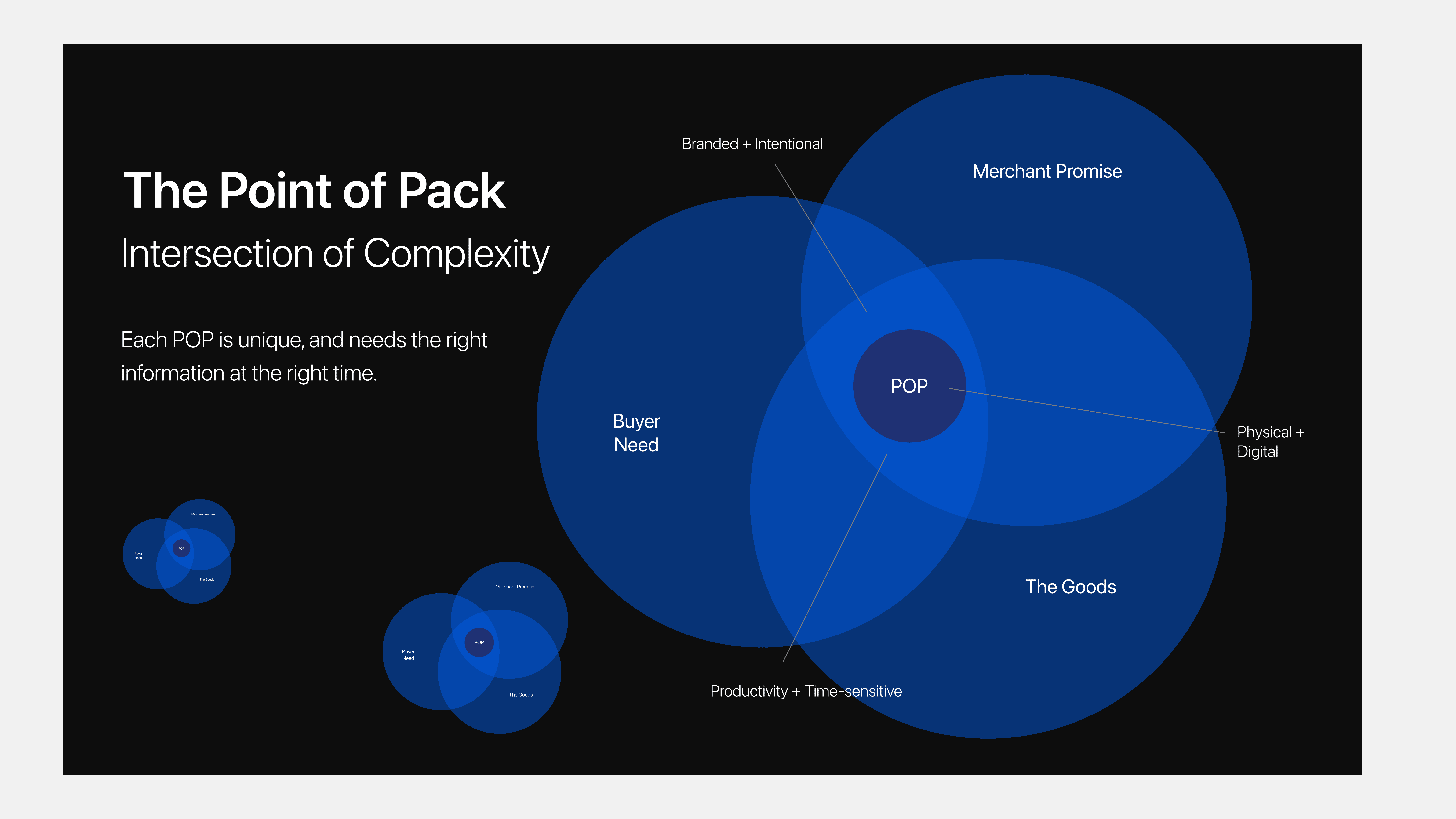
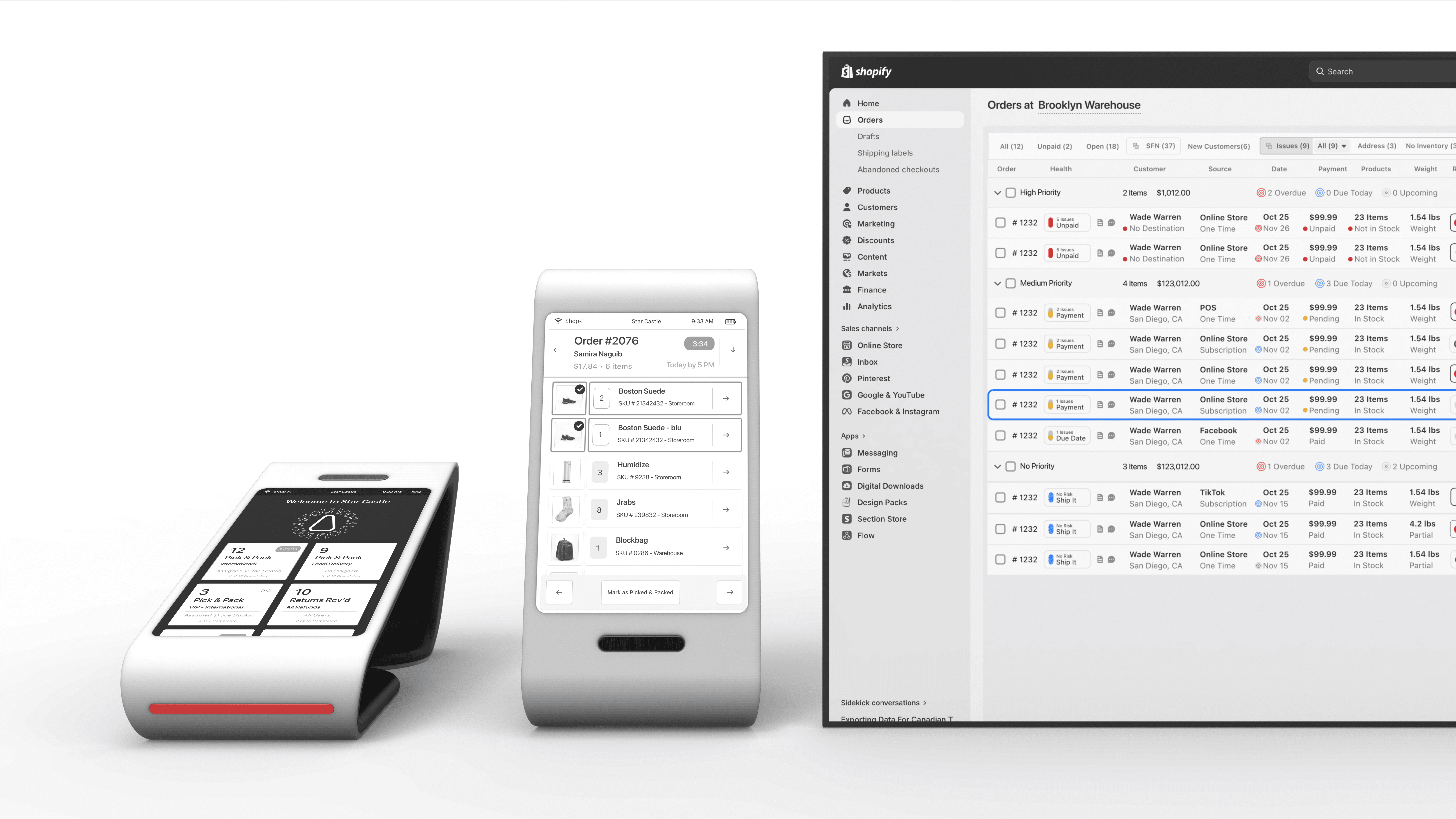
That gap became an idea. I took it into an internal hackathon and conceived Point of Pack - a hands-free, orientation-adaptive device that brought digital order context into the physical packing moment. The Shopify IP team filed for a patent.
Extending Order tasks to Shopify POP allowed one system to extend across surfaces.
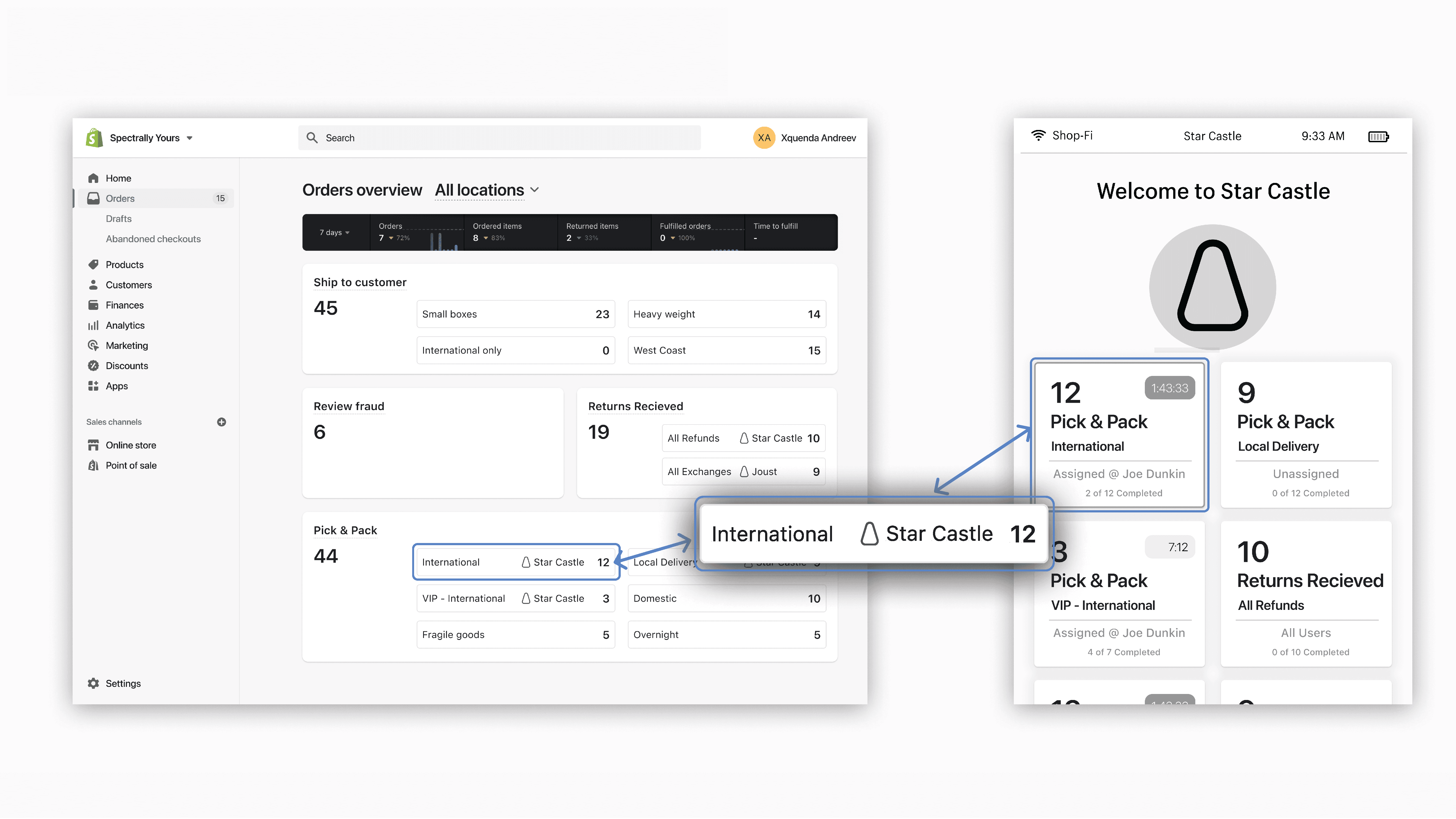
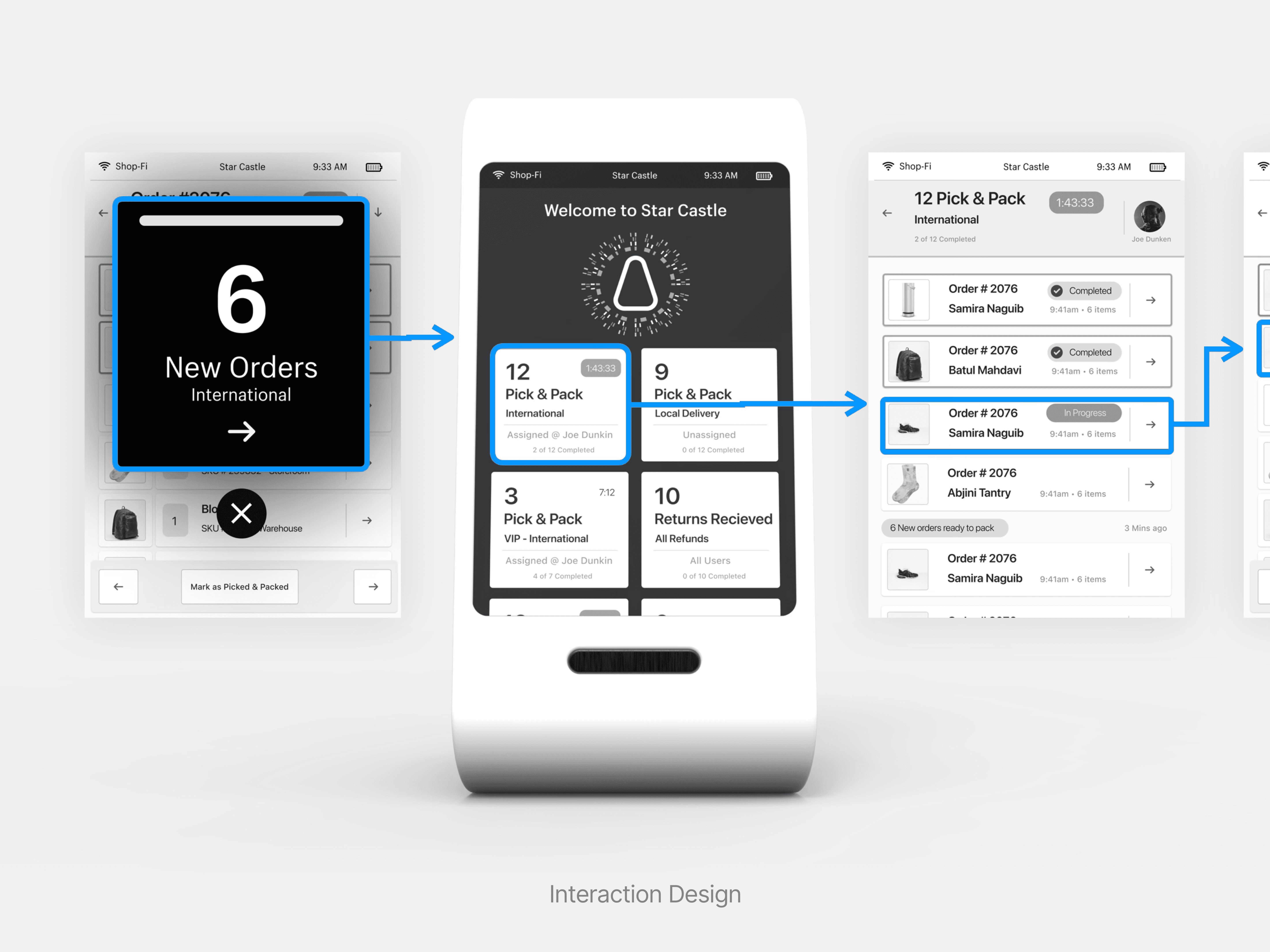
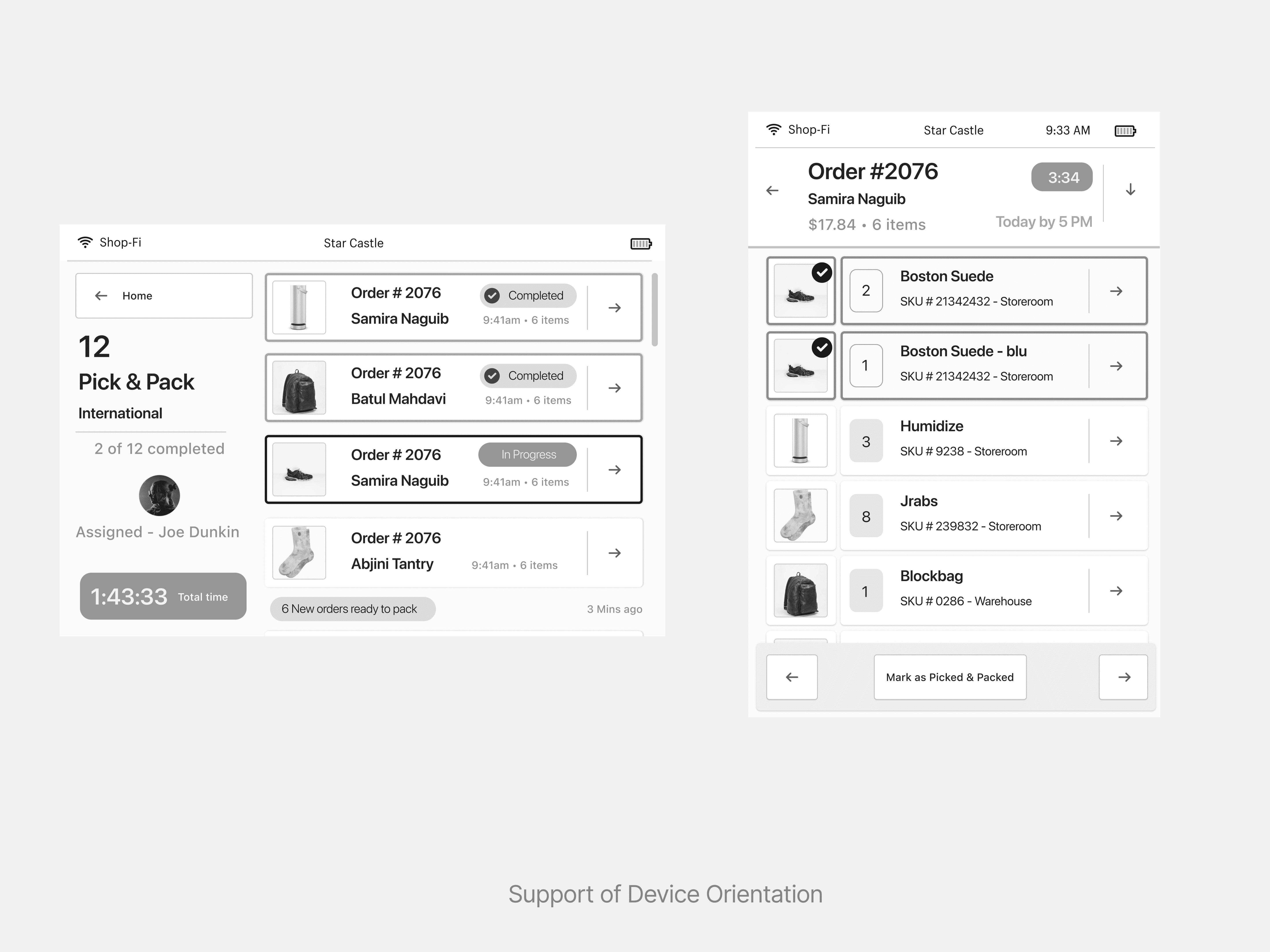
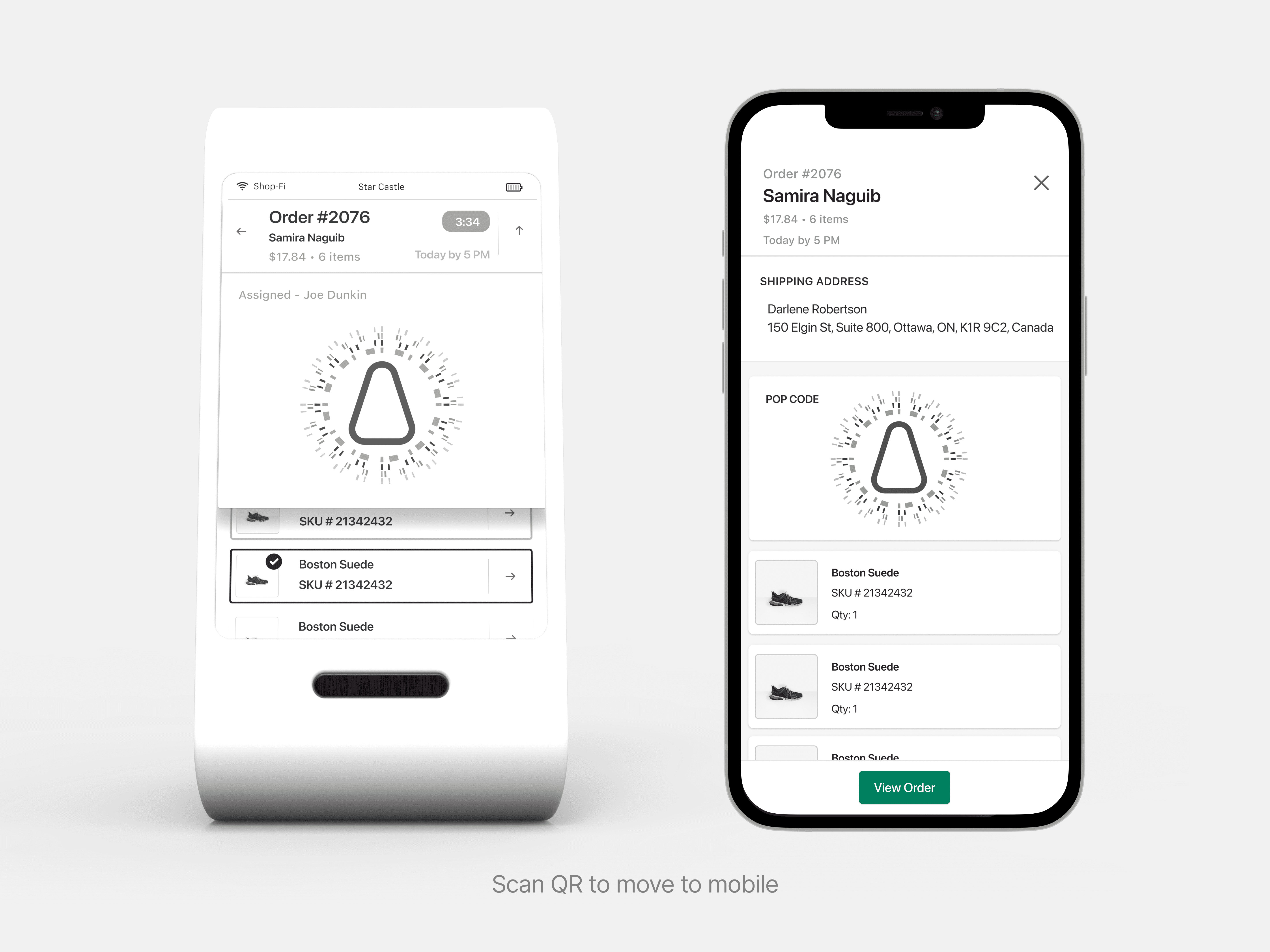
During the hackathon, I dedicated time to thinking through the workflow and optimizing it for picking and packing.
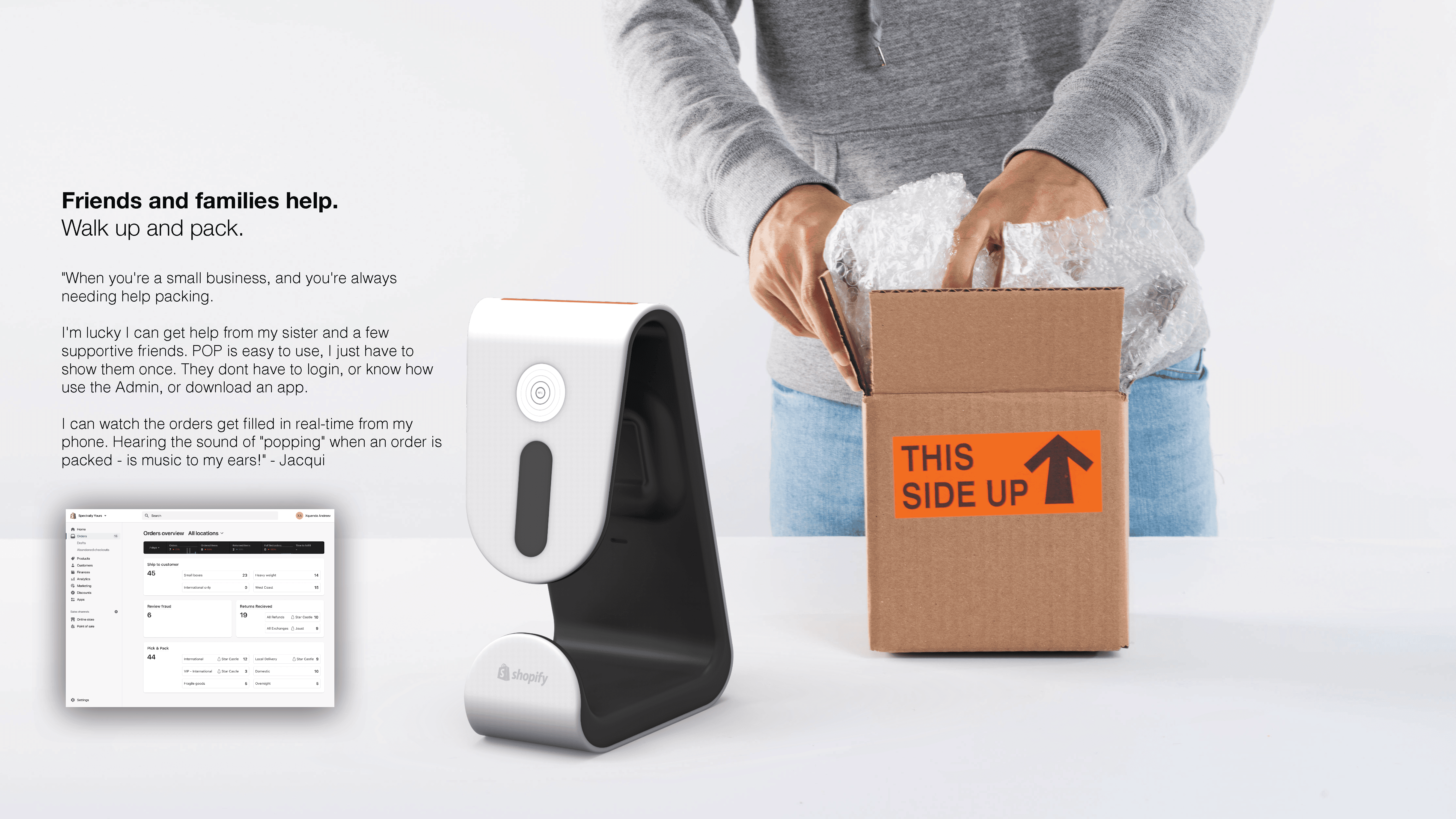
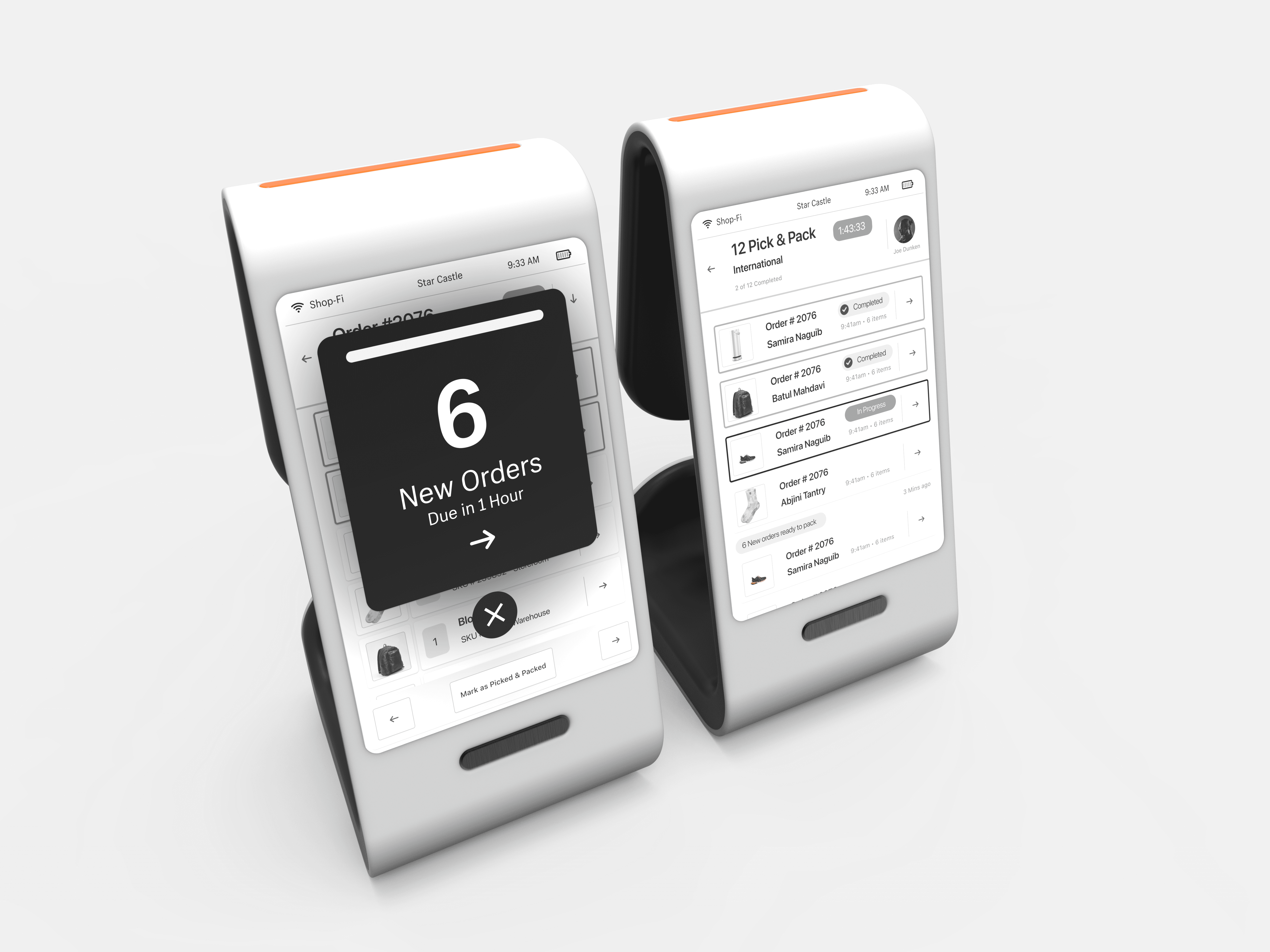
Problem: Order fulfillment split across digital (Shopify) and physical (packing table) with no bridge between them.
Action: Identified the gap through merchant observation; conceived Point of Pack in a company-wide hackathon - brand, ID, and UI as a studio of one.
Result: Patent filed. Expanded Shopify's product thinking into the physical fulfillment space.
Greenpathing a single Unified Surface -100% hands on
Working with my Sr UX manager, I reframed the problem: how do we bring the value of task-driven prioritization into the existing orders surface, without replacing it?
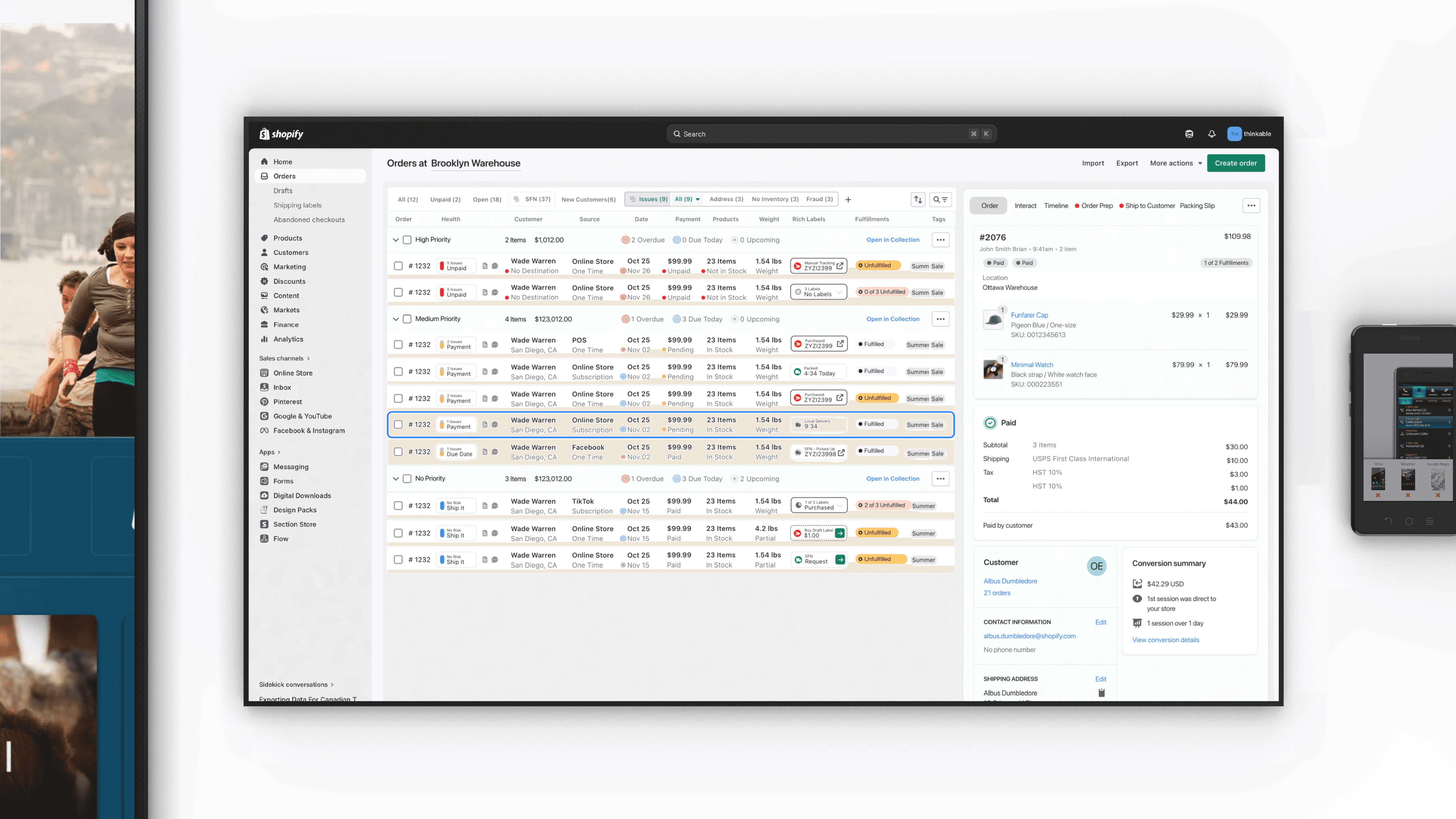
I drove the end-to-end thinking - running workshops, aligning stakeholders, keeping the design team moving through the uncertainty.
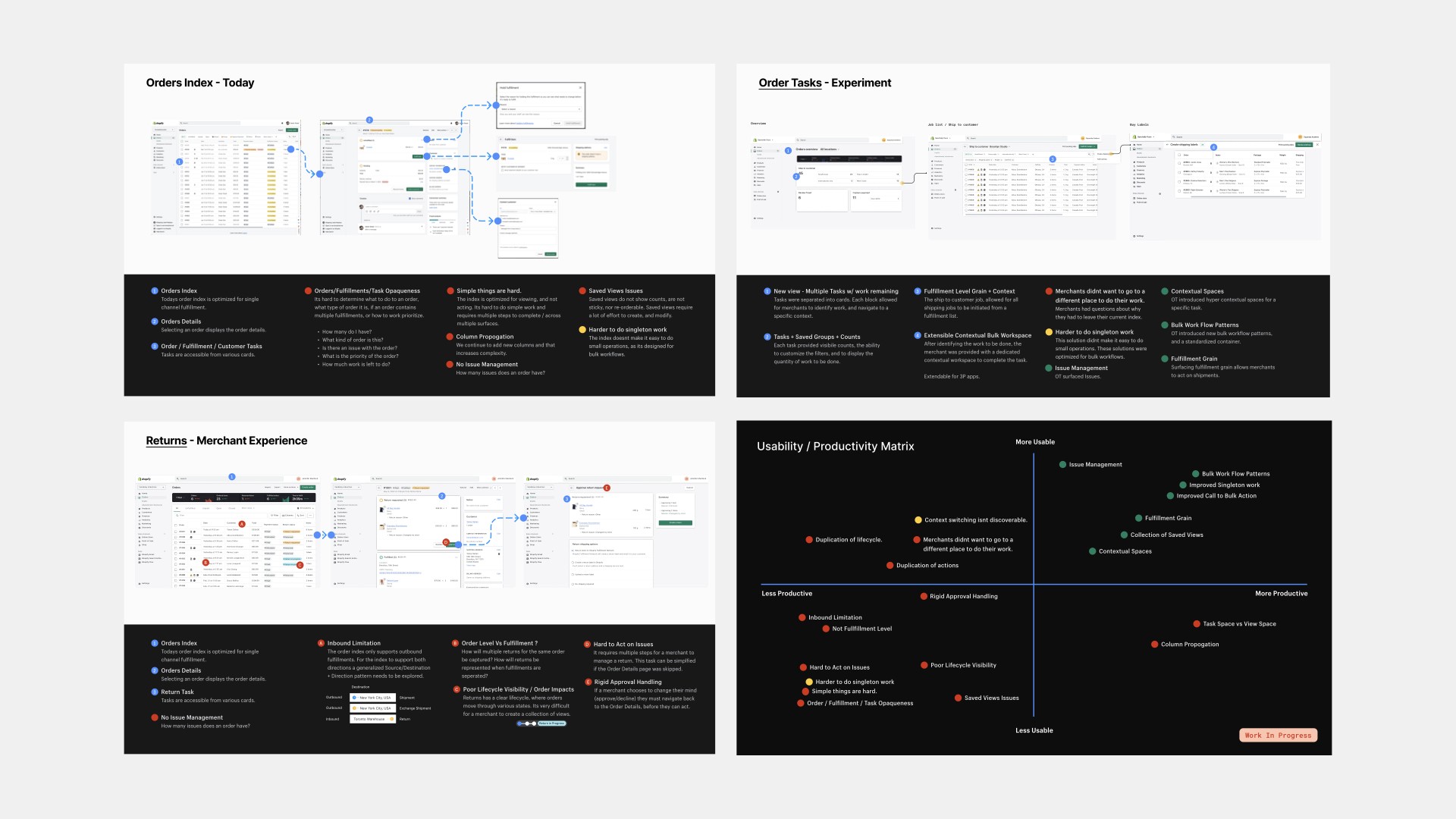
The orders index at that point was outbound only - no recognition of inbound orders, no support for multiple packages on a single order, no unified view of shipping labels, returns, or fulfillments.
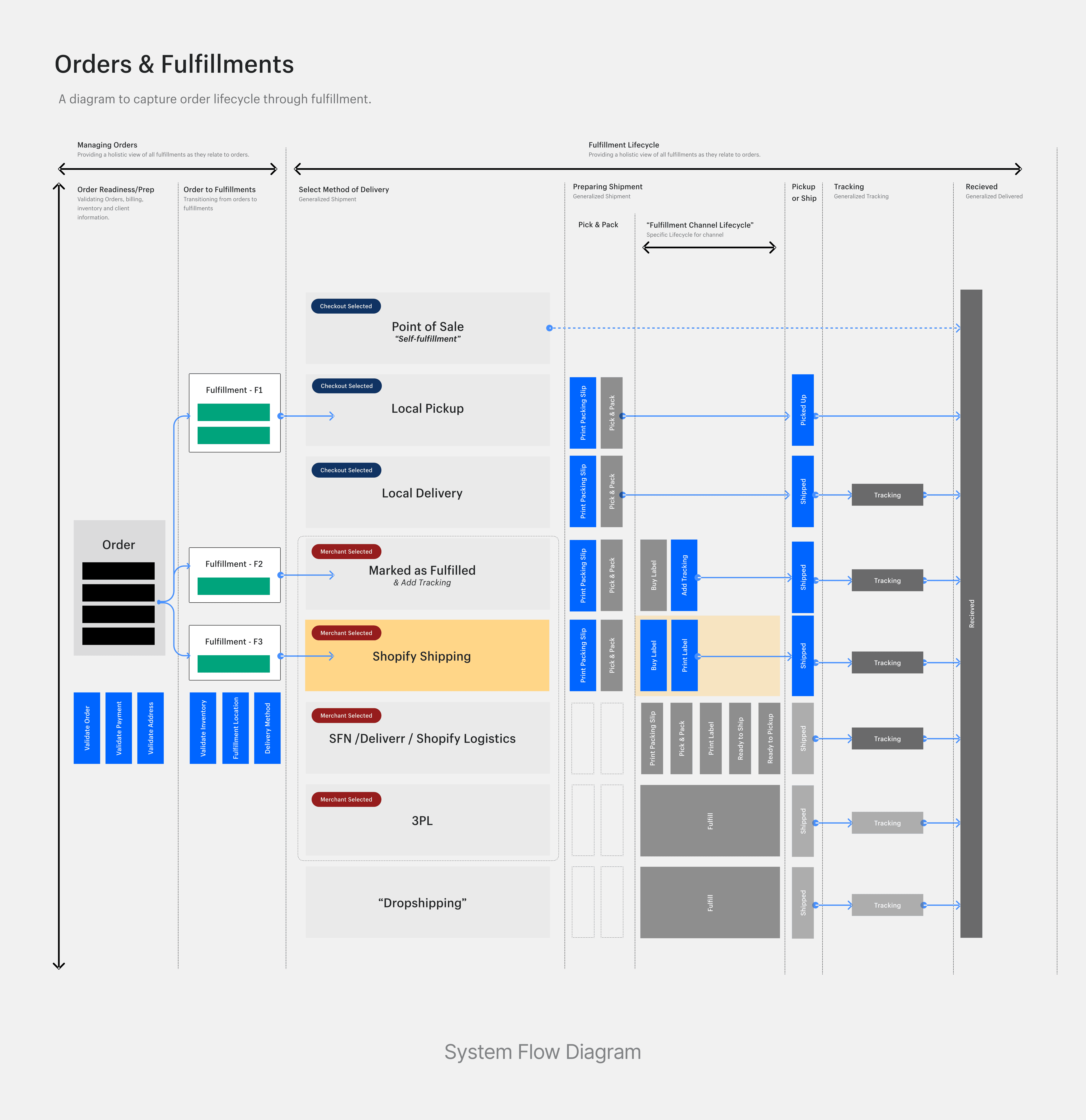
Three major workstreams were converging simultaneously: returns, multi-package fulfillments, and shipping labels - all of them touching the orders surface, none of them yet unified. Each workstream had its own PM, its own design lead, its own timeline.
My job was to find a single interface that could hold all of it, without overwhelming the merchant who just needed to know what to do next.
Analysis of Existing Workstreams
Understanding Workflows
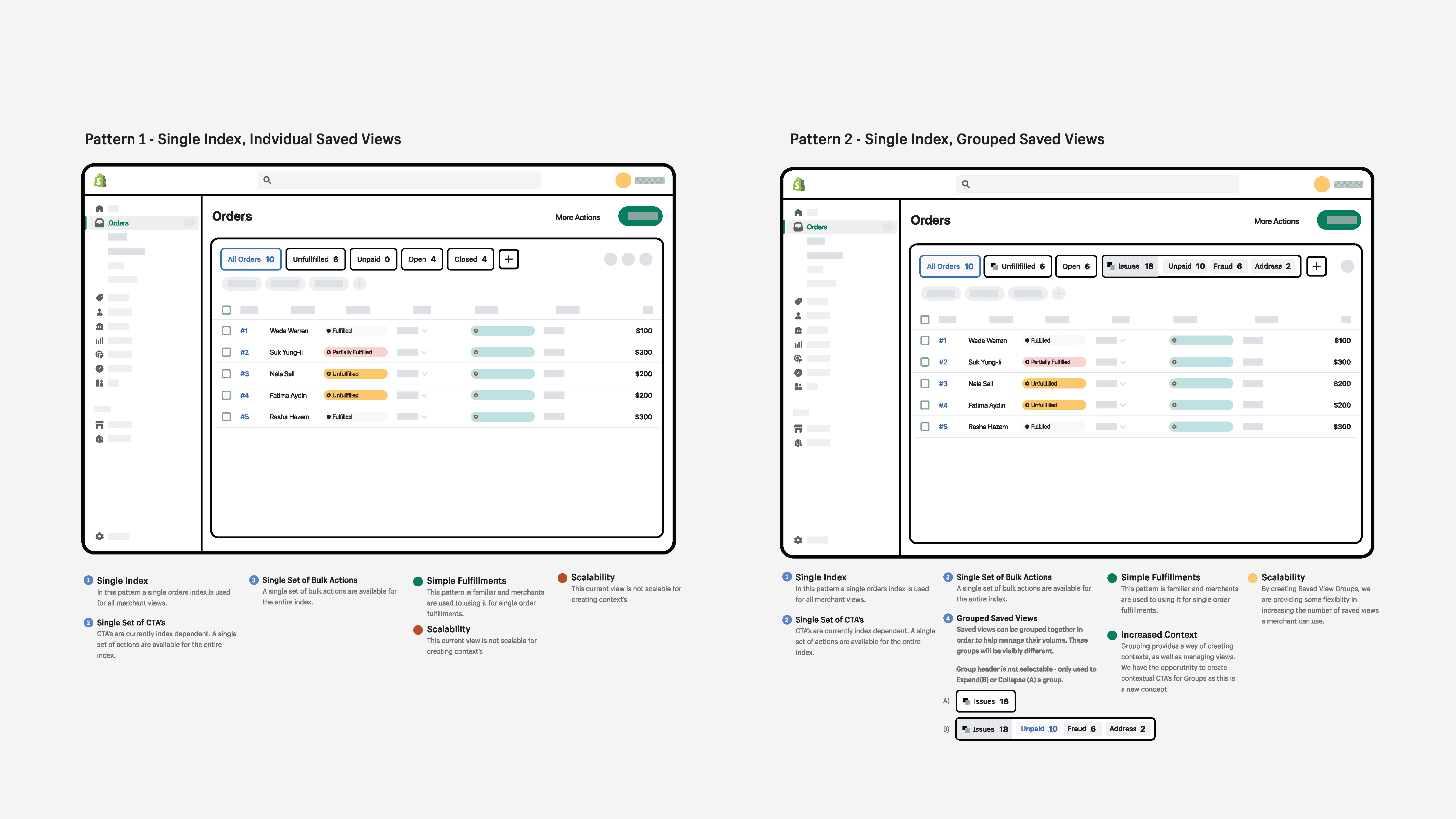
Building a POV & Patterns
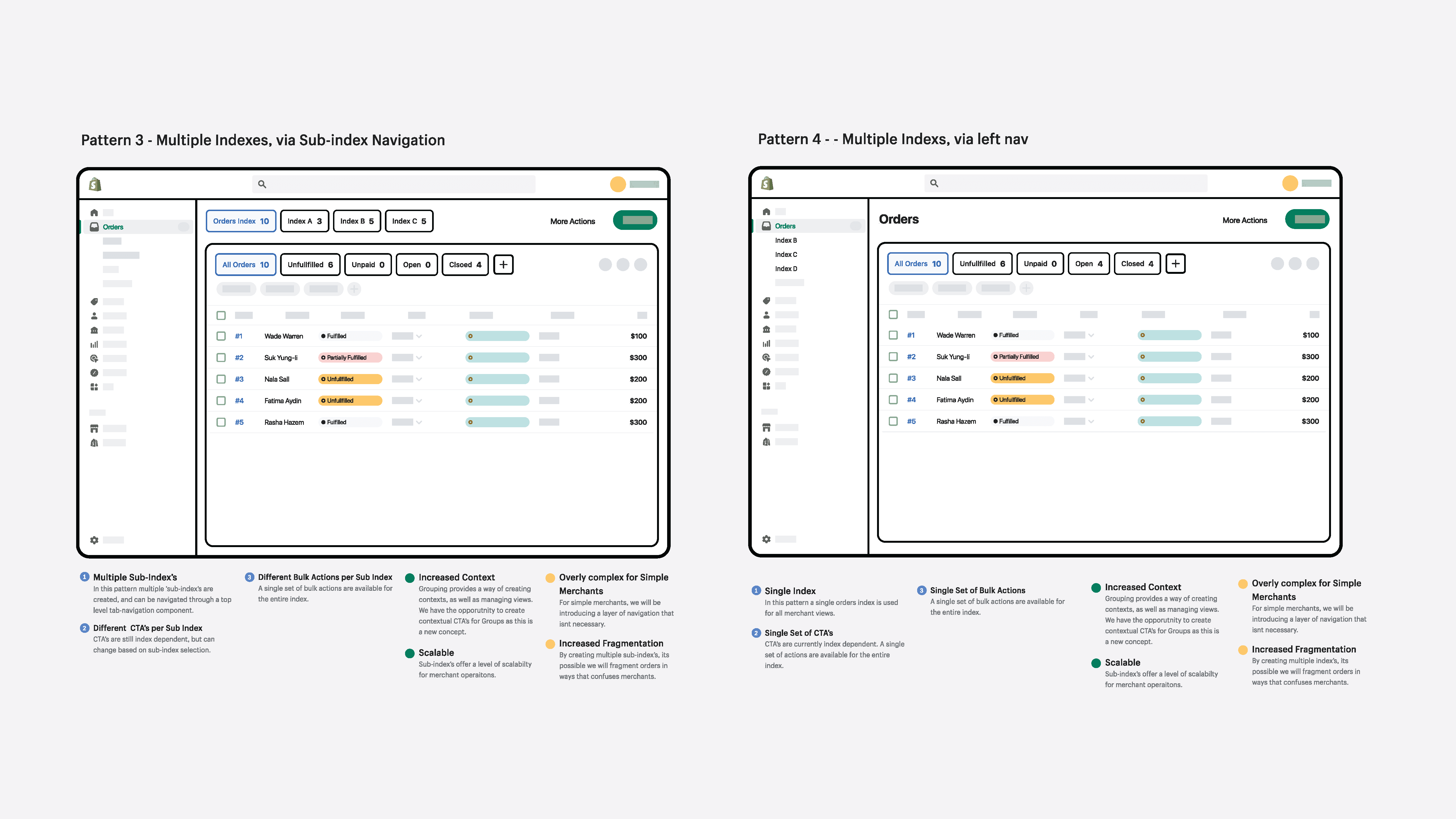
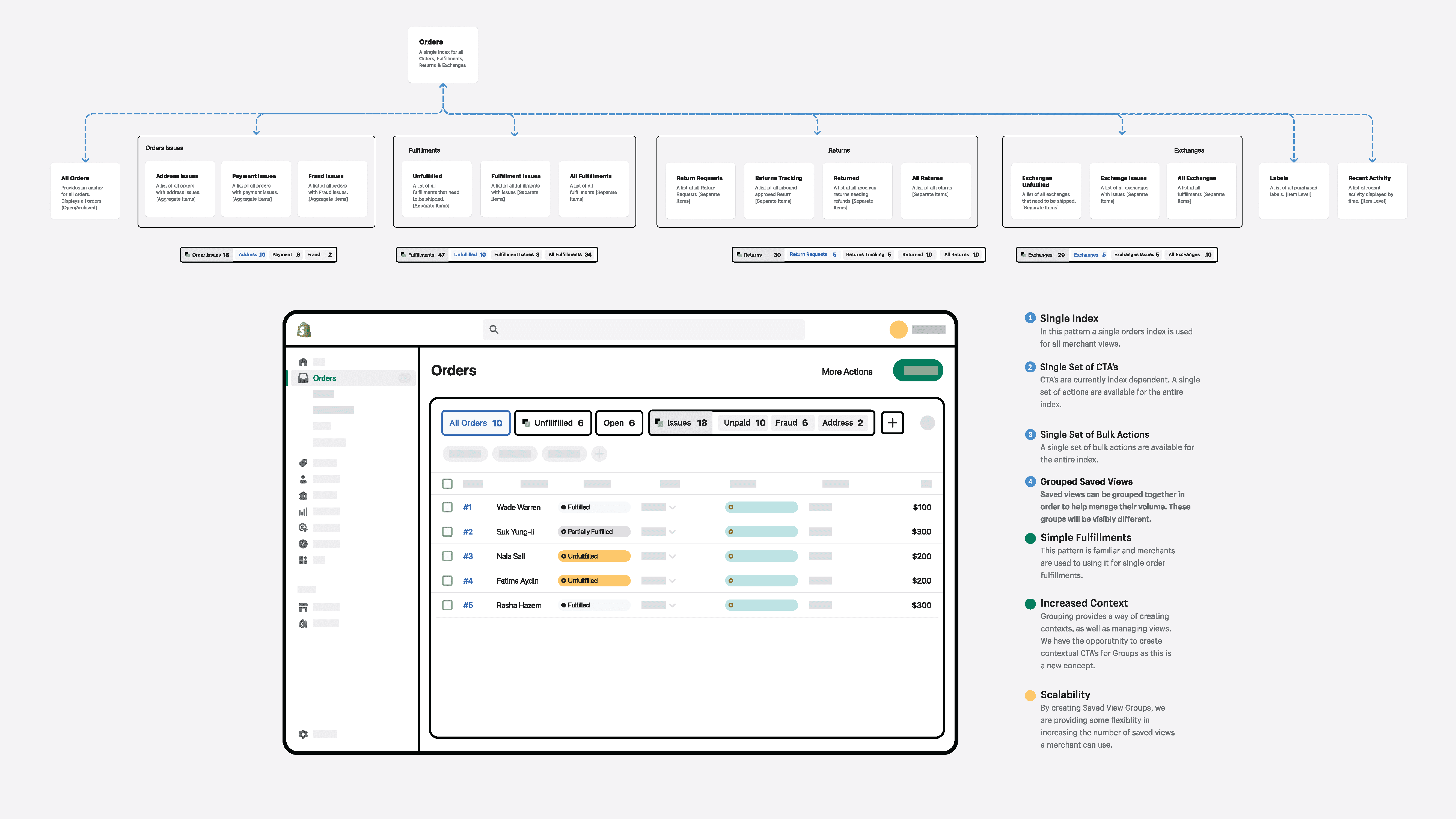
Workshop on POV and Stakeholder Management
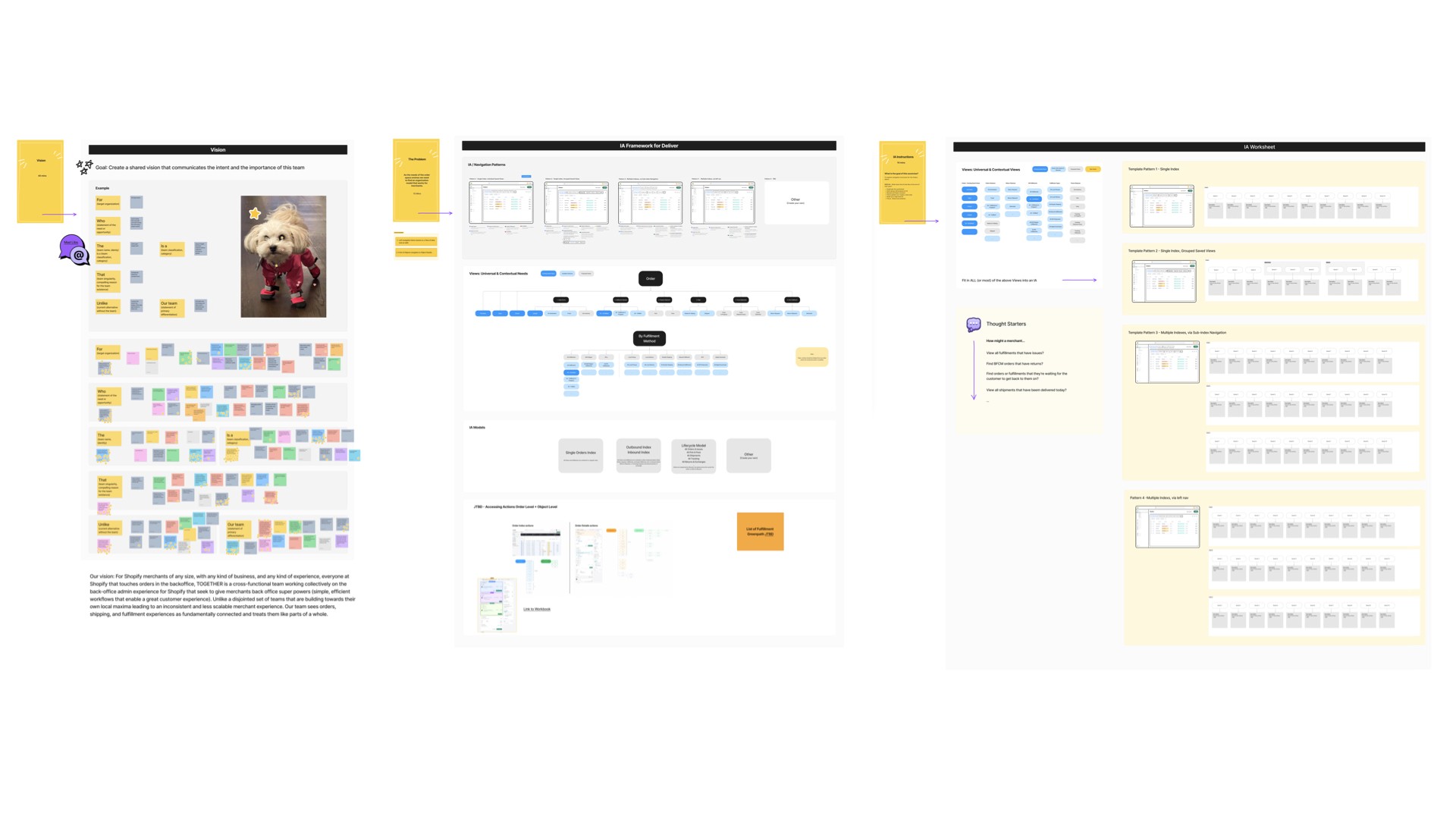
Component Explorations
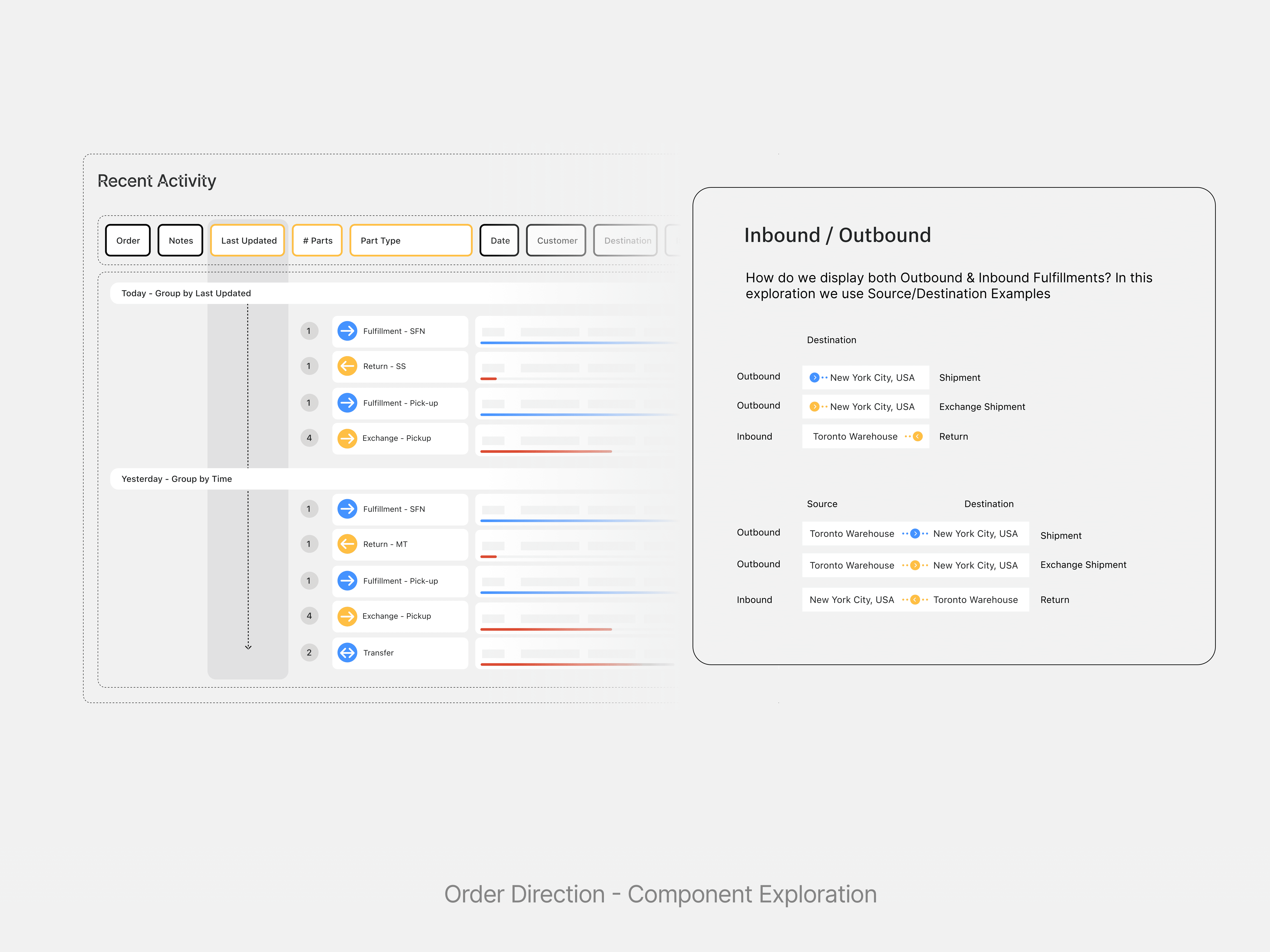
Green-pathing required three key components to work: directionality, shipping labels, and issue grouping. For each, I researched existing Polaris patterns, consulted with the relevant product and design teams, explored options, and reviewed with stakeholders before converging on direction. These weren't surface decisions — they were the functional foundation the unified orders surface depended on.
Directionality - inbound and outbound orders distinguished for the first time
Shipping labels - surfaced inline, not buried in a separate flow
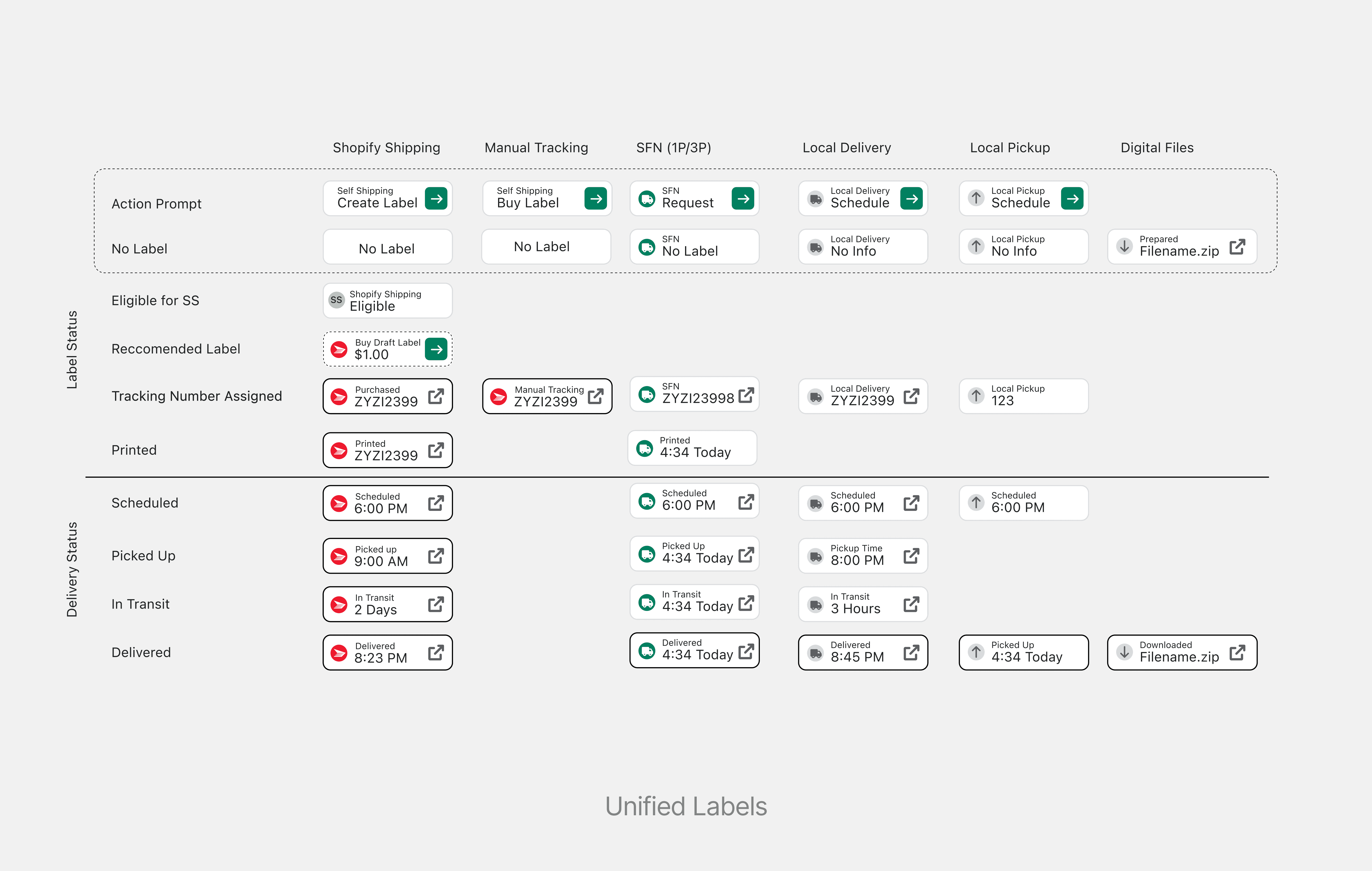
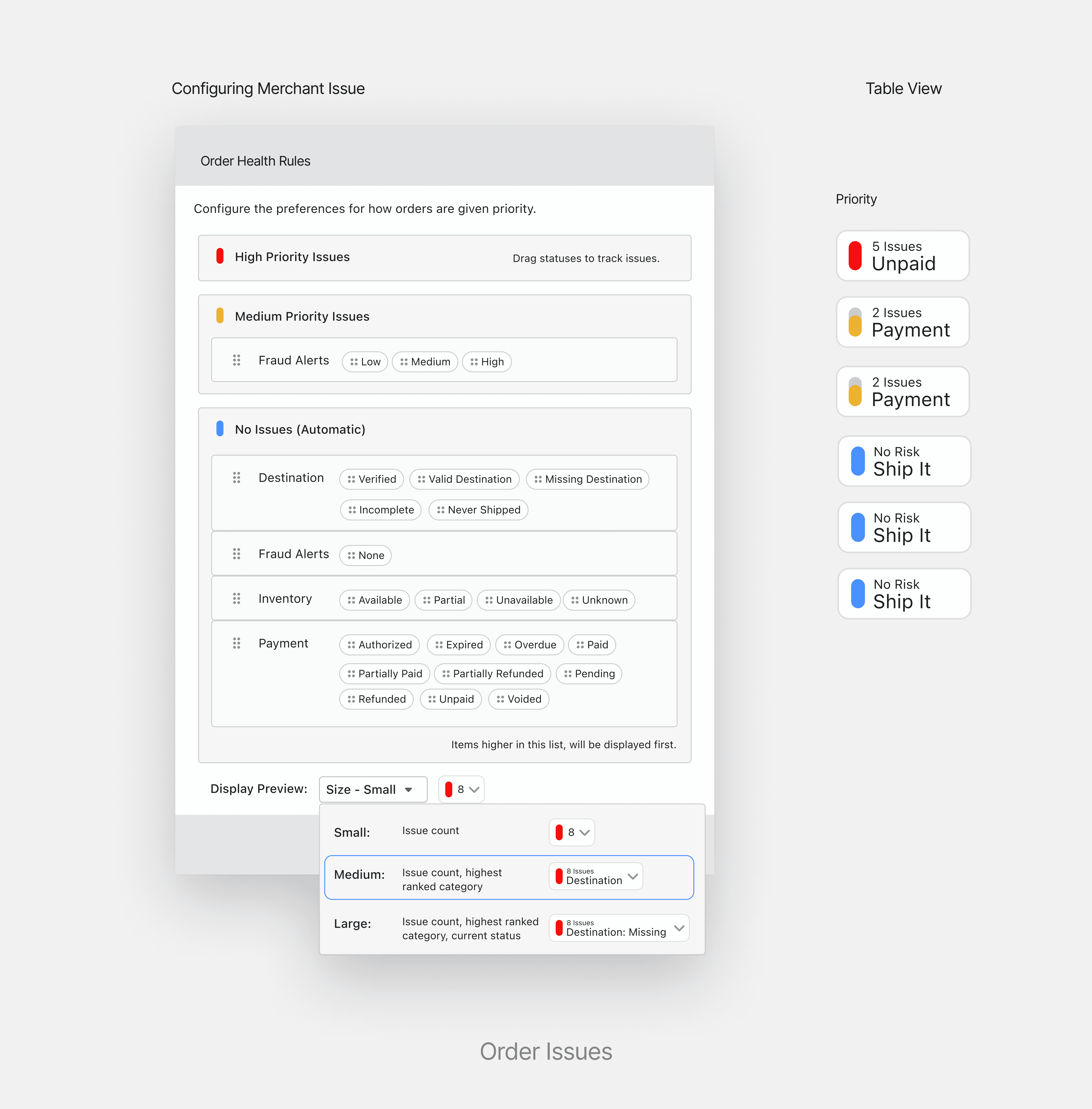
Issue grouping - I designed a prioritization system that merchants could configure to surface their problems worth acting on first. This extended the new filtering system that Polaris had just shipped.
Concepts Explorations - I generated and shared design concepts with the orders leadership layer (Product/Eng/Data/Design) to socialize new ideas and collect feedback
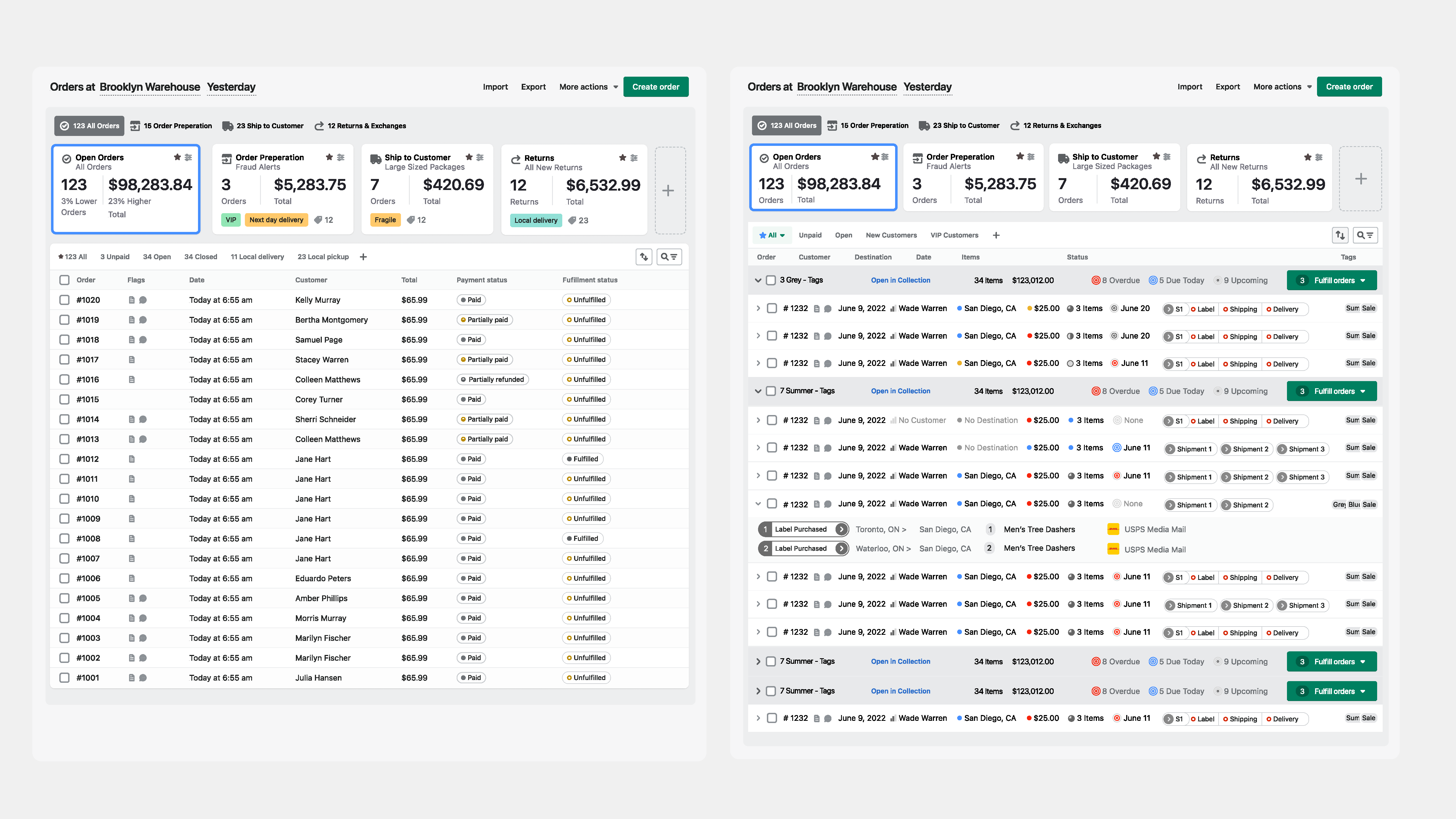
Putting it back together - The final solution took form, introducing new components and interaction patterns to help merchants handle all their work
Product Goals
Single surface to manage all orders
Order Visibility
Reflect merchant workflow
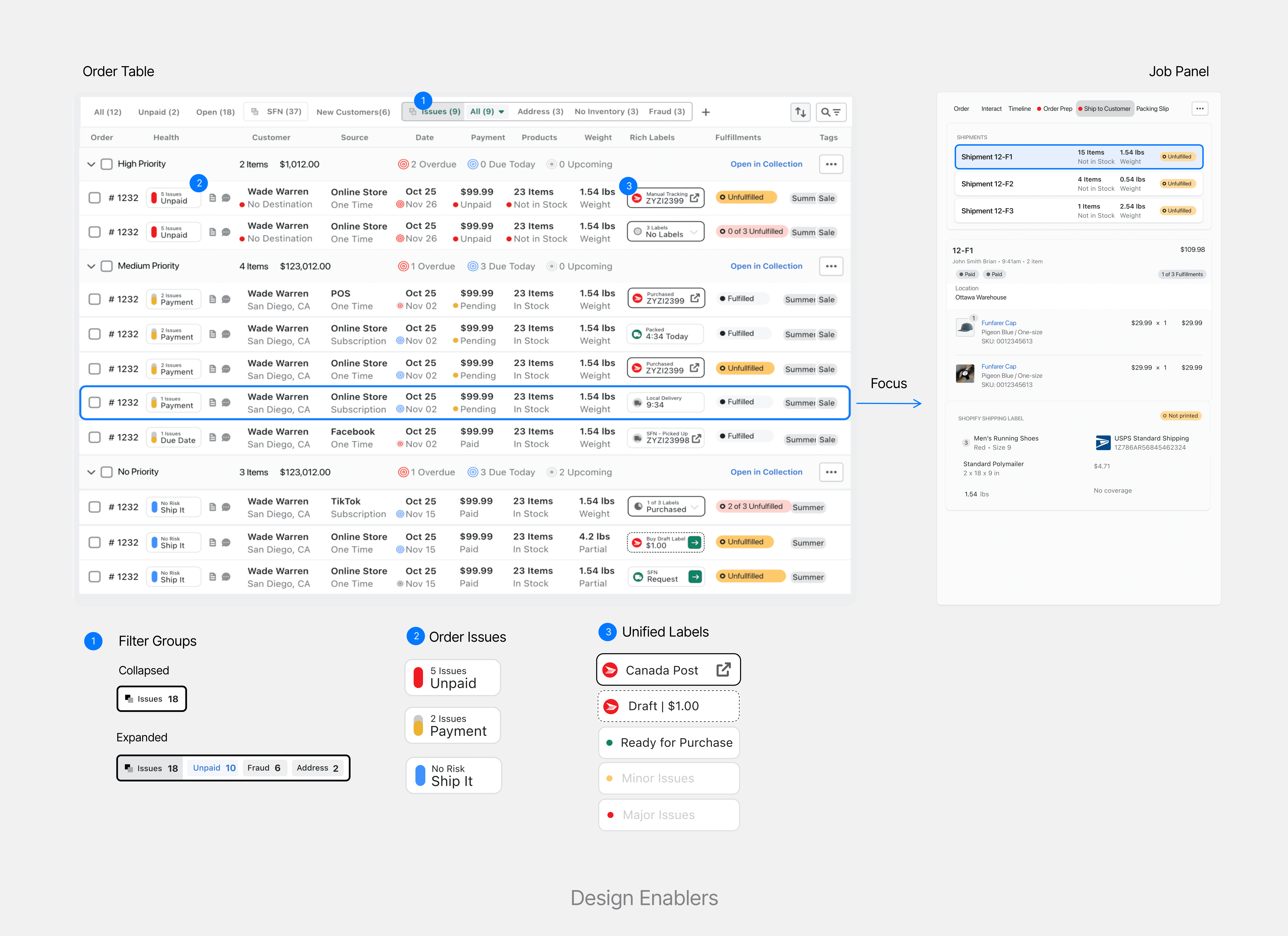
Unified Orders Surface
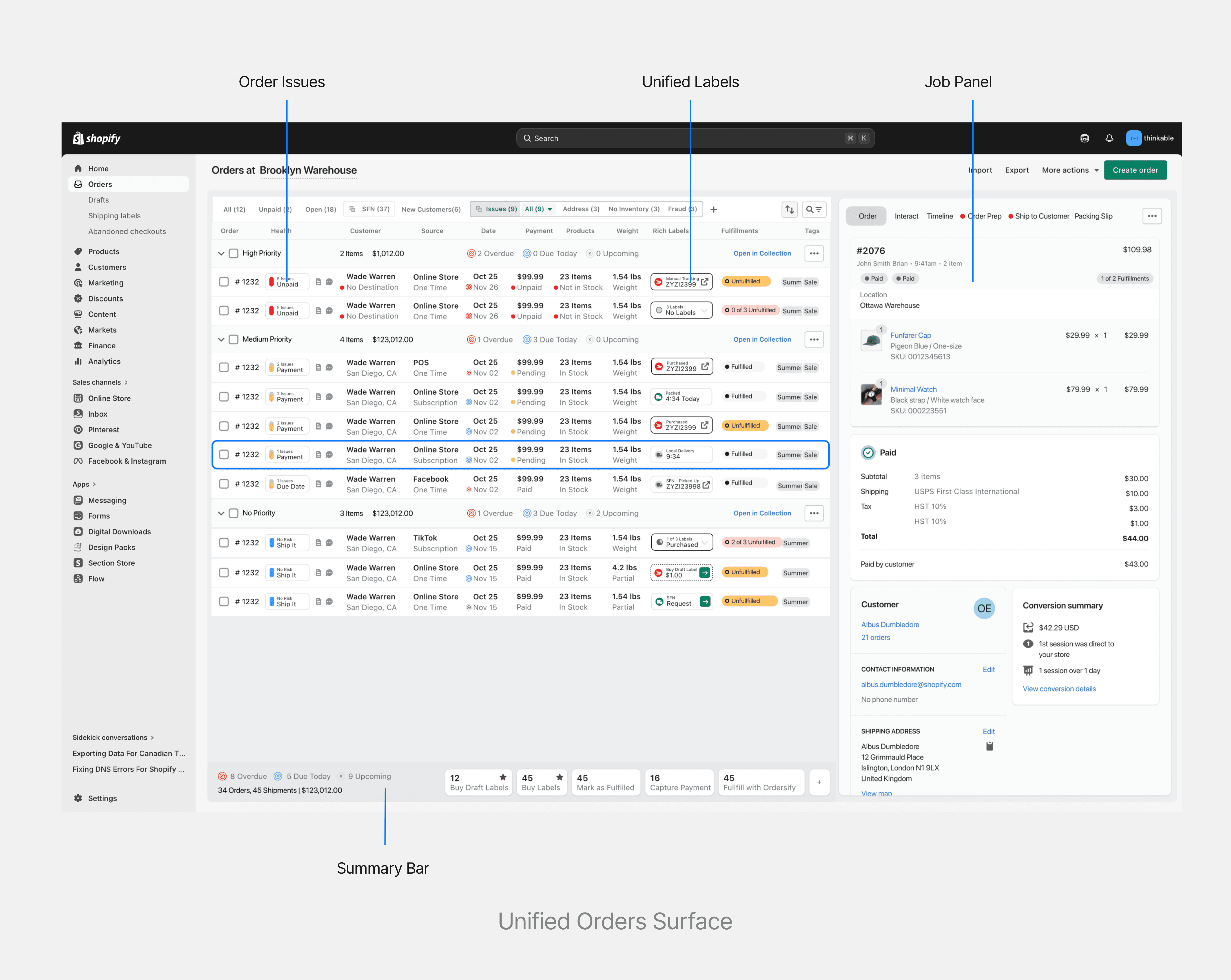
Problem: Three converging workstreams - returns, multi-package fulfillments, shipping labels - all touching the same surface with no unified direction.
Action: Reframed the problem space; ran cross-functional workshops across design, product, and engineering to build alignment and pressure-test direction.
Result: Consensus reached on a unified approach. Direction held up through stakeholder review.
Merchants didn't need a new destination. They needed a signal layered onto the surface they already trusted.
Green-pathing concepts kept merchants on the orders index - their home - but added a simple grouped header above it. Outstanding tasks surfaced as scannable counts: orders to fulfill, shipments pending, returns to process, and issues flagged. No context switch. Just signal.
Patents
Two patents came out of this engagement.
Point of Pack - a hands-free, orientation-adaptive UI for accelerating physical order packing - filed from the hackathon concept. A second patent, co-invented with the team, covers an AR system that detects purchased products via camera and surfaces contextual post-purchase actions. Granted January 2026.
A note on how I work
The through-line of this engagement isn't any single artifact. It's a way of working: research as a source of invention, not just validation. The packing workflow gap didn't come from a brief - it came from watching how merchants actually operated. Point of Pack came from that. Green-pathing came from the same instinct applied to the software side: what are merchants actually doing, versus what the product assumes they're doing?
That question is where the work starts.