HAVEN AI.
Scope
Project
Role
Year
/
Summary
(01)
A case study for humanizing intelligence (AI) in the built environment.
Solo founding designer on an AI-powered home protection platform. Reframed the product from reactive security system to proactive autonomous protection, invented three core interaction models - the Circular Floorplan, the Adaptive Interface, and Threshold Tracking - and delivered a complete design stack (brand, ID, UX, pitch) in under nine months. Work contributed directly to the company's acquisition by Katerra.
Outcome
Championed product vision by reframing Haven from security to protection - shifting from reactive monitoring to proactive protection, expanding market appeal and underpinning acquisition narrative
Built Haven's design identity as a solo founding designer - brand, hardware, app, pitch materials, making it an attractive AI + ML product and setting up for acquisition
Defined an AI-Adaptive User Interface OS across proximity states - from hands-free to touch - driven by occupant presence and sensor for natural operation.
Delivered the product design for a next generation OS that contributed to Haven's acquisition by Katerra. The product vision and narrative were core to Katerra's mission
Read the case study below
/
Case Study
(02)
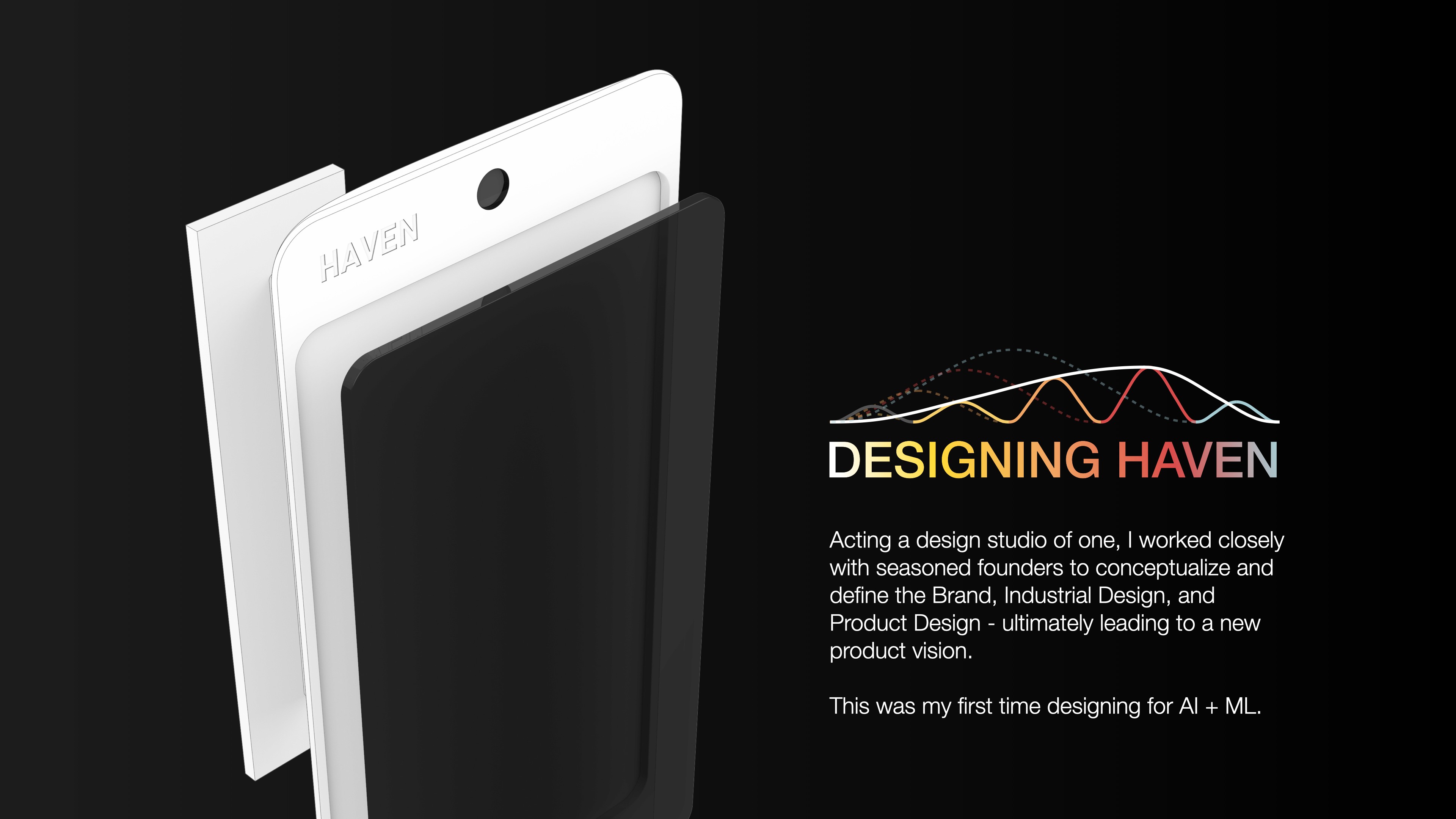
Designing HAVEN
Problem / Challenges
A small stealth startup had built an at-edge AI platform using sensor fusion to detect occupancy, recognize individuals, and automate home security. The technology was credible. The product didn't exist yet - no brand, no form, no interface, no investor story.
The core design problem: if the AI platform was working autonomously, the physical screen on the wall would become an ornament. The conventional security panel interaction model - arm, disarm, check alerts - didn't justify a dedicated device or a meaningful user experience.
A secondary challenge was onboarding. Traditional security systems require homeowners to manually program zones and floor plans - a configuration burden most users can't complete accurately and shouldn't have to.
Actions
Reframing the Vision
Direct immersion - observing how families move through their homes, speaking with homeowners - surfaced the real opportunity. If you already know who's home, when they leave, when they return, and what's normal versus anomalous, the system can do far more than guard a perimeter. It can guard the people inside it. The child near the pool. The elderly parent leaving without a coat. The teenager past curfew.
That insight shifted the product from reactive "home security" to proactive "autonomous protection." Haven stopped being a security panel and became a family protection platform. That reframe drove every decision that followed.
Outcome
Reframed product from home security system to autonomous protection platform - the strategic shift that defined the acquisition narrative
Executed complete design stack solo in under nine months: brand, industrial design, interaction design, design language, scenario design, and investor pitch
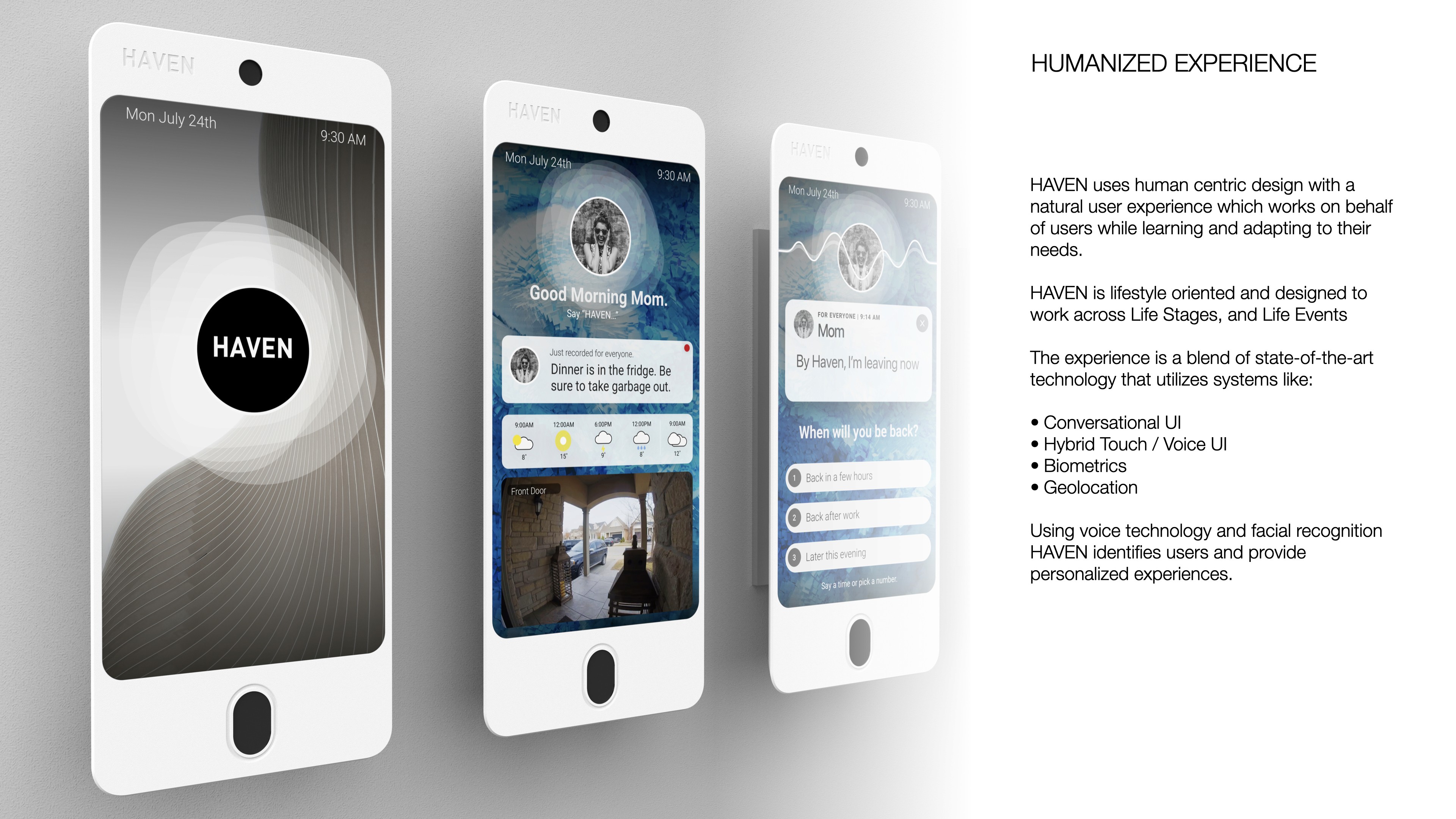
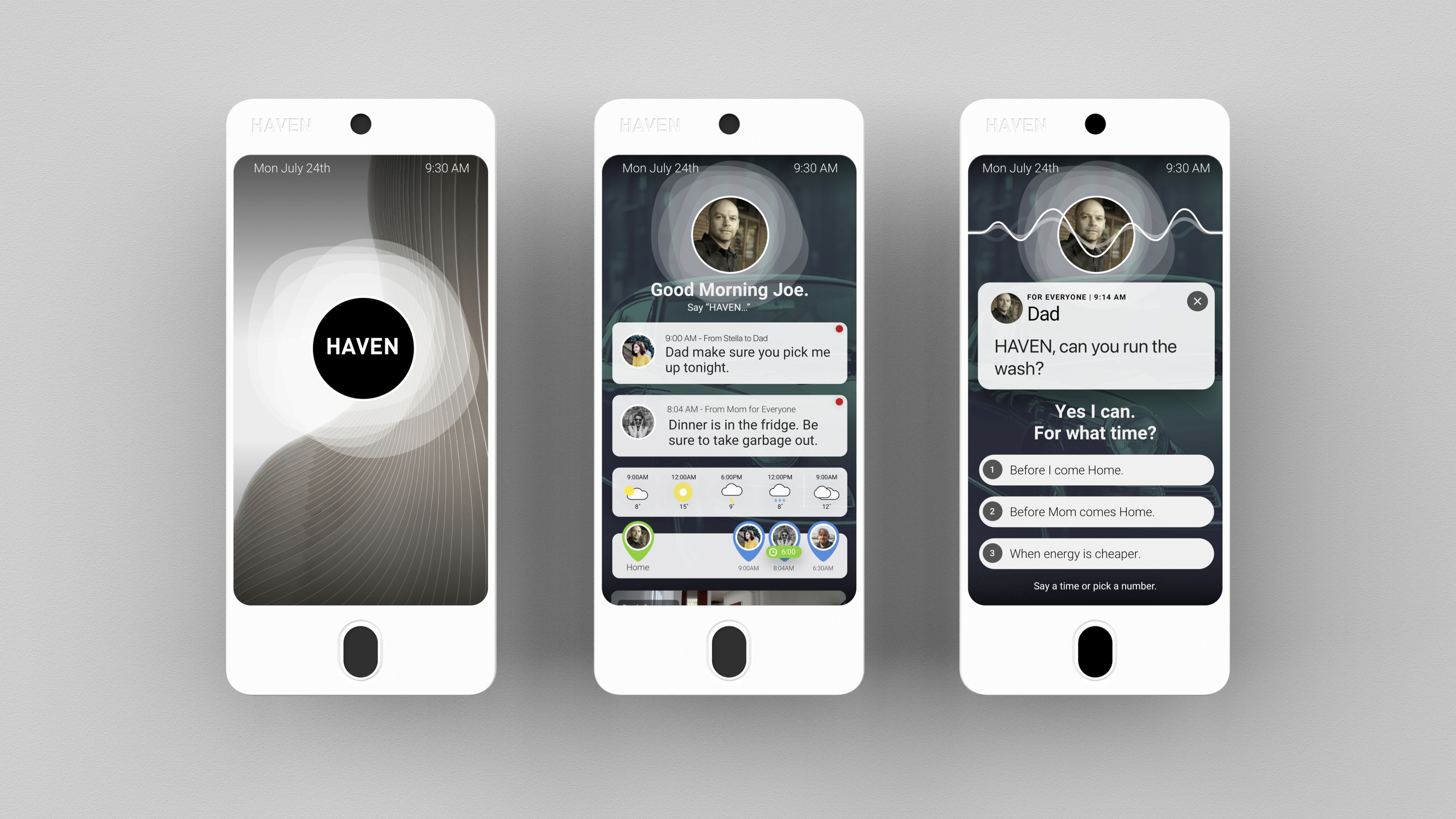
Designed a five-state Adaptive Interface driven by proximity and facial recognition - personalizing a wall-mounted display per occupant in real time
Architected Threshold Tracking - an occupancy-based interaction model grounding AI behaviour in cognitive science research
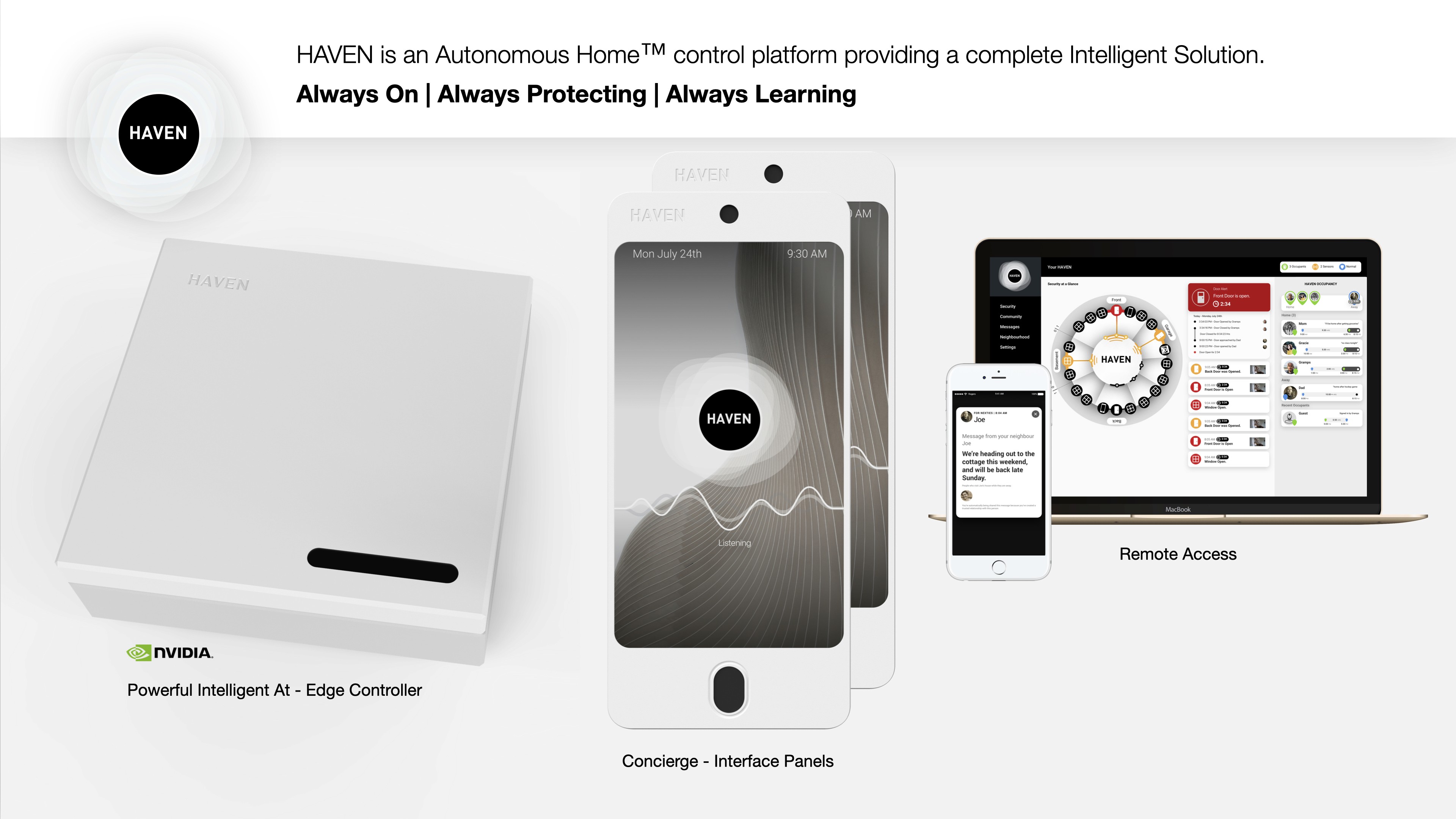
Invented the Circular Floorplan - novel spatial abstraction eliminating floor plan configuration, deployed across console, mobile, and web as a unified design system component
Designed six named protection behaviours covering diverse family types, life stages, and occupancy scenarios
Work directly contributed to company acquisition by Katerra
Designing for AI - What Haven Taught Me
Haven was built in 2017, before designing with AI had a vocabulary. There were no established patterns, no precedents, no playbook. Every decision about how to represent intelligence, how to surface it, when to show it and when to let it recede - had to be invented from first principles.
The first lesson was about trust. AI that announces itself too loudly creates anxiety.
The second lesson was about identity. Generic AI is impersonal AI. The Personalized Feed wasn't just a UX pattern - it was an argument that intelligence becomes valuable when it knows who it's talking to.
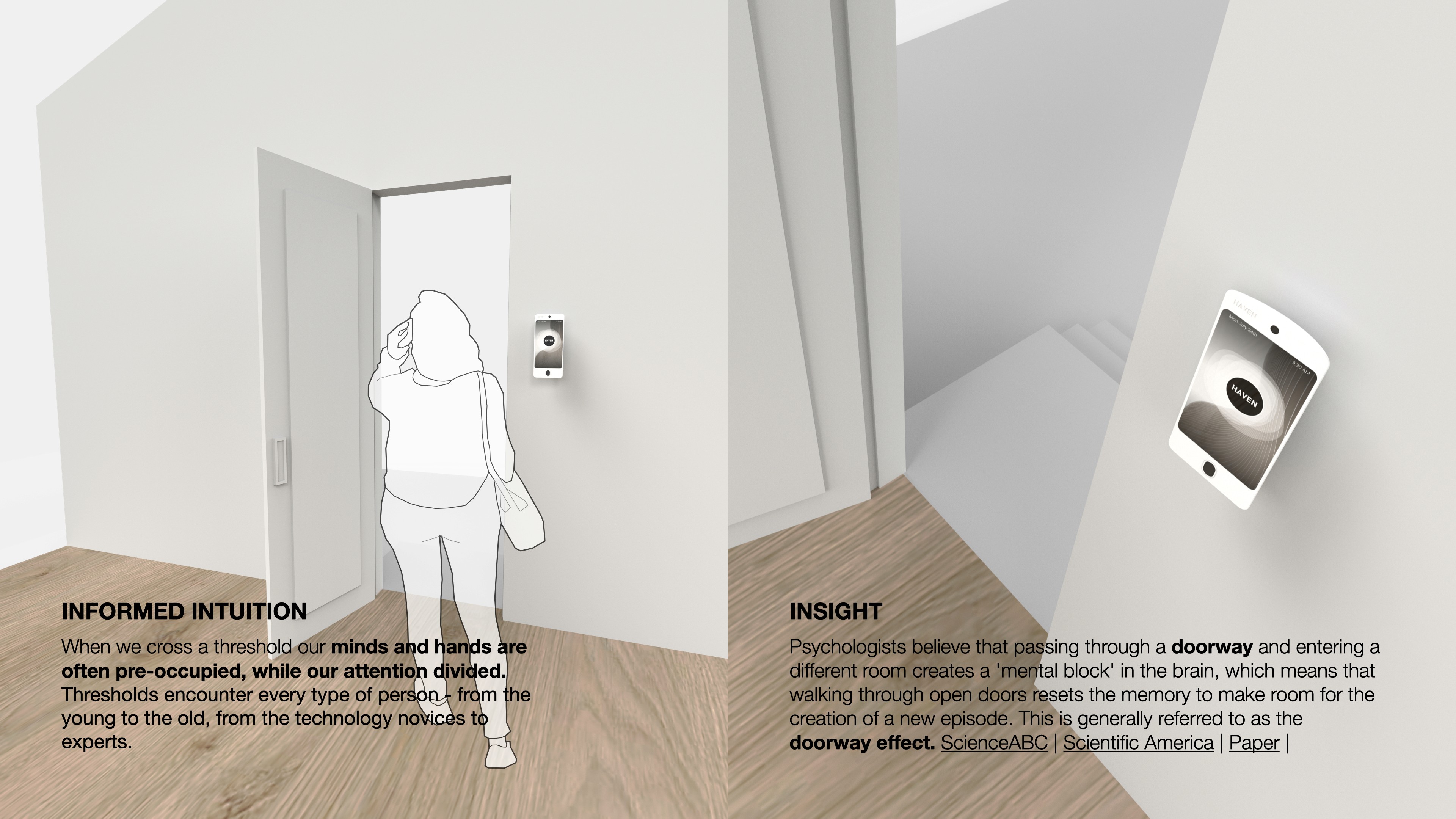
The third lesson was about natural timing. The Doorway Effect research gave the design a principled answer to when HAVEN should speak: at the threshold, where attention naturally pauses, where memory is most vulnerable.
/
Vision
(03)
HAVEN Product Vision
Product Features
Six core behaviours, each named as an action rather than a function:
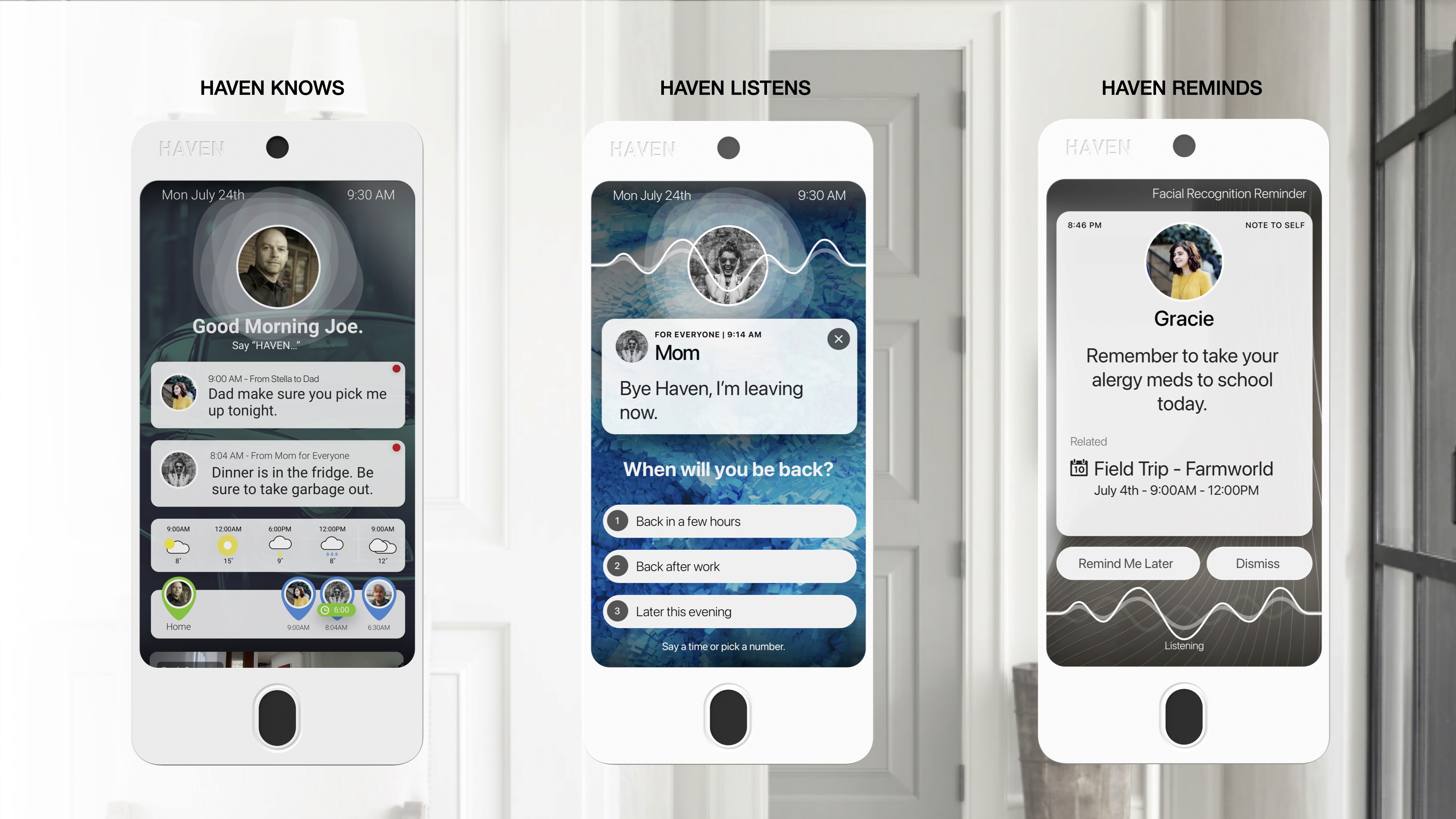
HAVEN Knows - recognizes each occupant by face, adapts the entire experience to them personally.
HAVEN Listens - voice or touch, natural interaction, learns from behaviour over time.
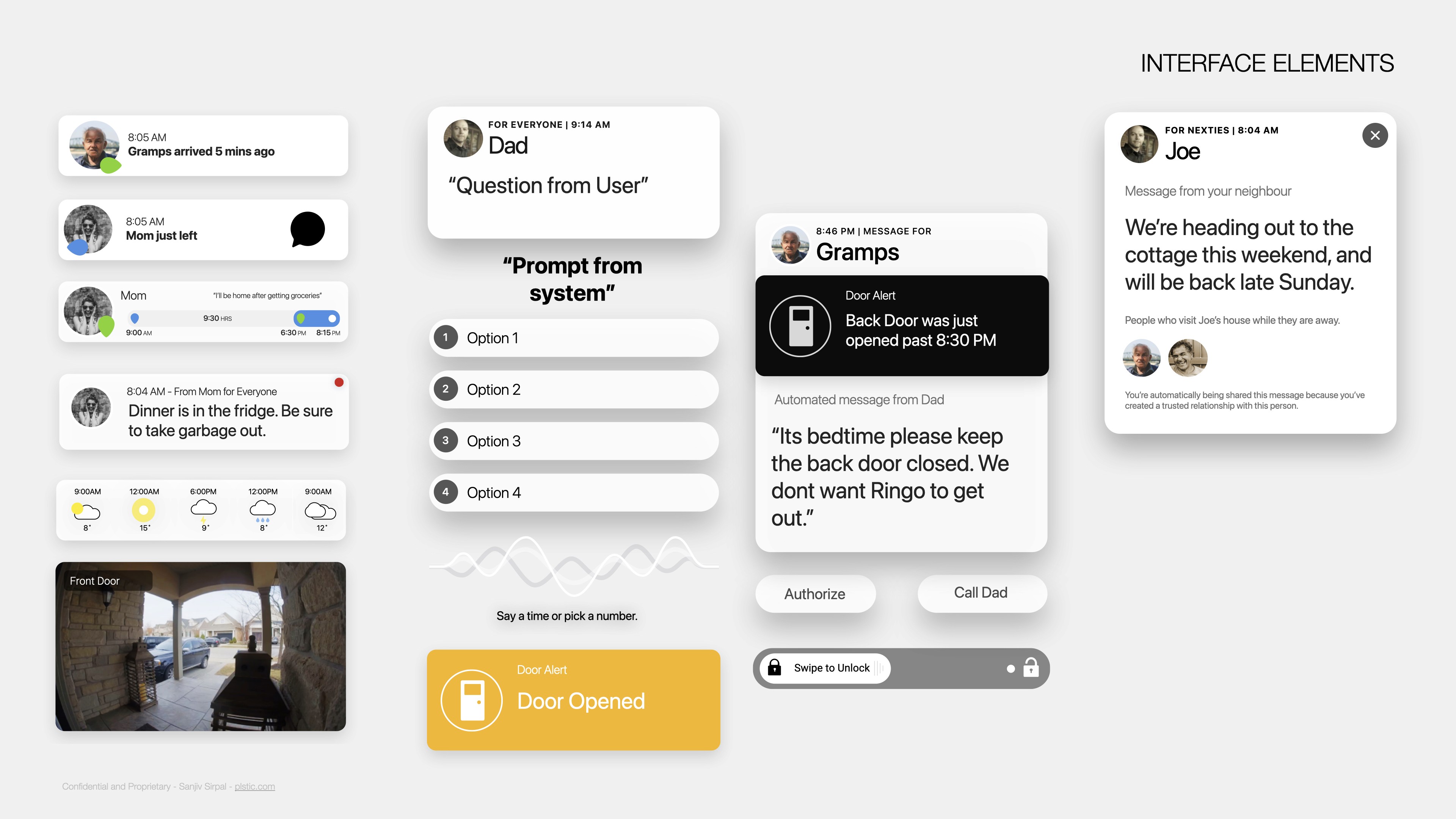
HAVEN Reminds - intervenes at the threshold where the Doorway Effect makes people most likely to forget. Gracie's allergy meds tied to her field trip. Dad's reminder to pick up the kids. Triggered by recognition, not a schedule.
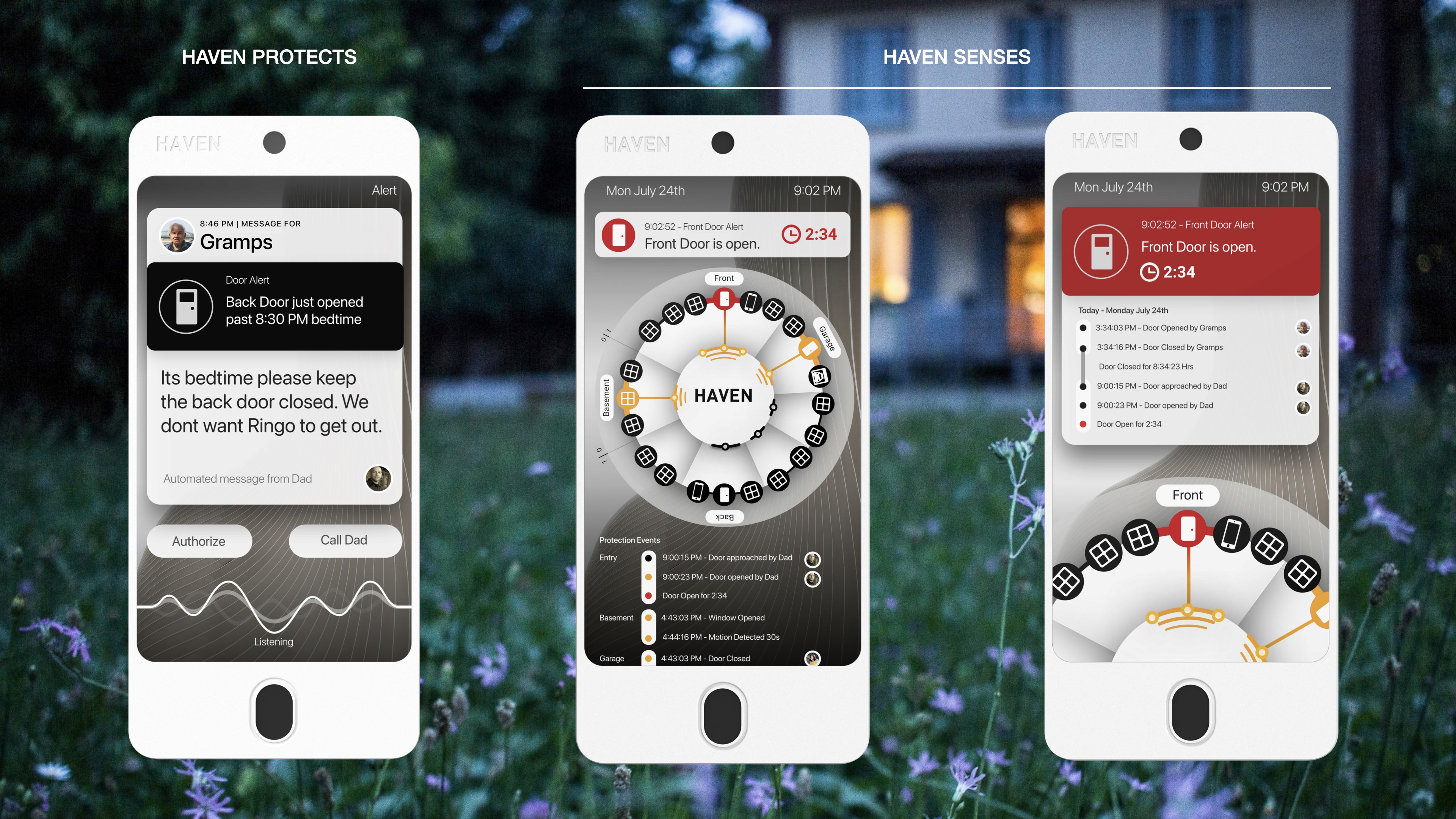
HAVEN Protects - alerts with context and a clear action. Not "back door opened" - "back door opened past Gramps' 8:30 PM bedtime" with an automated message from Dad queued and Call Dad one tap away.
HAVEN Senses - builds a model of normal household activity. Surfaces only genuine anomalies.
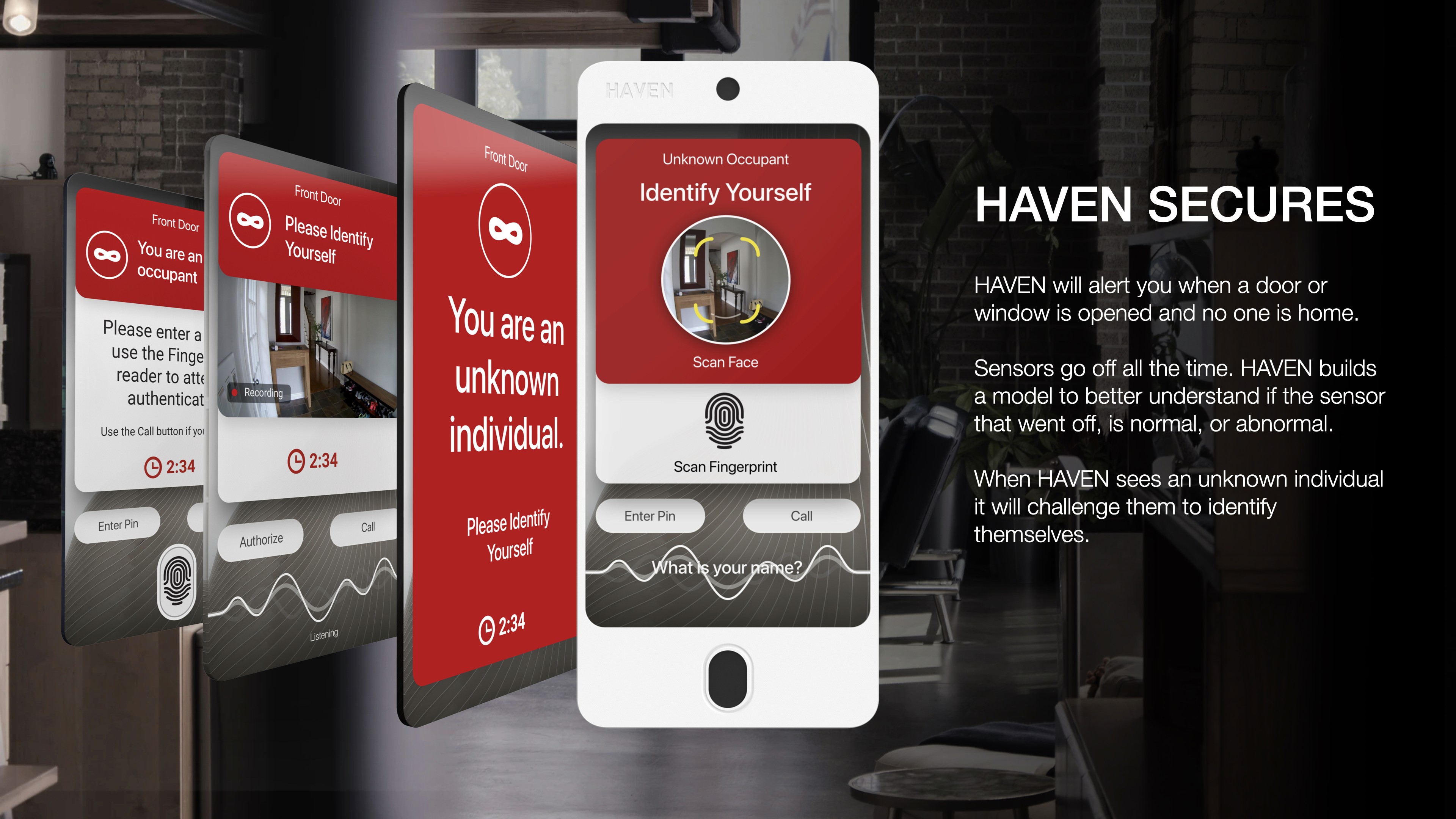
HAVEN Secures - unrecognized individual detected: experience inverts. Device becomes an intermediary - challenge, record, open a direct line to the homeowner. Not a lockout. A conversation.
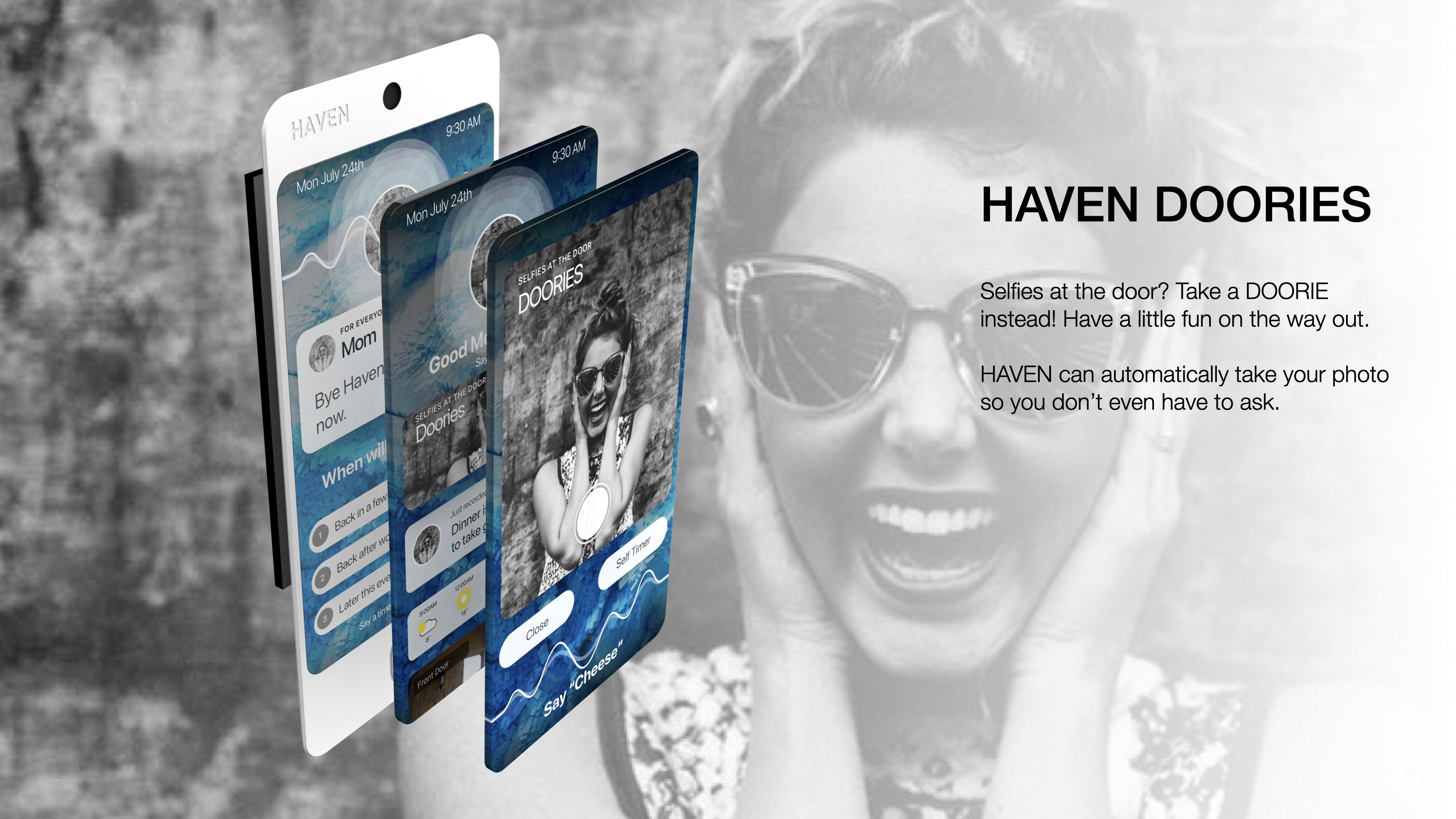
HAVEN Doories - automatic selfie at the door on your way out. A deliberate moment of delight in a product built around vigilance. It showed the system had range.
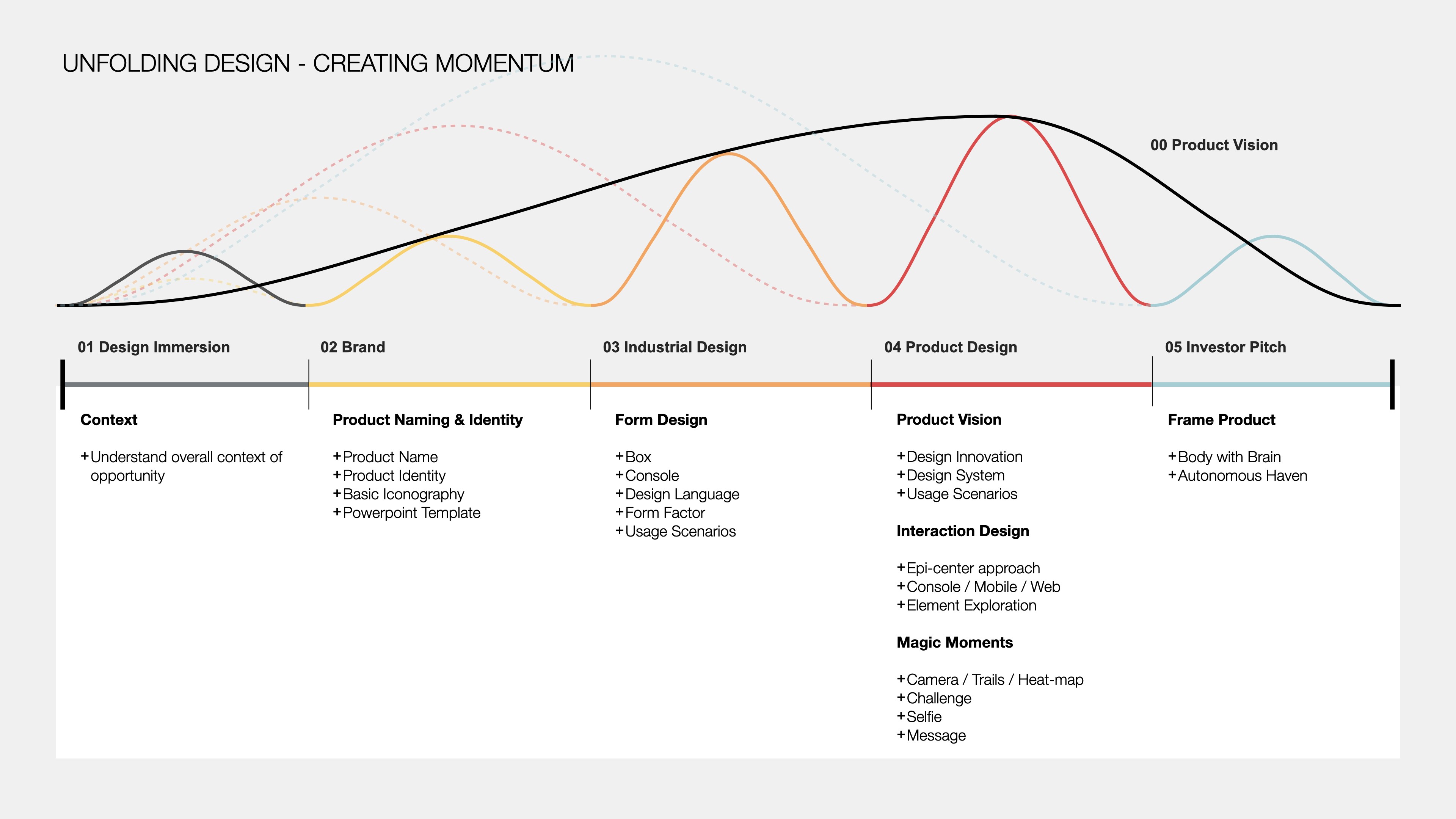
Unfolding Design
The project was sequenced deliberately across five phases, each building on the last to create momentum - and to generate collateral that made the technology increasingly tangible to founders and investors.
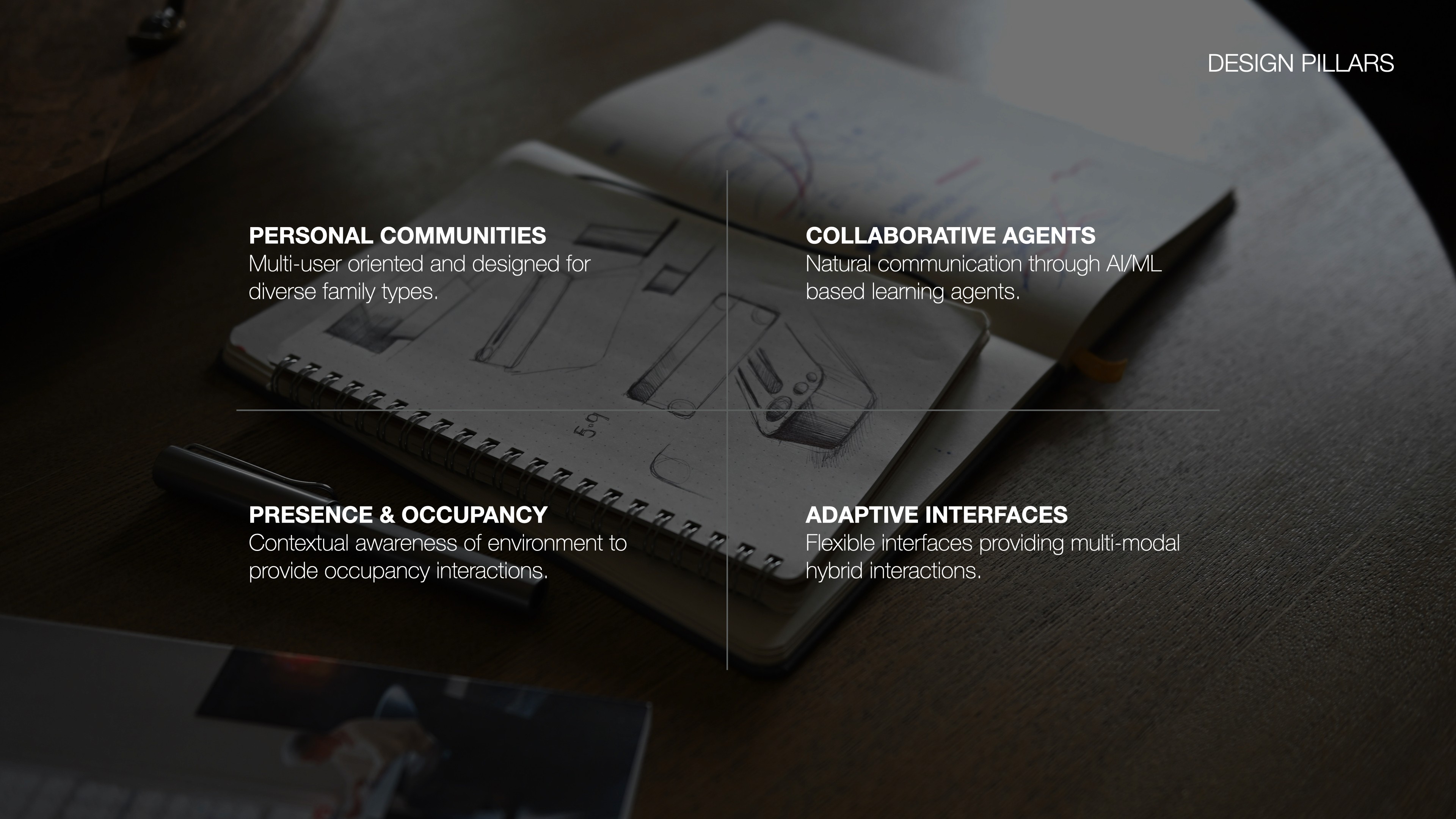
01 Design Immersion - Mapped competing design threads in a Signal to Noise exercise. Identified priorities. Established four design pillars: Personal Communities, Collaborative Agents, Presence & Occupancy, and Adaptive Interfaces.
02 Brand - Creating Immediate Product Value - Brand before hardware for a deliberate reason: a named product creates belief. HAVEN as name, mark, and communication system transformed a technology concept into something people could imagine owning.
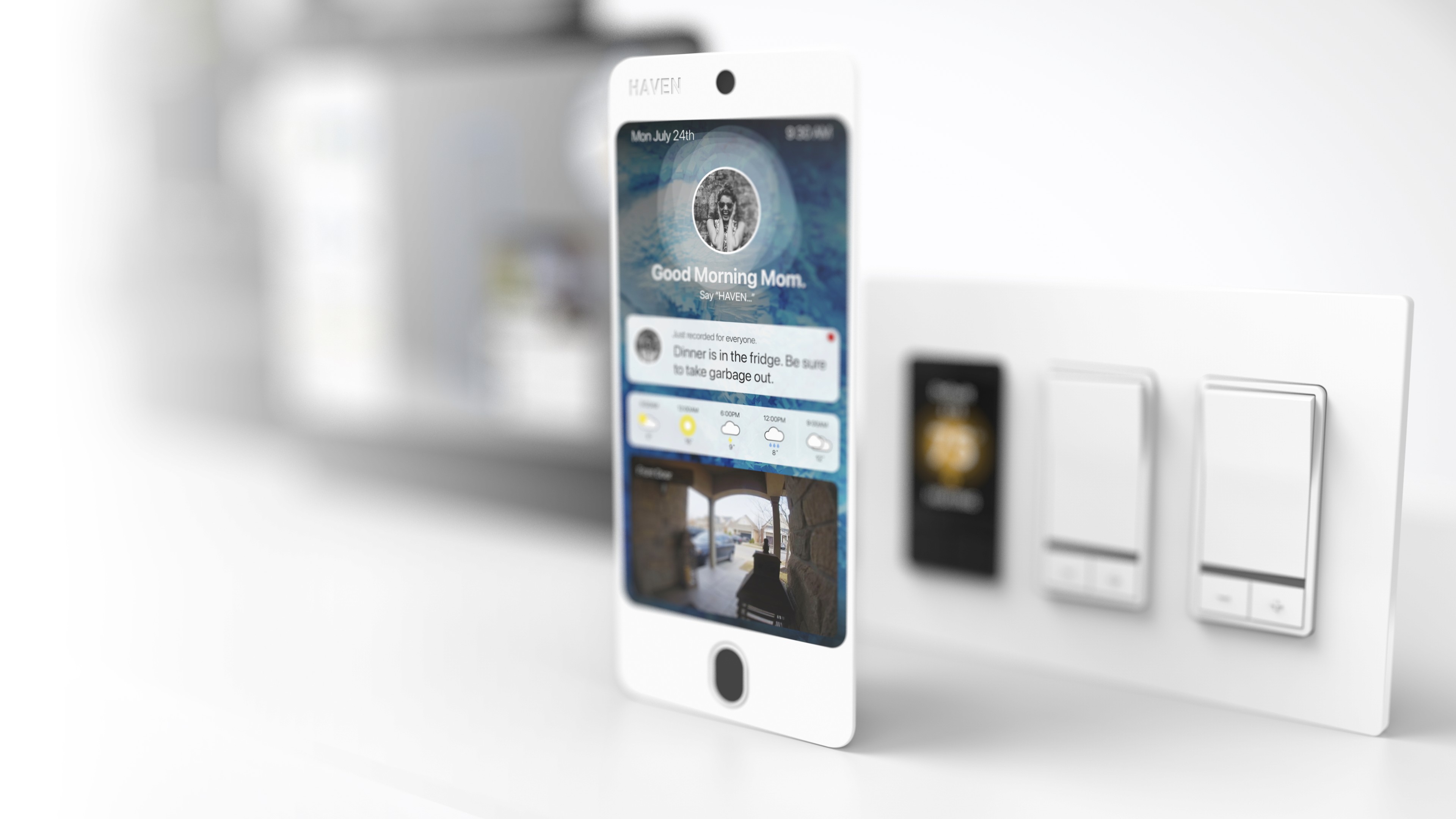
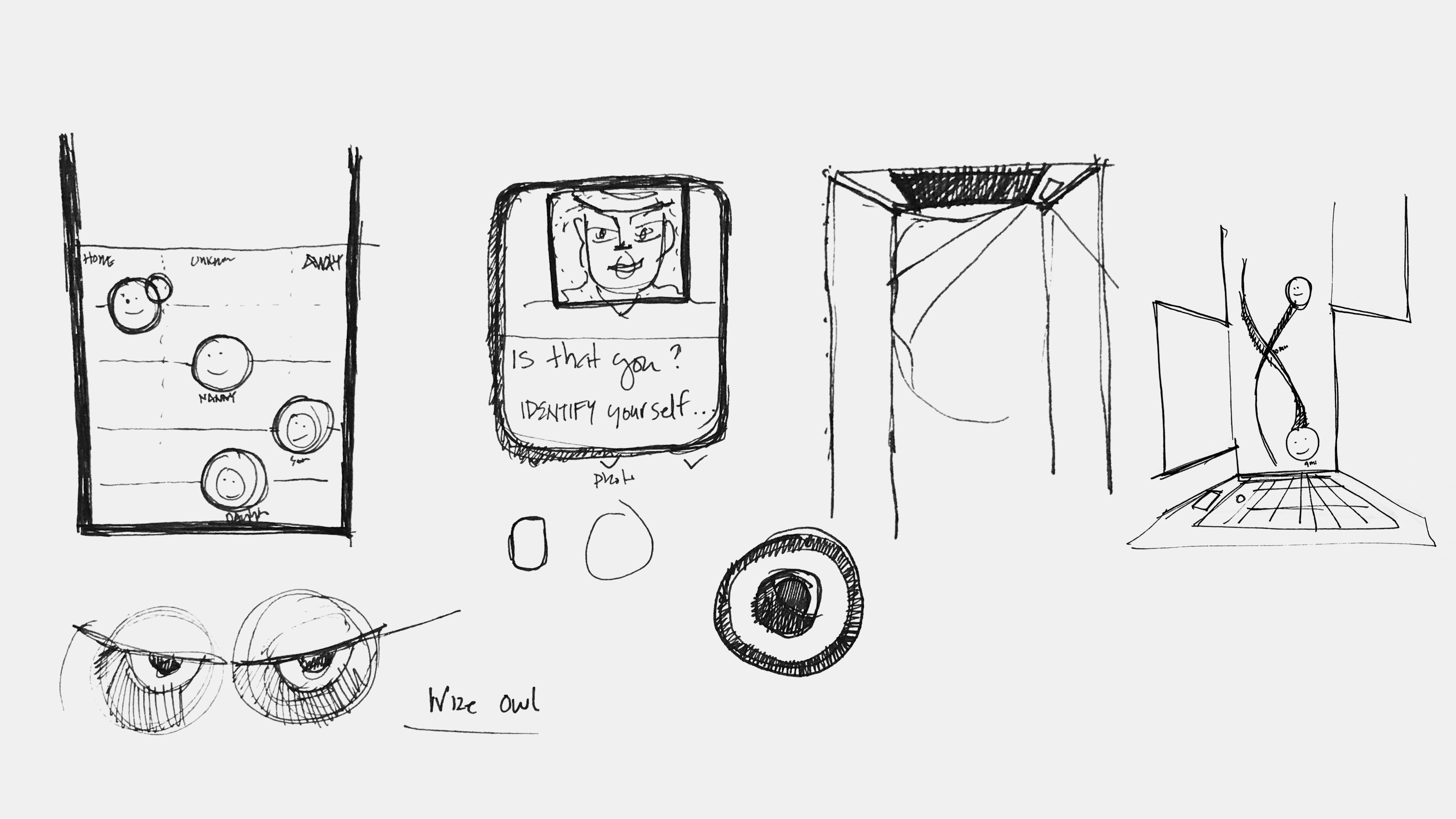
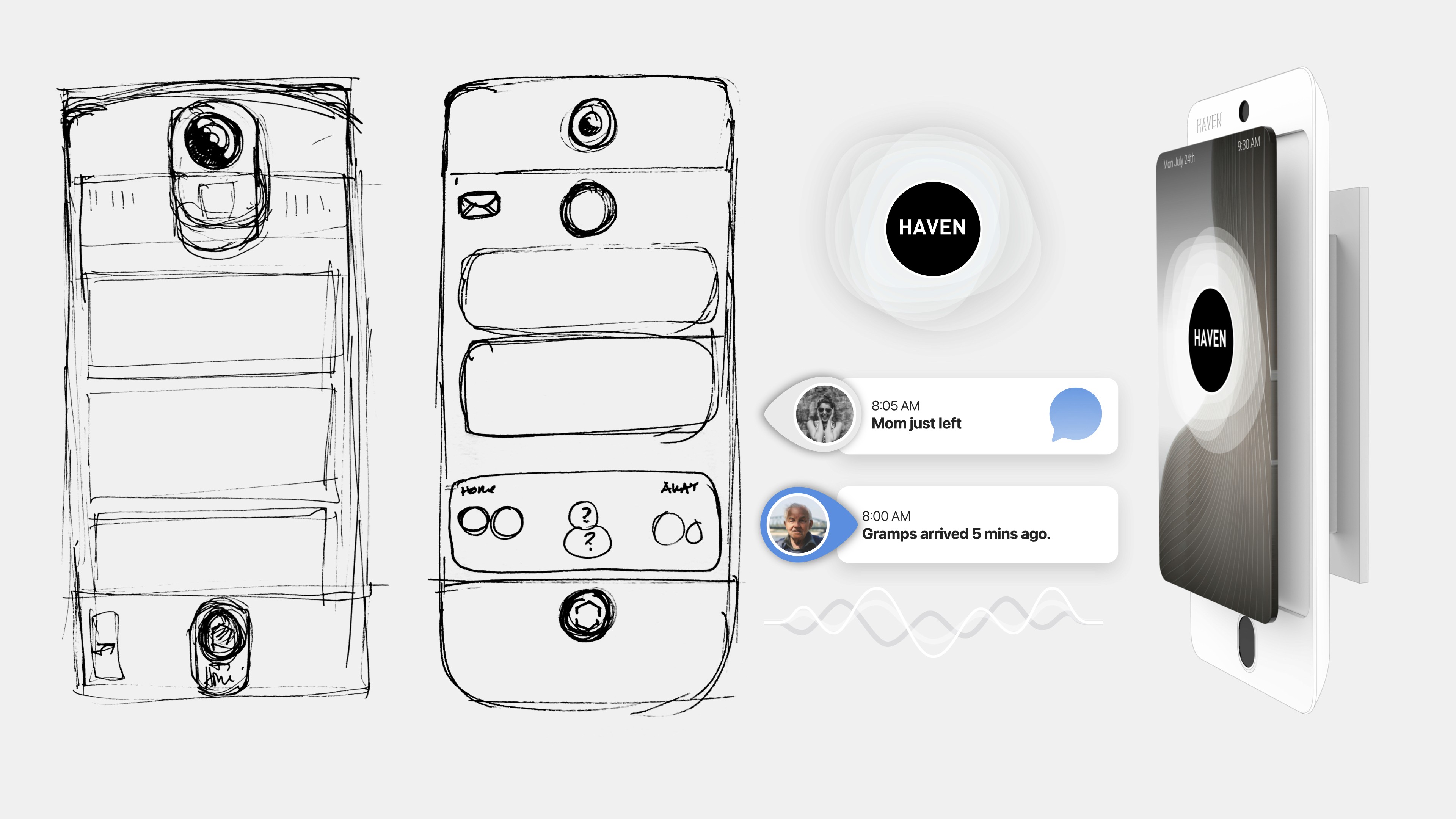
03 Industrial Design - Solving the Form Problem - Designed a wall-mounted console that worked at multiple distances - readable across a room, usable at arm's length, recognizable as a product category that didn't yet exist. Gave the pitch deck a physical object to anchor the vision.
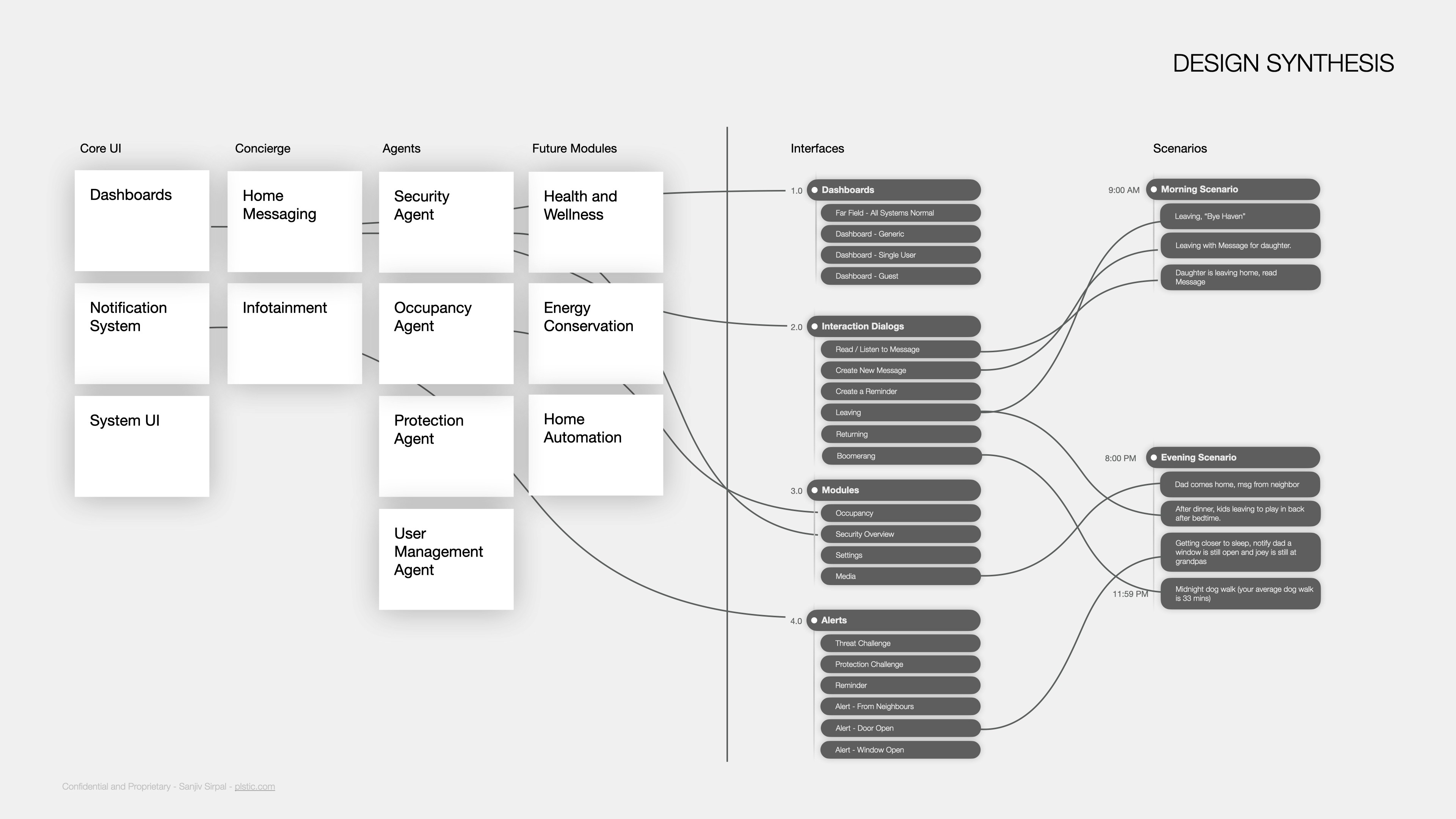
04 Product Design - Solving the Interaction Problem - Three core innovations emerged: the Circular Floorplan, the Adaptive Interface, and Threshold Tracking. Full scenario design produced six named behaviours expressed as real family moments across morning, evening, and overnight contexts.
05 Investor Pitch - Framing the Product - Assembled everything into a coherent investment story: Body with Brain (hardware + AI platform) and Autonomous Haven (the product vision). Not a feature summary - a demonstration that this was a real, designed, investable product.
Design Pillars
Doorway Effect - Research
User Stories to Product Features
Designing
Epicentre of the Interface - Control Panel or Dashboard?
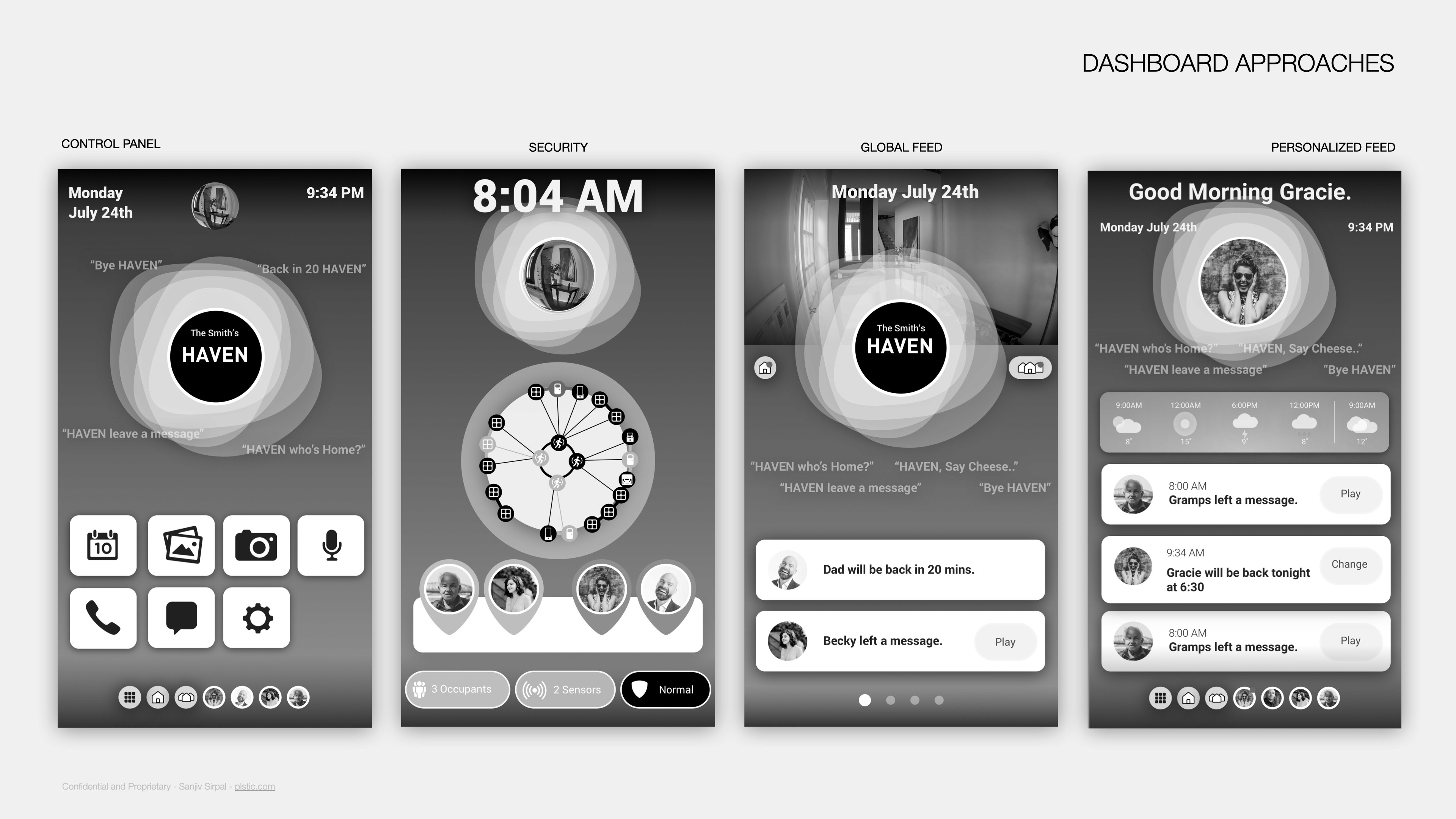
With the interaction system defined, a critical design question remained: what should the interface lead with when someone approaches? Security state, or personal context?
Four directions were explored:
Control Panel - function-first. Quick-access buttons, household overview, voice prompts at the perimeter.
Security - Circular Floorplan front and center. Live sensor state, occupancy count, protection status at a glance.
Global Feed - household stream. Door cam, family messages, occupancy updates as a scrollable feed.
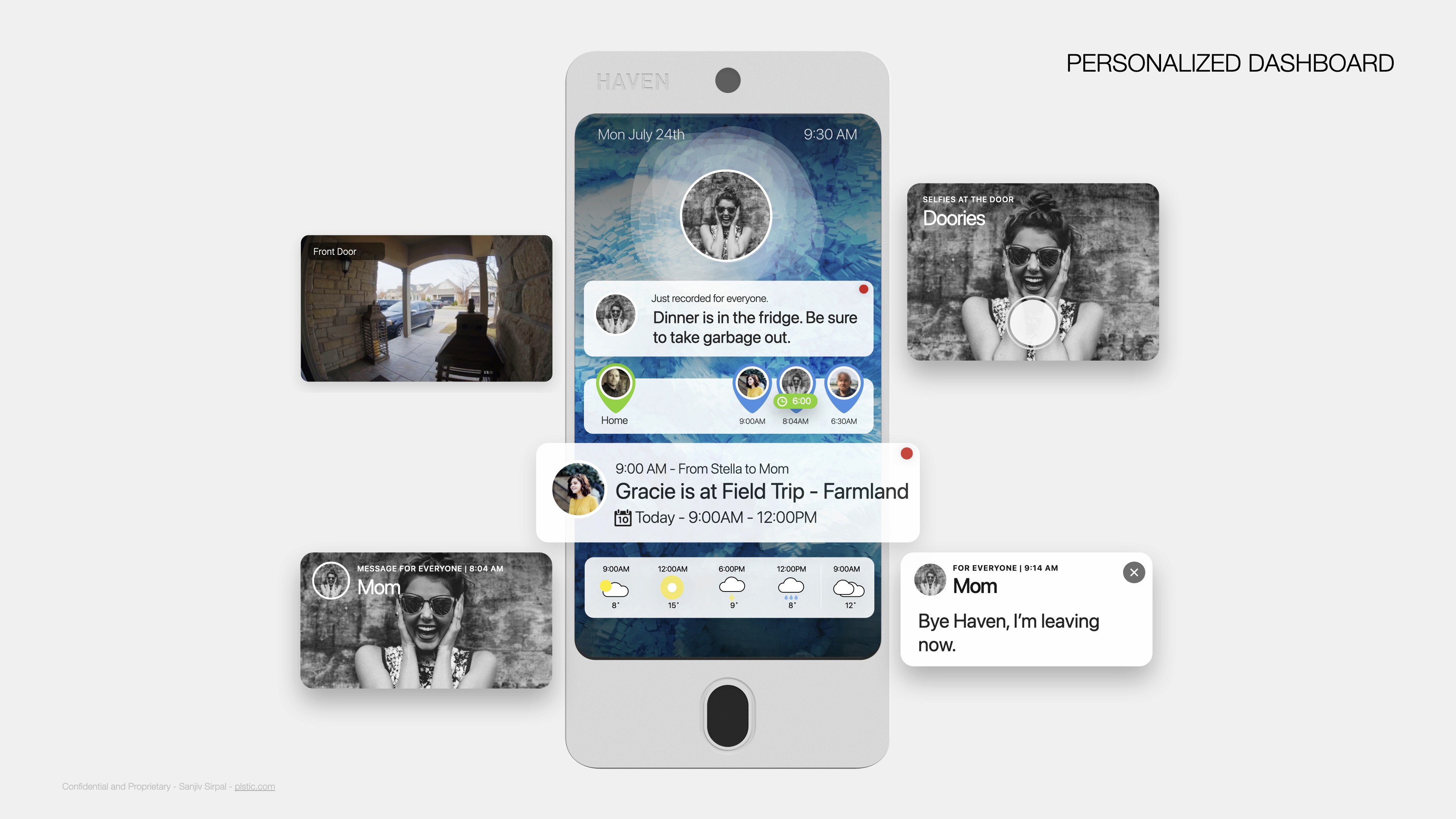
Personalized Feed - identity-first. Good morning Gracie. Your messages, your schedule, your family's context - built around you the moment you're recognized.
The decision wasn't made in a design review. It was made over wine and cheese - presenting the four directions informally to the founders, a small team who were, in many cases, their own target users. The Control Panel felt like a better version of something people already tolerated. The Security view was powerful but narrow. The Global Feed showed promise but lacked a personal hook.
The Personalized Feed landed differently. It sparked a different conversation - about their own families, their own mornings, what it would feel like to have the house acknowledge you by name on your way out. That response was the signal. The product moved toward identity-first, with everything else personalized downstream.
Design System & Pattern Design
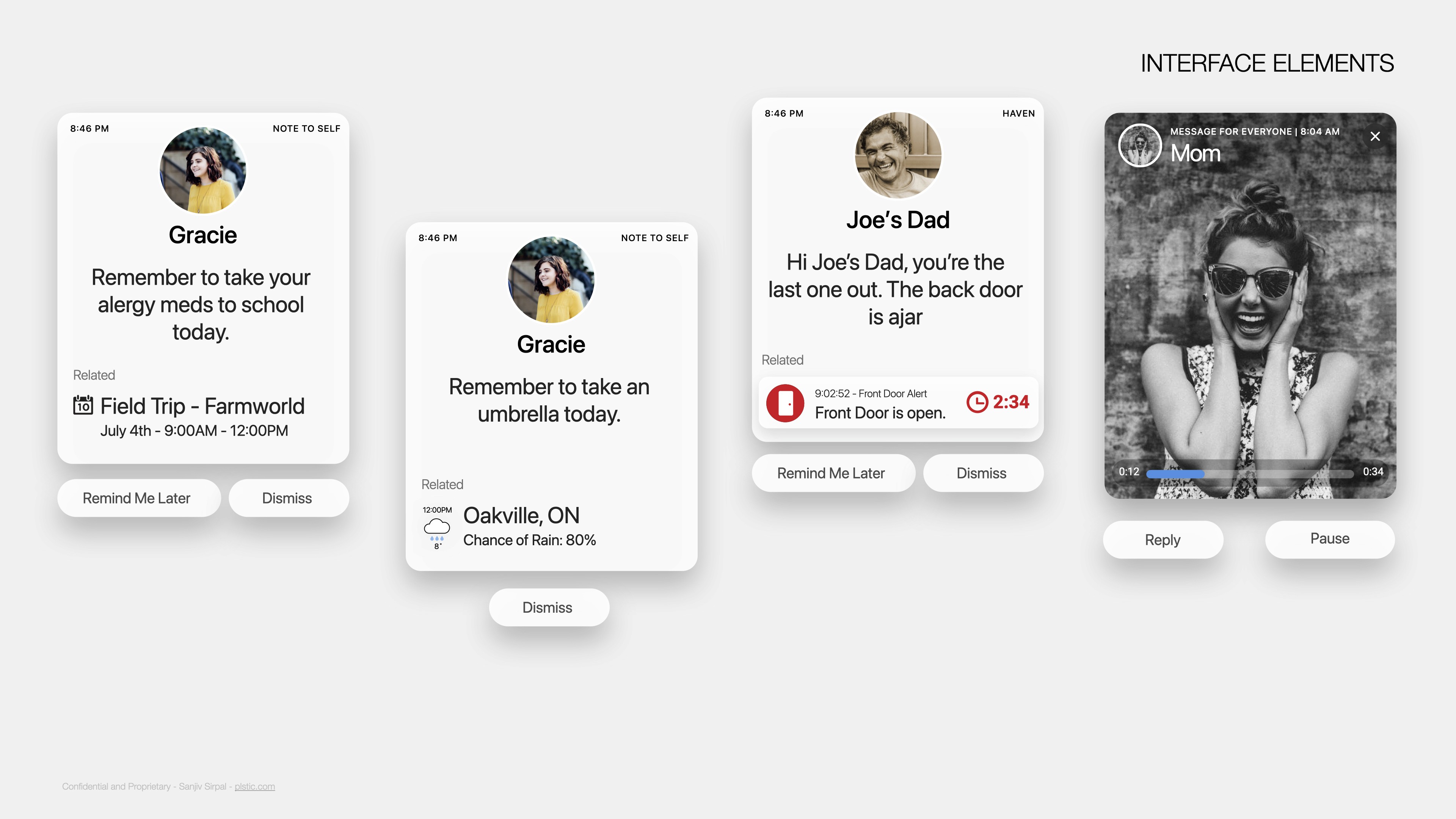
Interaction Design
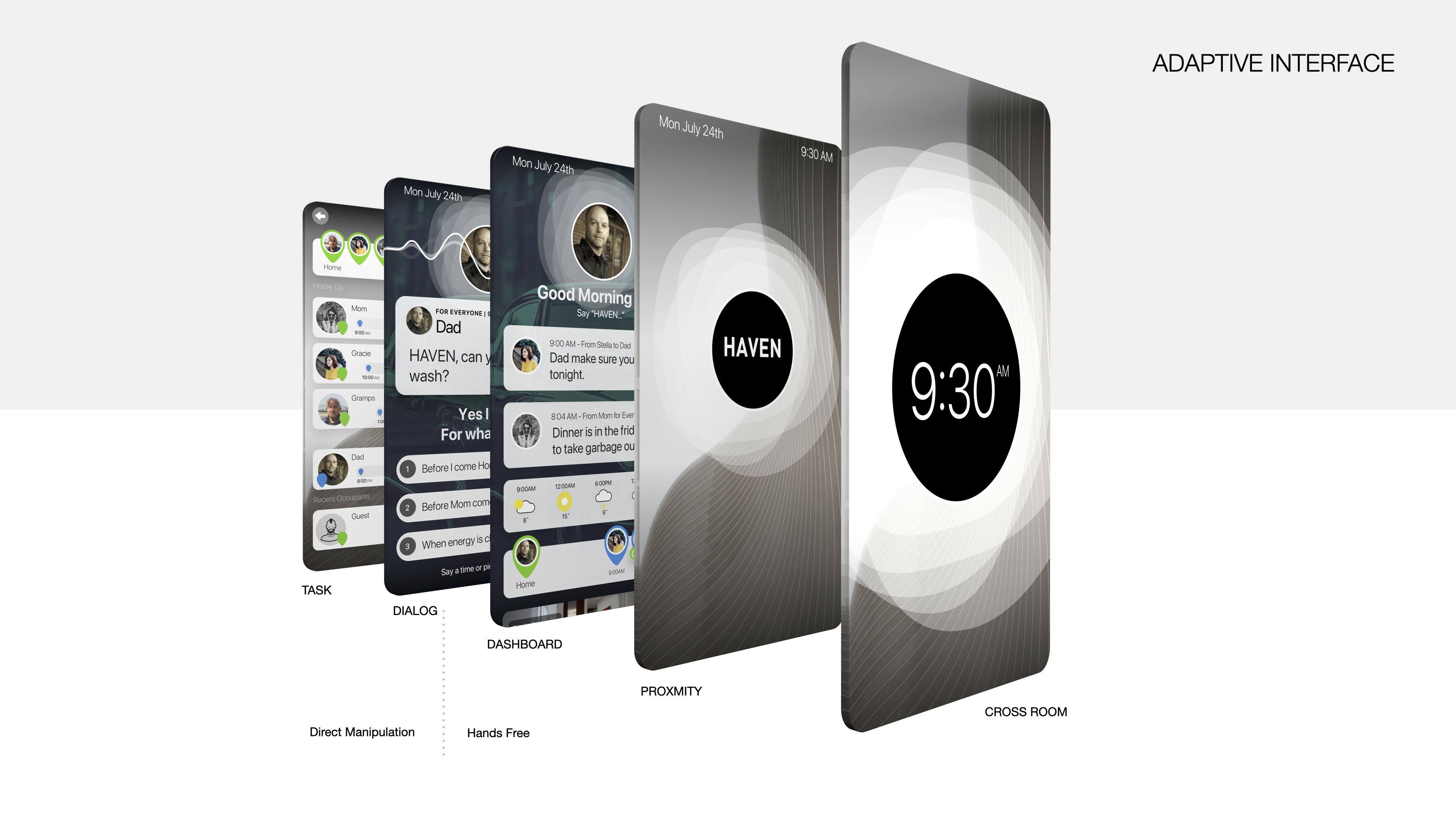
Adaptive Interface
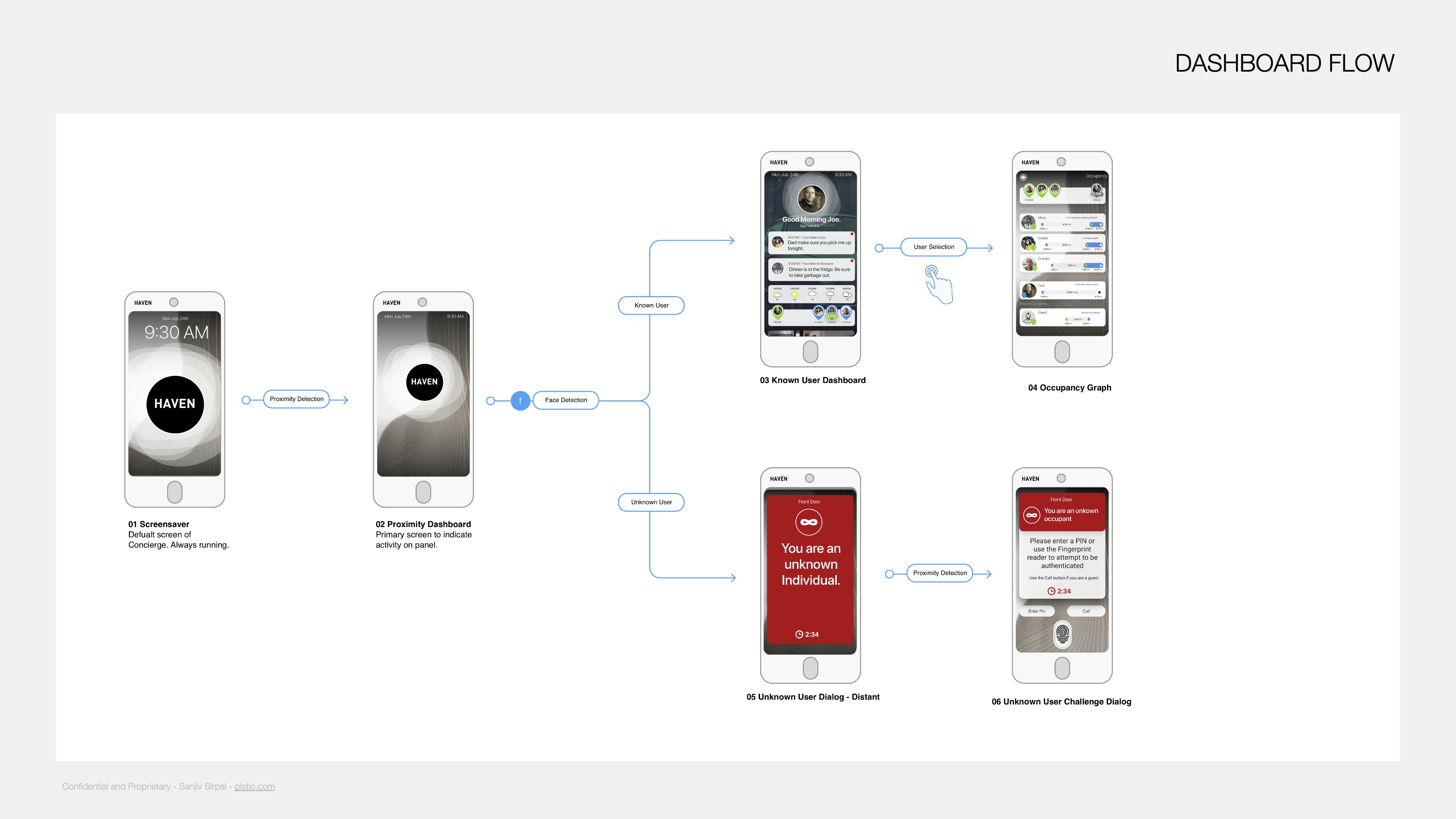
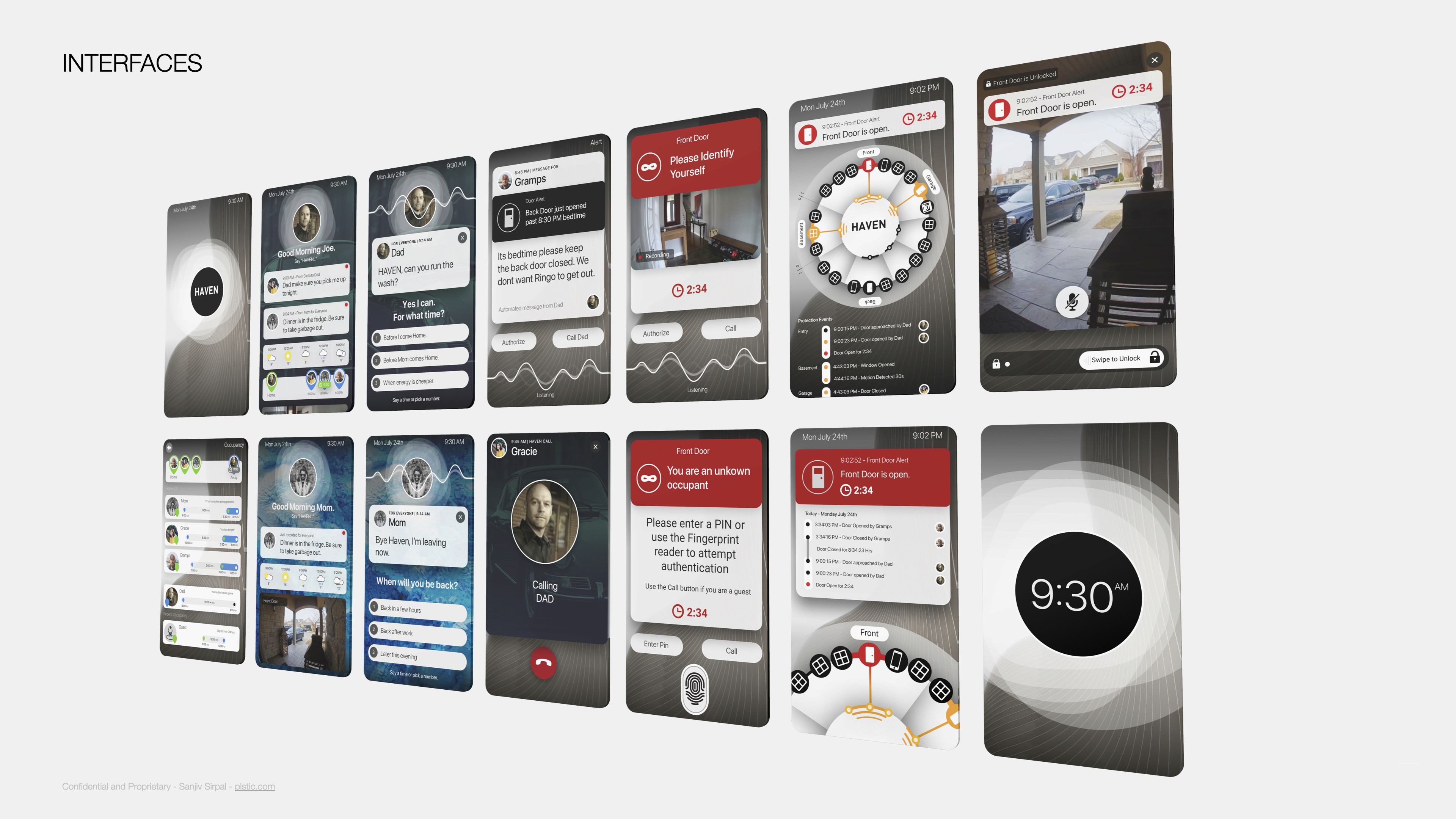
Designed around two axes: how close you are, and who you are. Five states shift based on proximity and facial recognition:
Cross Room - ambient time display. HAVEN present but quiet.
Proximity - approach detected, listening state activates. Ready before you speak.
Dashboard - identity confirmed. Interface reconfigures entirely per occupant - Mom's view differs from Gracie's differs from Gramps'.
Dialog - hands-free voice. Suggests return times based on past behaviour, updates occupancy model. Designed for hands full of groceries.
Task - direct manipulation. Familiar, immediate. Operates like a phone.
The system drives the transitions - not the user.
Tracking the Threshold
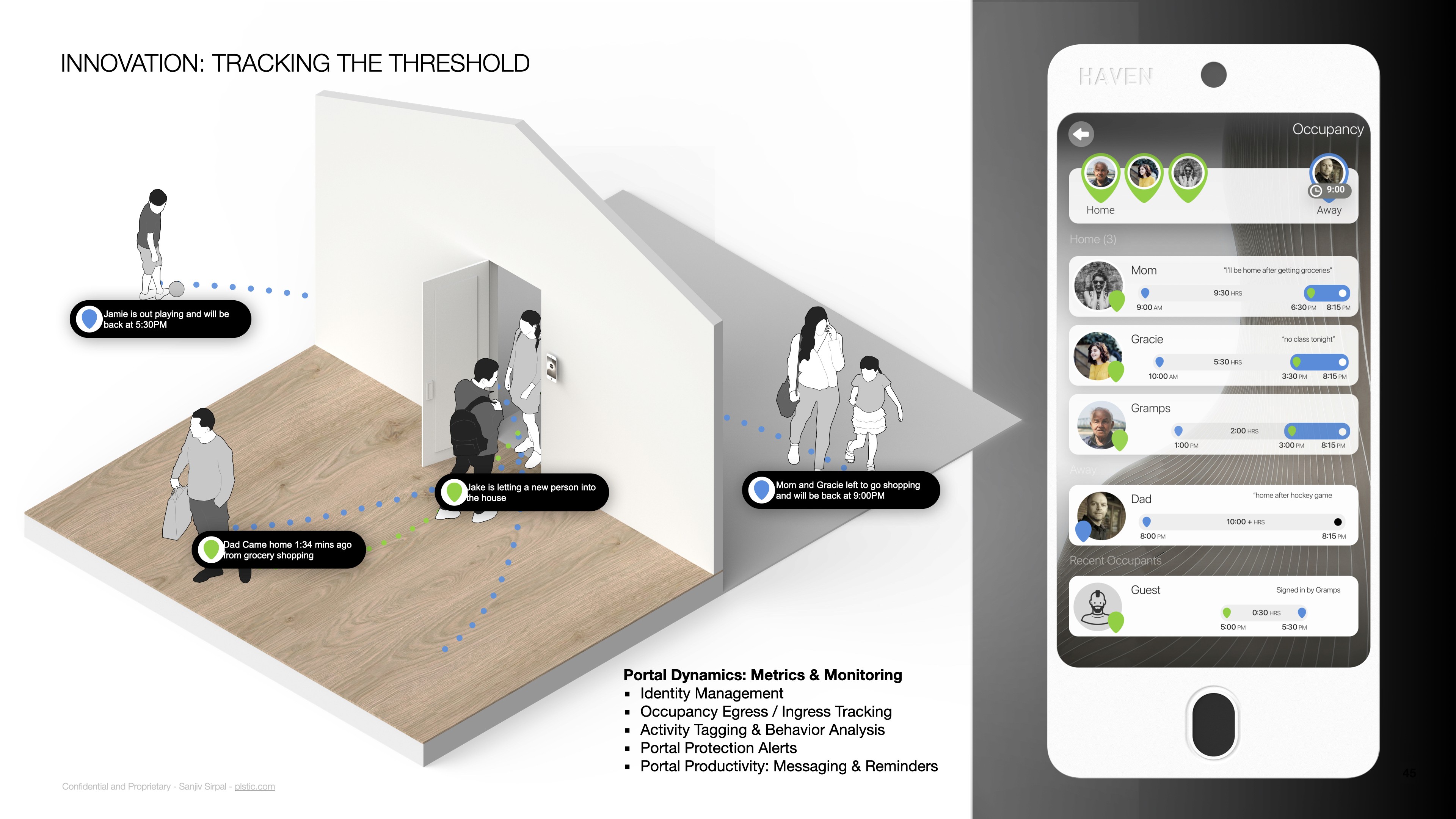
Framed the door as the primary data collection point for the entire protection model. Every ingress and egress event builds the occupancy picture that powers proactive protection. The system learns normal household rhythms and treats deviation as the signal - not just sensors firing.
Grounded in the Doorway Effect: the cognitive phenomenon where crossing a threshold resets working memory. HAVEN intervenes at exactly that moment, surfacing what matters before it's forgotten.
Circular Floorplan
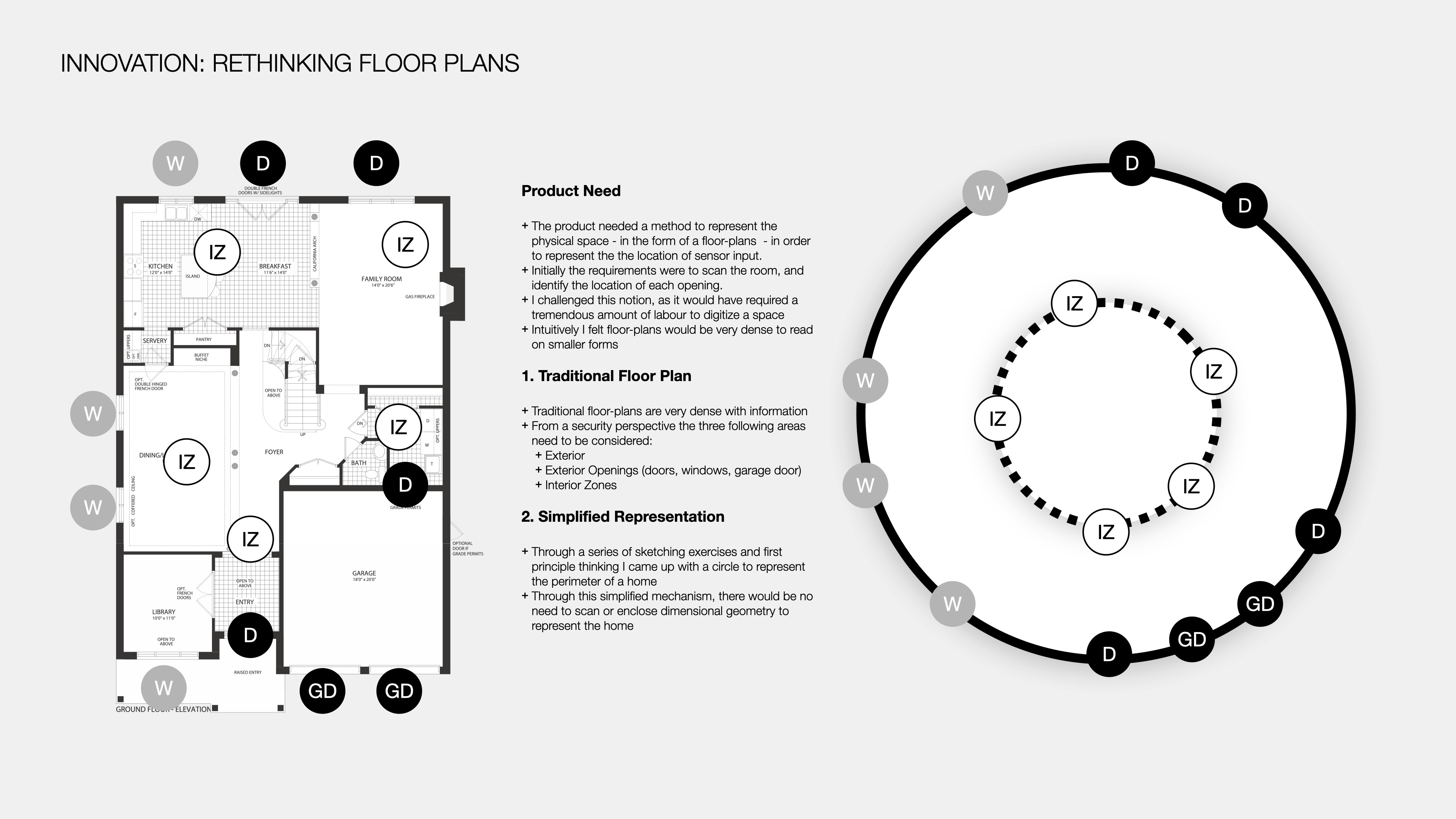
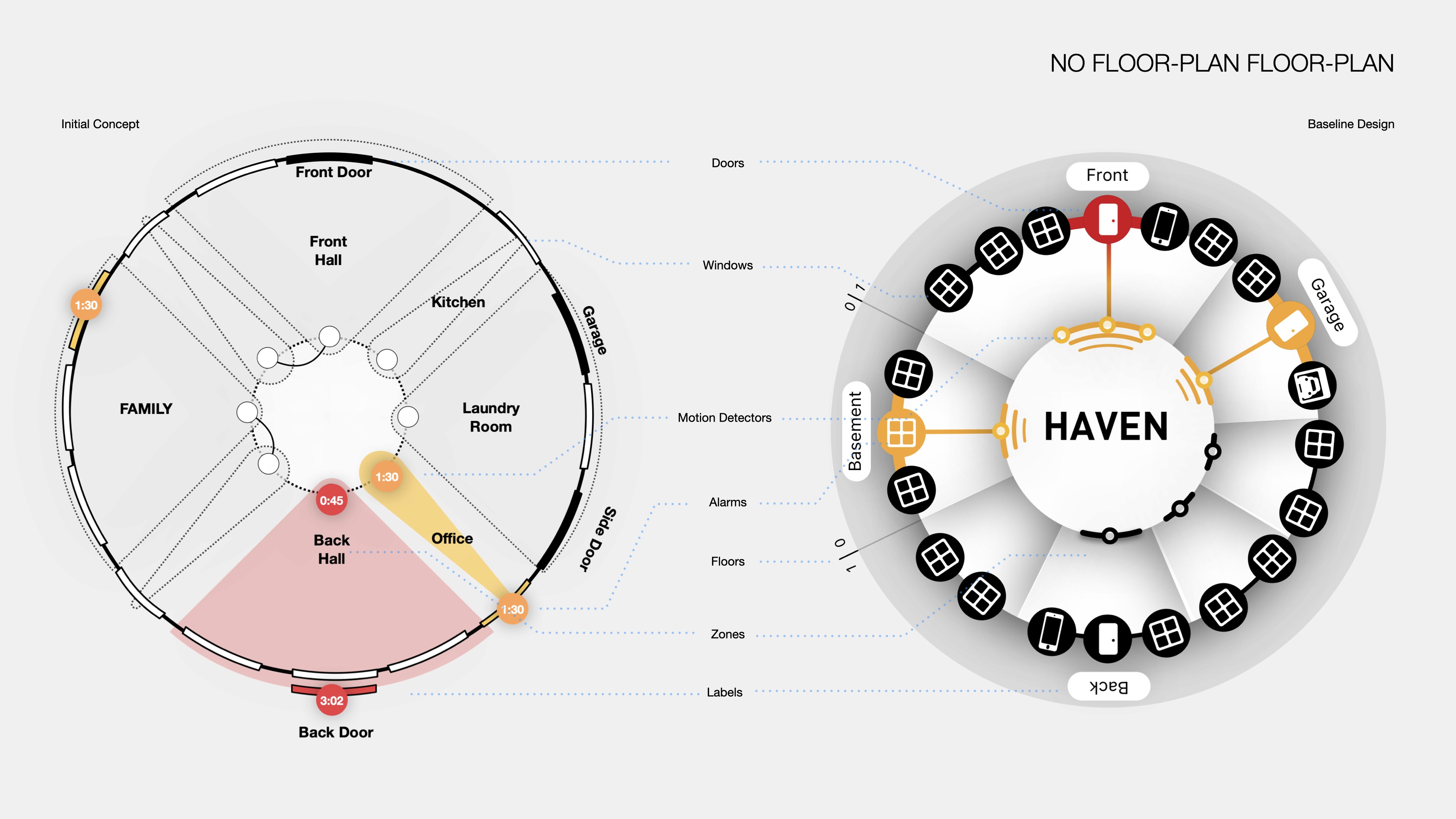
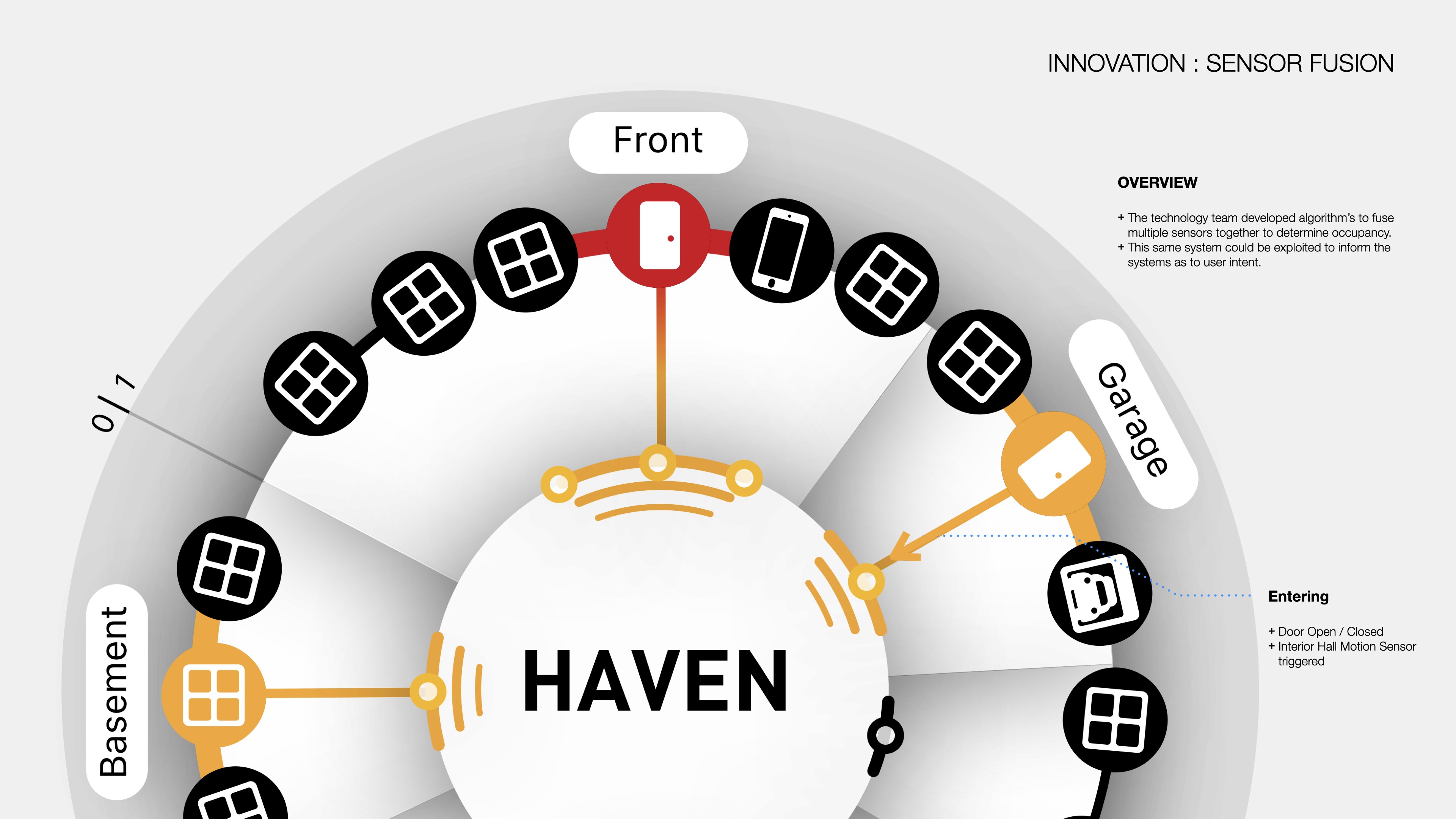
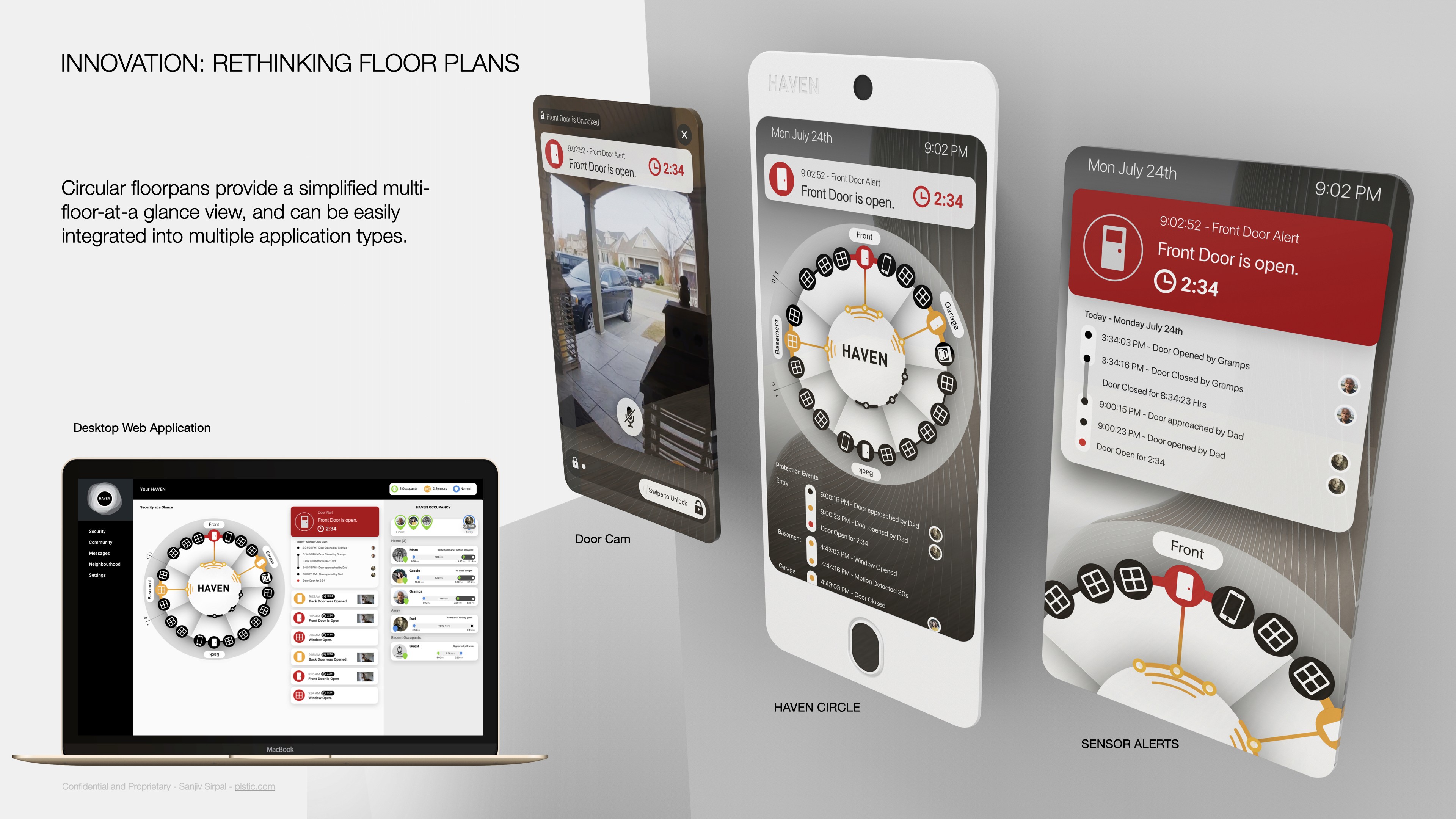
Homeowners don't think in floor plans - they think in perimeters. Is the boundary intact?
Replaced architectural schematics with a perimeter ring. Sensor states shown at a glance. Setup flow eliminated manual configuration entirely: walk room to room, open and close each entry point, let the system build its own spatial model. Scaled across console, mobile, and desktop web as a unified design system component.
Interfaces
Humanized Experience